
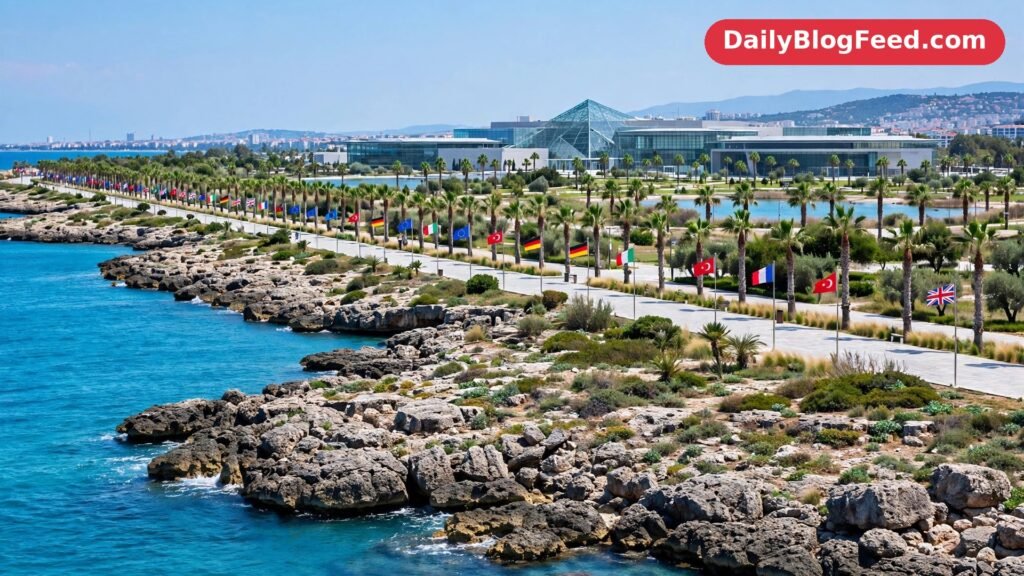

Nearly 200 countries gathered in Antalya on Monday, 9 November 2026, as the COP31 climate summit opened on Türkiye’s Mediterranean coast. The two-week conference runs until 20 November, and it arrives at a rough moment for global climate cooperation — war in the Middle East, soaring energy prices, and a year of punishing weather extremes.
This isn’t the kind of summit built around one big headline deal. COP31 is about something less showy and arguably harder: turning promises that already exist into things people can actually feel.
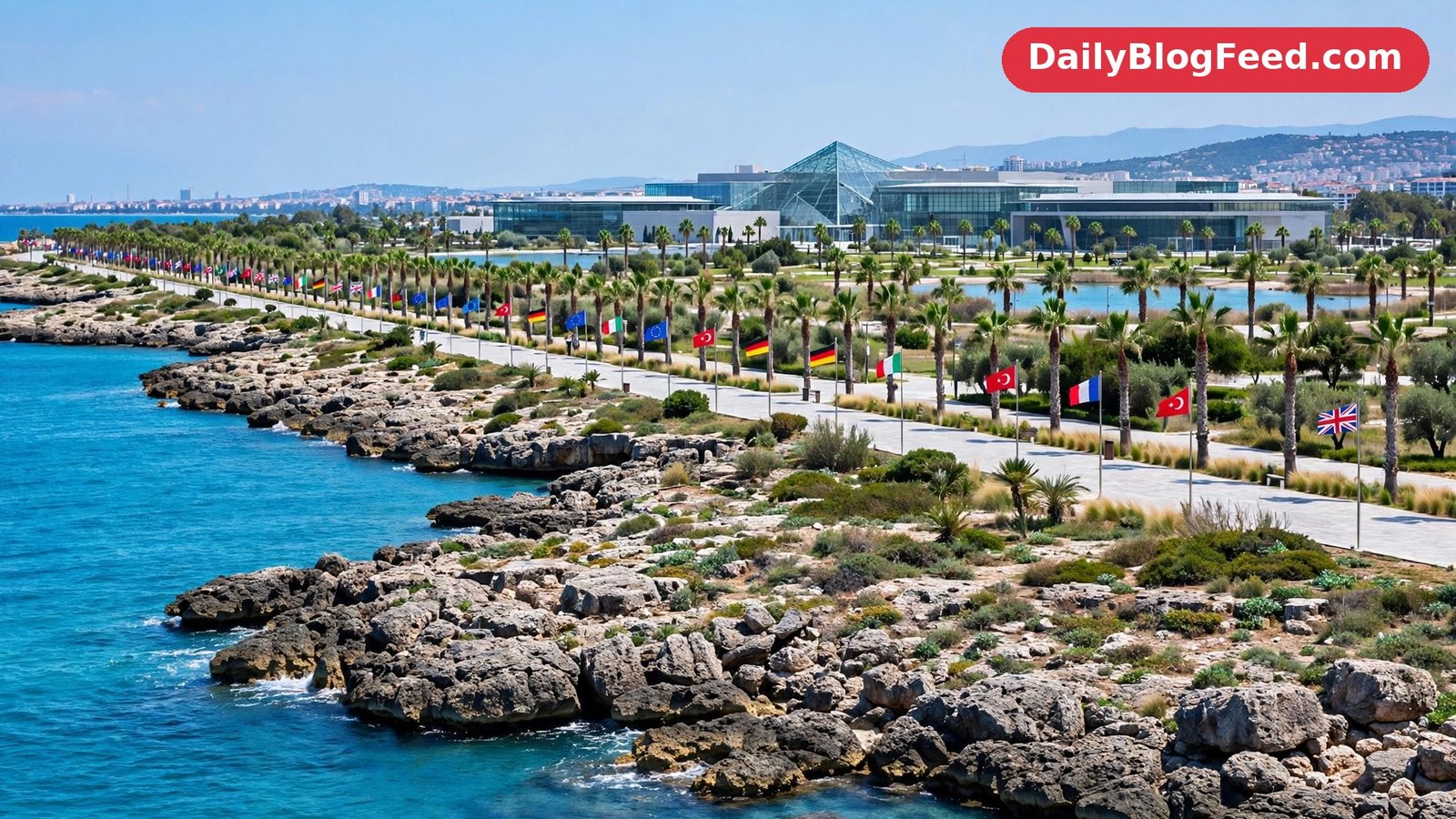
A summit opening under a very different sky
The mood in Antalya was set before anyone took the gavel. UN Climate Change chief Simon Stiell told the opening plenary that progress so far is “nowhere near far enough or fair enough,” and urged countries to move past setting targets and “supercharge solutions” that work on the ground.
“No COP is a silver bullet,” he said. “No single conference can bridge the chasm between the science and reality.”
UN Secretary-General António Guterres went further, calling on world leaders to “get serious” about tackling the crisis after a year of devastating weather extremes. His warning landed on a week when Europe has counted the cost of another summer of heatwaves, Indonesia has battled major wildfires, and Nepal has buried victims of catastrophic floods.
A United Nations Environment Programme report published in October said the world is already set to overshoot 1.5 degrees Celsius of warming above pre-industrial times — the threshold agreed at the 2015 Paris climate summit. The same report projected warming of around 2.6 degrees this century even if countries fully deliver on their current pledges.
Reuters also noted that a glacier collapse in Nepal this year caused a catastrophic flood that killed more than 1,450 people, with thousands still missing.
Electrification is the big idea — and the first fight
Türkiye’s COP31 presidency has put one goal at the centre of this summit: electrify more than a third of the global economy by 2035, up from around a fifth today. Countries are being asked to sign a pledge backing that target, which would mean swapping fossil-fuel cars, furnaces, boilers and cookstoves for electric versions at a much faster pace.
The catch, say climate advocates, is that the pledge doesn’t require the extra electricity to come from low-carbon sources. Electrifying everything with coal power would barely move the needle.
That disagreement feeds into a bigger one. A coalition of countries, including South Pacific island nations most exposed to rising seas, wants a clearer global roadmap away from fossil fuels. Many oil- and gas-producing nations, including Saudi Arabia, say fossil fuels can still play a substantial part in the energy mix if paired with technology that captures or reduces emissions.
The war in Iran, now in its ninth month, has effectively closed the Strait of Hormuz and sent fuel prices climbing worldwide. Governments have scrambled for oil cargoes and, in several cases, fired up coal plants again.
“A lot of people who previously might have been embarrassed to argue for continuing very high use of fossil fuel are now feeling empowered to make that case,” said John Holdren, a professor of environmental policy at Harvard University.
Renewable energy deployment has kept rising too, helped by surging exports of cheap clean technology from China — a point the Brazilian diplomat who presided over last year’s COP, André Corrêa do Lago, used to argue that the war has actually strengthened the case for a faster energy transition.
Money, as always, is the hard part
If electrification is the headline goal, finance is the issue most likely to decide whether COP31 ends in agreement or argument. Developing countries are pressing for faster, simpler access to money for adapting to rising temperatures and switching to cleaner energy.
Right now, that money is hard to reach. Cristian Barrasueta, from the World Rural Forum, told UN News that complicated procedures and multiple intermediaries make international climate finance difficult to access, particularly for small farming organisations.
Business groups want something similar, though for different reasons. “Delivery cannot remain a slogan or be left to voluntary initiatives,” said John Denton, secretary general of the International Chamber of Commerce. “COP31 must send clear policy signals that give businesses the confidence to invest in electrification and the wider energy transition — and turn adaptation needs into bankable projects.”
Türkiye holds the conference presidency, with Environment Minister Murat Kurum taking the gavel as COP31 President on Monday morning. Australia is leading the negotiations under an unusual co-presidency arrangement agreed during COP30 — Climate Change and Energy Minister Chris Bowen will oversee the talks. Bowen announced plans to develop a presidency-led decision throughout the conference rather than waiting until the final days, in the hope of shaping a political agreement early.
The World Leaders’ Summit is scheduled for 11–12 November, though the United States is shunning climate cooperation for the second year running.
The human cost is already here
Monday was also Food, Agriculture and Health Day at COP31. According to the World Health Organization, between 3.3 and 3.6 billion people live in areas highly vulnerable to climate change.
“The main character at the center of this story is not the atmosphere. It’s not the land, the ocean or the ice. It’s us. You and me, our family and our communities,” Alan Dangour of the Wellcome Trust Foundation said during a press conference held by the World Meteorological Organization.
Extreme heat is a particular worry: scientists link it to premature births and stillbirths, and the WMO’s Joy Shumake-Guillemot noted that almost all heat deaths are preventable if warnings reach the health workers who need them.
Food and farming tell a similar story. The sector accounts for roughly one third of global greenhouse gas emissions, yet farmers are among the first to feel the damage. In Bolivia, a severe drought has prompted the government to declare a national emergency, with more than 75,000 head of livestock dead and over 114,000 families affected, according to official figures. Türkiye itself knows the problem first-hand: the country suffered its worst drought in more than 50 years last year, with rainfall 27 percent below the long-term average.
What happens next
The next two weeks will test whether a summit built around delivery can actually deliver. Negotiators must advance agreements on emissions cuts, adaptation funding and a just transition, while the presidency tries to keep a political agreement on track from the start rather than cobbling one together in the final hours.
The opening ceremony itself started an hour and a half late, with no explanation given. With a powerful El Niño forecast to intensify in the coming months, the pressure to leave with something concrete is real.
The summit closes on Friday, 20 November. What it produces will show whether the world’s biggest climate gathering can still turn talk into action — or whether the promises outlast the progress.
Sources: Reuters — COP31 to open in Turkey, with climate goals under pressure from war and AI (https://www.reuters.com/sustainability/cop/cop31-open-turkey-with-climate-goals-under-pressure-war-ai-2026-11-09/); UN News — COP31 opens in Antalya: Can climate promises finally deliver results? (https://news.un.org/en/story/2026/11/1168763); AP via The Week — UN climate summit kicks off in Turkiye after disastrous year of extreme weather (https://www.theweek.in/wire-updates/international/2026/11/09/un-climate-summit-kicks-off-in-turkiye-after-disastrous-year-of-extreme-weather.html)