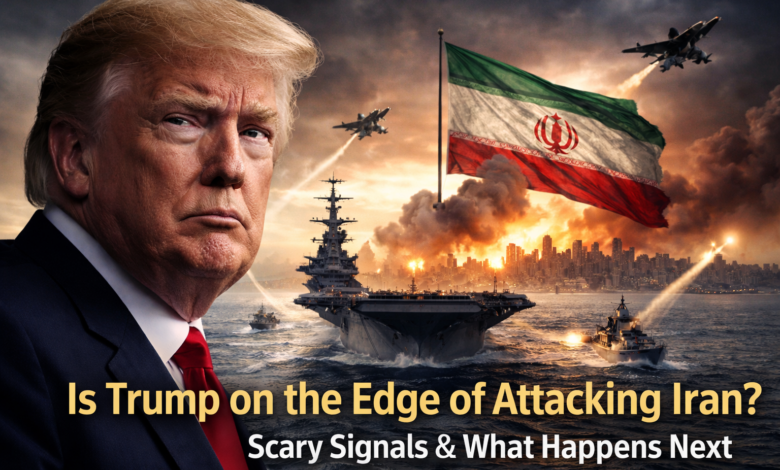
Is Trump on the Edge of Attacking Iran? Scary Signals & What Happens Next: The world is holding its breath as tensions between the United States and Iran escalate. Recent statements from former President Donald Trump, combined with visible U.S. service movements in the region, have reignited a critical question: Is Trump on the edge of attacking Iran, or is this another high-stakes political pressure game?
For global requests, Middle Eastern stability and transnational security, the answer matters more than ever.
Rising US–Iran Tensions: Why This Moment Feels Different
US – Iran relations have never been simple, but the current atmosphere feels surprisingly unpredictable. Trump’s language toward Iran has grown sharper, with repeated warnings that “ time is running out. ” At the same time, reports of increased U.S. nonmilitary and military readiness near the region have fueled fears of an implicit battle.
Unlike routine political controversies, this moment is defined by contemporaneous pitfalls and accommodations, a dangerous combination that can helical snappily if misruled.
Trump’s Strategy: Pressure, Power, or Preparation for War?
Donald Trump is known for using aggressive rhetoric as a concession tool. During his former administration, he relied heavily on what judges call a “ maximum pressure ” strategy, warrants, military signaling and public warnings designed to force opponents to the negotiating table.
Sympathizers argue that this approach avoids war by showing strength. Critics advise that it increases the threat of misapprehension. The big question now is whether these rearmost signals represent
- A genuine preparation for military action
- A calculated bluff to extract concessions
- Or a mix of both
At this stage, there is no official confirmation of an attack order, but the signals are strong enough to alarm allies and adversaries alike.
Scary Signals That Have Caught Global Attention
Several developments are raising red flags across the international community:
1. Military Posturing
Reports of increased U.S. nonmilitary presence and readiness exercises suggest that contingency plans are being laboriously reviewed. While this doesn’t confirm an attack, it shows that military options are firmly on the table.
2. Escalating Rhetoric
Trump’s warnings to Iran have come more directly, emphasizing consequences rather than concessions. History shows that similar language frequently precedes major geopolitical opinions.
3. Diplomatic Silence
Ages of reduced political communication are frequently the most dangerous. When back-channel addresses slow down, misconstructions are more likely.
Iran’s Response: Defiance Over Submission
Iran has responded with inverse firm messaging. Iranian officers have constantly stated that any attack would be met with a decisive response. Rather than signaling weakness, Tehran appears determined to project strength, both to its population and to indigenous abettors.
This collective defiance increases the threat of escalation; indeed, if neither side wants a full-scale war.
What Would Happen If the US Attacks Iran?
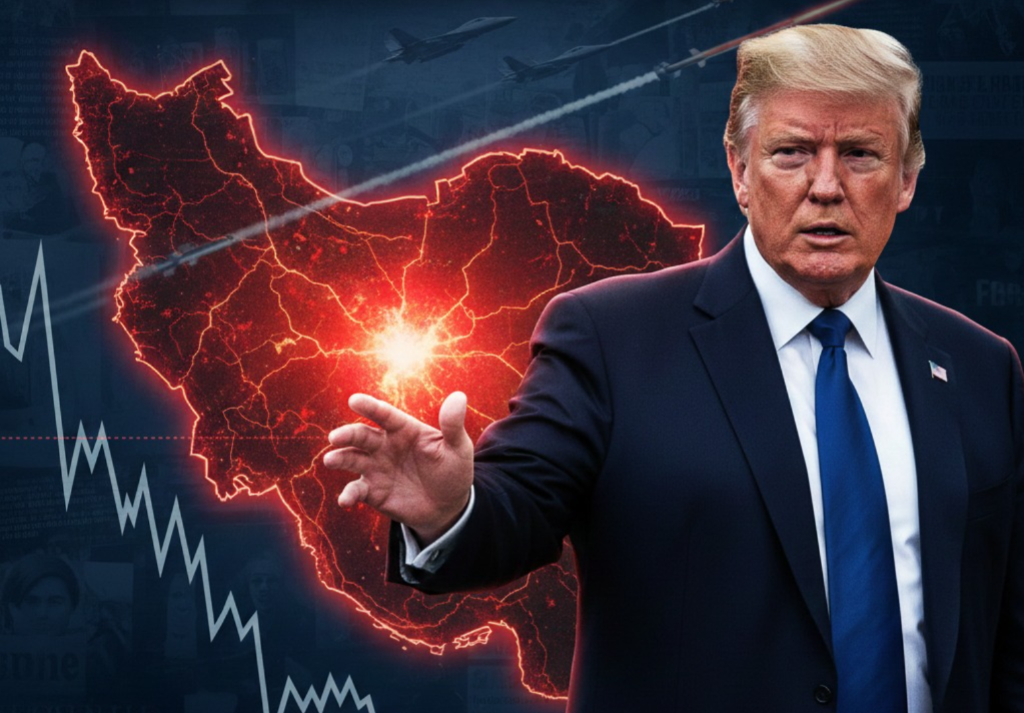
A direct military confrontation would have consequences far beyond the battlefield:
- Oil prices could surge, affecting global inflation
- Middle Eastern instability would deepen, impacting neighboring countries
- Global markets could react sharply, increasing uncertainty
- Cyber and proxy conflicts could expand beyond the region
Even a limited strike could trigger a chain reaction that would be difficult to control.
Is Diplomacy Still Possible?
Despite the pressure, tactfulness isn’t off the table. History shows that violent pressure is frequently followed by accommodations, especially when both sides understand the costs of war.
Several transnational actors continue to push for dialogue, hoping to help a military outgrowth. The challenge lies in rebuilding trust while both sides intimately project strength.
What Happens Next? Possible Scenarios
There are three realistic paths forward:
1. Negotiated De-Escalation
Behind-the-scenes talks lead to reduced tension and renewed diplomacy.
2. Prolonged Standoff
Threats and military signaling continue without direct conflict, keeping markets and governments on edge.
3. Limited Military Action
A targeted strike intended to send a message rather than start a full war—though even this carries serious risks.
Final Verdict: On the Edge, but Not Over It—Yet
Is Trump on the Edge of Attacking Iran? Scary Signals & What Happens Next
The signs suggest that military options are being prepared, but war isn’t ineluctable. What we’re witnessing is a dangerous phase where pressure, perception, and politics cross.
For now, tactfulness remains possible, but the periphery for error is shrinking.
Why This Matters
Is Trump on the Edge of Attacking Iran? Scary Signals & What Happens Next: For a world formerly facing profitable query and geopolitical insecurity, another major conflict could reshape global precedences overnight. Whether this extremity ends in addresses or fermentation depends on opinions made in the coming days — not just in Washington or Tehran, but across the transnational stage.