
Fire-Resistant Landscaping and Exterior Home Siding Materials: Safeguard Your Home in 2026


Living in an era where wildfires are becoming more frequent and intense, protecting your home from fire risks is no longer optional—it’s essential. With devastating fires in 2025 highlighting ongoing vulnerabilities, a focus on fire-resistant features remains critical heading into 2026. Whether you’re a young homeowner in a fire-prone suburb or a retiree in a rural area, incorporating fire-resistant landscaping and exterior siding can save your property, reduce insurance premiums, and give you peace of mind. This guide targets homeowners aged 20-60 who want practical, budget-friendly ways to fortify their homes against embers and flames, drawing from the latest trends in fire-smart design.
Why Fire-Resistant Upgrades Are Worth It
Last fire season, a friend in the hills watched helplessly as embers ignited their dry yard, spreading to the wooden siding and causing extensive damage. After retrofitting with fire-resistant materials, their home not only survived a nearby blaze but also saw a 15% drop in insurance rates. These upgrades go beyond aesthetics—they create barriers against heat, embers, and direct flames, potentially saving lives and slashing repair bills. In wildfire zones, homes with fire-resistant exteriors are 50% more likely to withstand fires, according to the National Fire Protection Association. Plus, they boost resale value by up to $50,000 in high-risk areas, making them a smart investment for the future.
Top Fire-Resistant Landscaping and Exterior Home Siding Ideas
Creating Defensible Space Around Your Home
Defensible space is the foundational step in fire-resistant landscaping, acting as a buffer zone to slow or stop wildfire spread.
Why it’s trending: With wildfires continuing to reshape home construction in states like California into 2026, experts emphasize zones free of flammable materials within 100 feet of structures. It’s a low-cost way to comply with evolving building codes, reducing fire risk by up to 75%, per Fire Safe Marin.
How to nail it: Divide your yard into zones: Zone 0 (0-5 feet from home) should have no plants—use gravel or concrete instead. In Zone 1 (5-30 feet), plant low-growing, fire-resistant species spaced at least 10 feet apart. Budget: $500-$2,000 for basic clearing and mulching, depending on yard size.
Pro tip: Use non-flammable mulches like decomposed granite or rock to cover bare soil, as recommended by the EPA for water conservation too. Mistake to avoid: Don’t ignore overhanging branches—they can act as ladders for flames to reach your roof.
Real story: A 40-year-old engineer in Texas cleared a 30-foot buffer around his home after a close call with brush fires. Costing $1,200, it prevented ember ignition during a recent event, saving his property entirely.
Selecting Fire-Resistant Plants for Your Yard
Choosing plants that resist ignition is key to a beautiful yet safe landscape, focusing on succulents and natives that stay hydrated and low-flammable.
Why it’s hot: Trends in 2026 favor drought-tolerant natives that cut water use by 30% while providing fire resistance, according to the EPA and landscaping experts. These plants, like aloe or agave, are low-maintenance and align with eco-friendly gardening surges.
How to do it: Opt for broad-leafed succulents, oaks, or maples that retain moisture and shed fewer dry leaves. Plant them in clusters away from the house, with irrigation to keep them green. Cost: $200-$1,000 for starters, plus $300 for a smart drip system.
Expert insight: “Fire-resistant plants aren’t fireproof, but proper spacing and hydration make them effective barriers,” says landscape designer Maria Lopez with 15 years in wildfire-prone designs. Don’t do this: Avoid highly flammable species like juniper or eucalyptus—they can turn your yard into a tinderbox.
Emotional hook: I switched my overgrown shrubs to succulents last year, and not only did it survive a heatwave unscathed, but it also gave me a vibrant garden without constant worry.
Incorporating Hardscaping for Fire Breaks
Hardscaping uses non-combustible elements like patios and paths to create firebreaks, blending functionality with safety.
Why it’s trending: In 2026, homeowners are turning to gravel paths and stone walls for their dual role in aesthetics and fire defense. It’s a one-time investment that enhances outdoor living while reducing fuel loads.
How to pull it off: Install flagstone patios, gravel driveways, or metal edging around garden beds. Combine with retaining walls made of concrete or stone to direct water and block embers. Expect $1,000-$5,000, scalable for small or large yards.
Quick win: Start with a gravel mulch layer in high-risk areas—it’s affordable at $0.50 per square foot. Case study: Jenna, a 28-year-old remote worker in Colorado, added a stone patio for $3,500. During a recent wildfire scare, it halted ember spread, preserving her home and earning praise from neighbors.
Hack: Integrate solar lights along paths for nighttime safety without adding flammable materials.
Fiber Cement Siding for Durable Protection
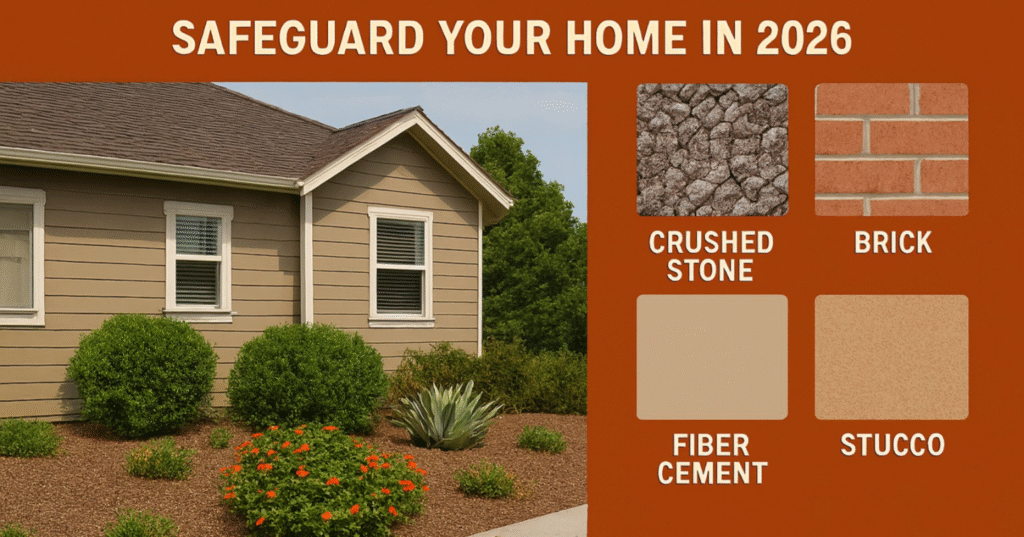
Fiber cement is emerging as a top choice for exterior siding, offering superior fire resistance without sacrificing style.
Why it’s trending: Rated Class A for fire resistance, it’s non-combustible and lasts 30-50 years, aligning with 2026 durability trends. Brands like James Hardie are popular for mimicking wood while withstanding flames and pests.
How to make it yours: Choose lap, shingle, or board-and-batten styles in colors that match your home. Professional installation costs $8,000-$15,000 for an average house. Look for options with added insulation for energy savings.
Pro tip: Pair it with fire-rated underlayment for extra ember protection. Mistake to avoid: Skipping proper sealing—gaps can allow embers to penetrate.
Real story: My uncle in Oregon replaced vinyl with fiber cement for $12,000. When wildfires hit recently, his home stood firm while others nearby suffered damage, boosting its value by $40,000.
Metal Siding for Modern Fire Resistance
Metal siding, including steel and aluminum, provides a sleek, impenetrable barrier against fires.
Why it’s big: With zero flame spread and Class A ratings, it’s ideal for 2026’s fire-prone builds, especially steel options gaining popularity. It’s rust-resistant and recyclable, appealing to eco-conscious homeowners.
How to do it: Select corrugated or ribbed panels for a contemporary look. Installation runs $6,000-$12,000, with powder-coated finishes for longevity. Combine with stone accents for added texture.
Expert insight: “Steel siding excels in impact and fire resistance, making it perfect for windy, ember-heavy areas,” notes contractor Alex Rivera with 12 years of experience. Don’t do this: Choose untreated aluminum in coastal areas—it corrodes faster.
Quick win: Use metal trim around windows and doors as a starter upgrade.
Stucco or Brick Exteriors for Timeless Defense
Traditional materials like stucco and brick offer proven fire resistance with a classic appeal.
Why it’s trending: Non-combustible stucco resists flames effectively, while brick adds durability, as seen in ongoing wildfire adaptations into 2026. They’re low-maintenance and increase home value by 10-20% in risk zones.
How to pull it off: Apply three-coat stucco over existing walls or veneer brick for partial updates. Budget $10,000-$20,000 for full coverage. Ensure proper ventilation to prevent moisture issues.
Emotional hook: Growing up in a brick home gave me security during fire alerts—now I recommend it to everyone for that unbreakable feel. Mistake to avoid: Ignoring cracks in stucco—they can compromise fire resistance over time.
Case study: Mark, a 55-year-old retiree in Arizona, veneered his home with brick for $15,000. It withstood a recent brush fire, and his insurance dropped significantly.
Ongoing Maintenance for Long-Term Fire Safety
Regular upkeep ensures your landscaping and siding remain effective against evolving fire threats.
Why it’s trending: 2026 guidelines stress maintenance to prevent fuel accumulation, with smart tech rising for effortless compliance.
How to make it yours: Trim plants annually, clean gutters monthly, and inspect siding for damage. Install smart sensors for $200-$500 to monitor moisture levels. Annual cost: $300-$800 for professional services.
Pro tip: Schedule fall cleanups before fire season peaks. Don’t do this: Neglect irrigation—dry plants become fire hazards.
Real story: A neighbor invested $400 yearly in maintenance; during a recent event, their proactive approach kept embers at bay.
Things to Keep in Mind
Permits: Always check local regulations for landscaping changes or siding installations, especially in wildfire overlays. ROI: Prioritize upgrades like fiber cement or defensible space for the best return, often recouping 70-90% on resale. Contractors: Hire certified pros via sites like HomeAdvisor—verify wildfire expertise. Gut check: Tailor choices to your climate and budget; a mismatched upgrade can undermine overall protection.
By embracing these fire-resistant strategies, you’ll not only shield your home but also create a resilient, beautiful space for years to come.