
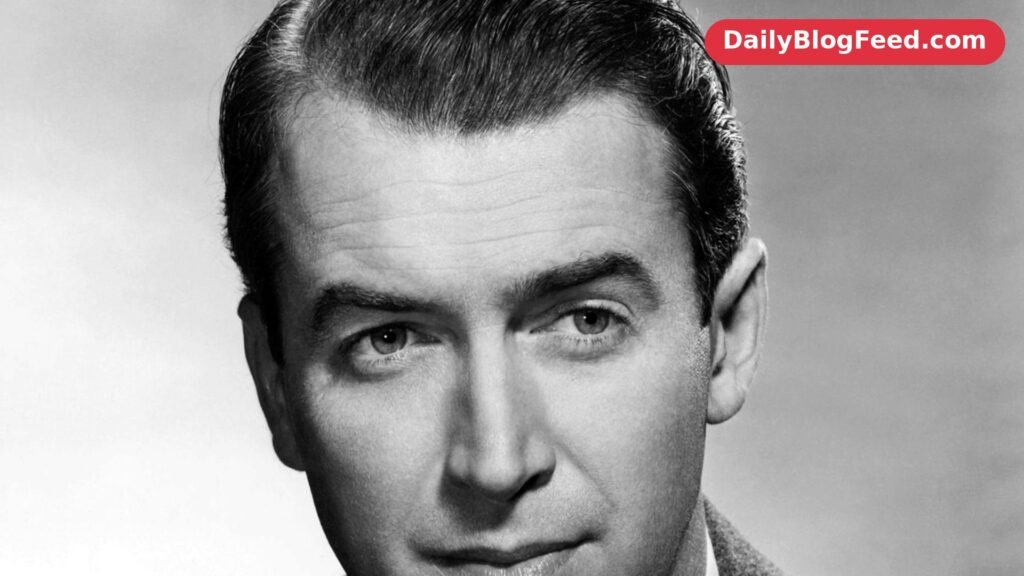

Most movie stars play heroes. James Stewart actually was one, long before the cameras rolled on his most famous films. He flew bombers over Europe, came home without talking much about it, and then became one of the most beloved actors who ever lived.
On screen he was the decent, drawling everyman from a small town, the guy you trusted to do the right thing. Off screen, he held on to those same values through war, loss, and fifty years of Hollywood change.
His story starts in a hardware store in Pennsylvania. It ends with a Presidential Medal of Freedom, a shelf of classic films, and a reputation almost no other star has matched for simple decency.
Quick Facts
| Fact | Details |
|---|---|
| Full Name | James Maitland Stewart |
| Born | May 20, 1908 |
| Died | July 2, 1997 |
| Birthplace | Indiana, Pennsylvania, USA |
| Nationality | American |
| Occupation | Actor, Military Officer |
| Spouse | Gloria Hatrick McLean (married 1949, died 1994) |
| Children | 4 — stepsons Michael and Ronald McLean, twin daughters Judy and Kelly Stewart |
| Net Worth | About $30 million at the time of his death (estimated) |
Where Did James Stewart Grow Up?
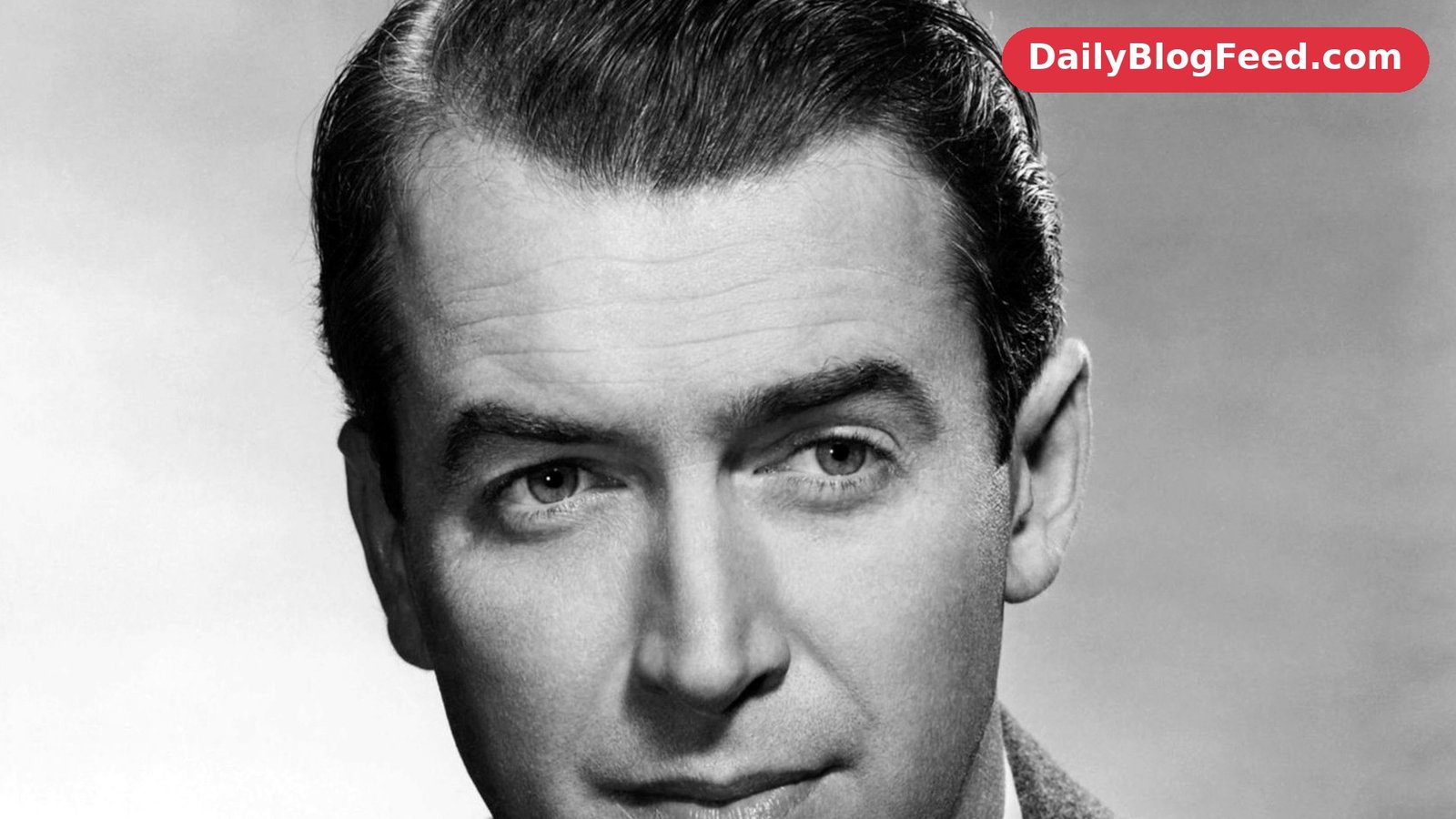
James Maitland Stewart was born on May 20, 1908, in Indiana, Pennsylvania. It was a modest town where everybody knew which family ran which shop on the main street.
His father, Alexander Stewart, ran the family hardware store. The expectation was simple. Young Jimmy would go to college, come home, and take his turn behind the counter.
He was a quiet boy. He played the accordion, built model airplanes, and dreamed about flight. That love of flying never left him, and years later it would shape the biggest decision of his life.
People in town trusted his father because he treated them fairly. Stewart carried that plain honesty into every role, and audiences could feel it was not an act.
How Did James Stewart End Up at Princeton?
Stewart went to Princeton to study architecture. He graduated in 1932, during the Great Depression, when building work was hard to find.
At Princeton he performed with the Triangle Club, the university’s musical theatre group. Acting started as a sideline. By graduation, it was pulling him harder than drawing boards ever had.
After Princeton he joined the University Players, a summer stock company in Massachusetts. Two fellow actors there were Henry Fonda and Margaret Sullavan.
Fonda became a lifelong friend. Sullavan became an early champion, and Stewart always credited her with believing in him before Hollywood did.
How Did James Stewart Get to Hollywood?
From summer stock, Stewart moved to Broadway. The parts were small, and the pay was smaller. He shared cramped New York apartments with Fonda, and the two friends kept each other going through lean months.
A talent scout spotted him on stage, and in 1935 he signed with MGM. Hollywood then ran on a factory system. New actors were expected to work constantly and complain never.
Stewart did exactly that, appearing in film after film and learning his craft in public. He was tall and thin, with a hesitant drawl casting directors were unsure about.
Audiences caught what they missed. That pause before he answered, that look of a man thinking something through, made him feel real in a way polished leading men often did not.
What Made James Stewart a Star in the 1930s?
In 1939, Stewart starred in Mr. Smith Goes to Washington, directed by Frank Capra. He played Jefferson Smith, an idealistic young senator who takes on a corrupt political machine almost alone.
The filibuster scene, where Smith talks himself hoarse rather than give in, became an instant classic. Stewart earned his first Oscar nomination, and the film fixed his image as America’s conscience.
That same year he starred in Destry Rides Again opposite Marlene Dietrich, proving he could handle a western and a joke with equal ease. Then, in 1940, came The Philadelphia Story.
Stewart played a reporter caught in a romantic tangle with a wealthy socialite, played by Katharine Hepburn, and her ex-husband, played with effortless charm by Cary Grant.
The film was witty, fast, and hugely popular. Stewart won the Academy Award for Best Actor at 32. He later joked the Oscar was partly a consolation for not winning for Mr. Smith.
He kept the award at his father’s hardware store. Alexander put it in the shop window, where customers could see what the local boy had done.
By then Stewart stood alongside giants like Clark Gable as one of MGM’s most bankable names. Then the world went to war, and Stewart did something none of his peers did in quite the same way.
Why Did James Stewart Enlist Before Pearl Harbor?
James Stewart was the first major American star to enlist in World War II. He joined up in March 1941, nine months before Pearl Harbor brought the United States into the war.
He was at the peak of his career, earning money most people could only dream about. He walked away from it because he believed service was a duty, not a publicity move.
Getting in was not easy. He was first turned down for being underweight for his height. He ate and trained to gain the pounds he needed, then tried again and was accepted.
Even then, the Army wanted to keep him safe. He was assigned to training and recruitment work in California. Stewart was grateful to serve, but he had not joined to stay behind a desk.
He pushed, politely but persistently, for combat duty. His superiors eventually gave in. In late 1943, he arrived in England as a B-24 Liberator pilot.
What Did James Stewart Do in the War?
Stewart flew with the 445th Bomb Group and later the 453rd Bomb Group, based in England. He piloted heavy B-24 bombers on missions over occupied Europe and Germany.
These were daylight raids, flown in tight formation through flak and fighter attacks. Many men who took off in the morning did not come home in the evening.
Stewart completed 20 combat missions. He rose from private to colonel by the end of the war. Men who flew with him said he was calm under fire and fiercely protective of his crews.
He earned the Distinguished Flying Cross and the Air Medal. Characteristically, he almost never talked about it afterwards. When reporters asked, he steered the conversation back to the men who had not returned.
Friends said the war changed him. It made him quieter and more serious, and it deepened his later performances.
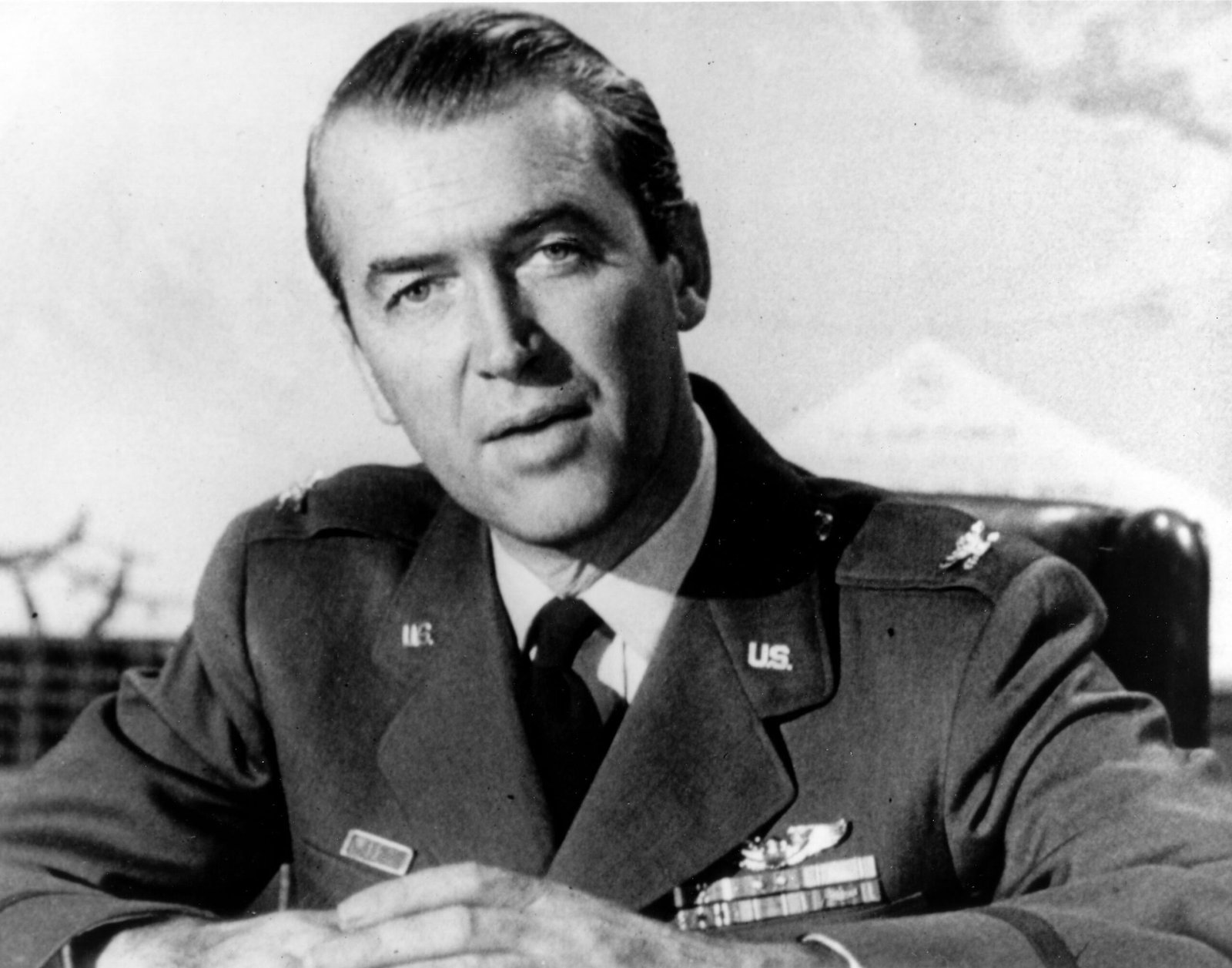
He stayed in the Air Force Reserve for over two decades and retired in 1968 as a brigadier general. He is often described as one of the highest-ranking actors in United States military history, a record built on real service, not honorary titles.
How Old Was James Stewart When He Died?
James Stewart died on July 2, 1997, in Beverly Hills, California. He was 89 years old.
His death was caused by a pulmonary embolism, a blood clot that reached his lung. It came after a period of declining health, made harder by grief after his wife Gloria died in 1994.
By then he had seen his early films rediscovered by new generations. He was mourned by presidents and by families who had grown up watching him every Christmas.
What Happened to James Stewart After the War?
Stewart came home in 1945 unsure whether Hollywood still wanted him. He was 37, and the industry had moved on while he was away. Frank Capra took a chance on him anyway.
The result was It’s a Wonderful Life, released in 1946. Stewart played George Bailey, a small-town man who gives up his dreams for others, despairs on Christmas Eve, and is shown what his town would have been without him.
The film was not a big success on release. It lost money, and Stewart worried his career might be over.
Through television showings in the 1970s and 1980s, it became one of the most loved films ever made. George Bailey became his signature role, and Stewart always said it was his favourite of his own films.
How Did James Stewart Reinvent Himself in the 1950s?
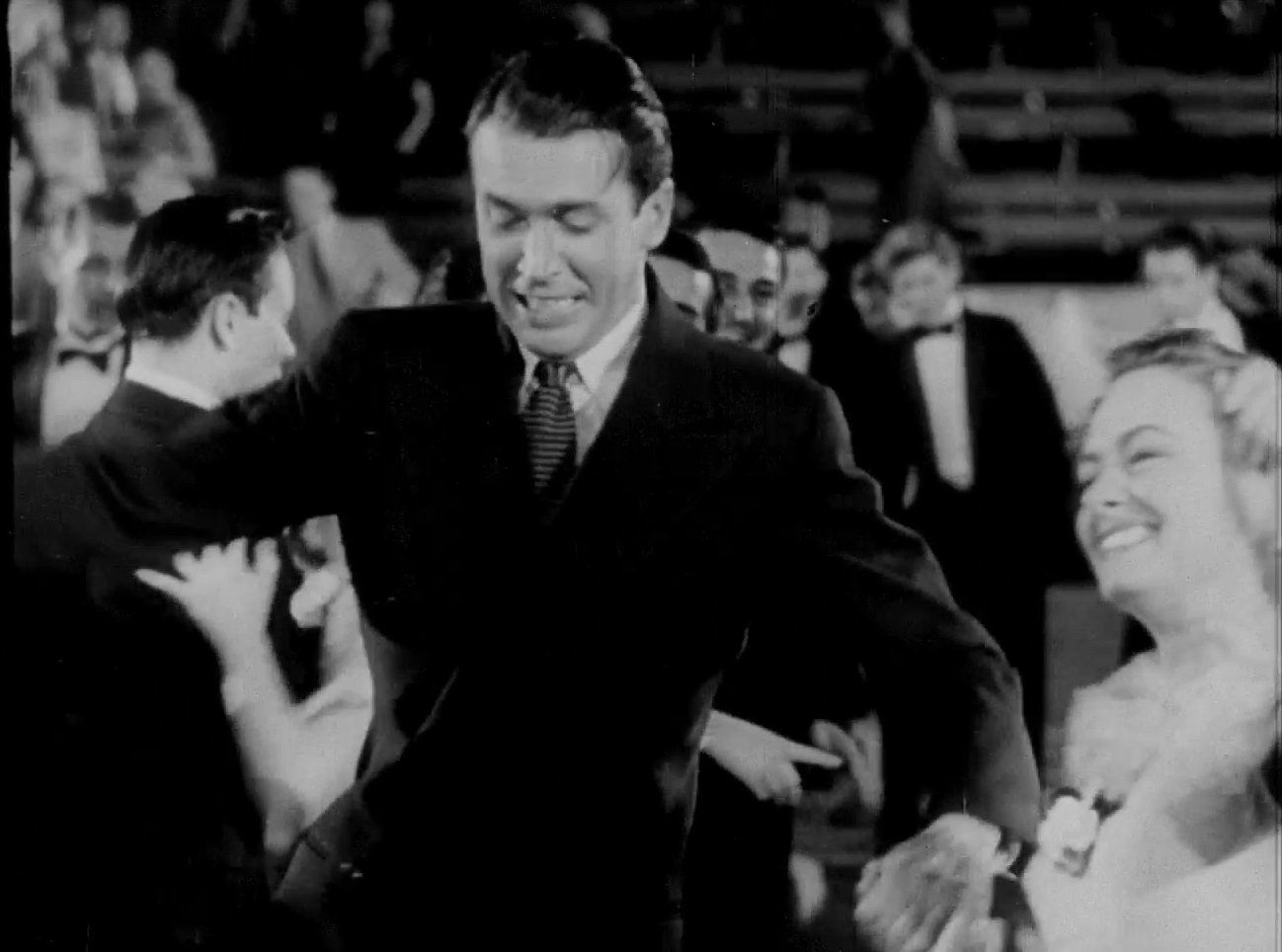
If Stewart had stayed the sweet everyman of the 1940s, his career might have faded politely. Instead, the man who came back from the war played harder, darker characters.
With director Anthony Mann, he made five westerns, including Winchester ’73, Bend of the River, and The Man from Laramie. His heroes there were obsessed, vengeful, and sometimes frightening. Audiences were startled, and they loved it.
Alfred Hitchcock saw something others had missed. He liked using Stewart’s trusted image against the audience, putting a familiar face into morally uneasy situations.
They made four films together. Rope (1948) was a daring experiment in long takes. Rear Window (1954) cast him as a wheelchair-bound photographer who believes he has witnessed a murder.
The Man Who Knew Too Much (1956) made him an ordinary tourist pulled into an assassination plot. Vertigo (1958) cast him as an acrophobic detective undone by obsession. It was coolly received at first, but in the 2012 Sight and Sound critics’ poll it was voted the greatest film ever made.
He worked widely elsewhere too. Harvey (1950) charmed audiences with Stewart as a man whose best friend is an invisible rabbit. Anatomy of a Murder (1959) gave him one of his finest roles, as a small-town lawyer defending a difficult client.
In 1962 he faced John Wayne in The Man Who Shot Liberty Valance. His final major live-action appearance was The Shootist (1976), again alongside Wayne. His last screen role was a voice part, as Wylie Burp in An American Tail: Fievel Goes West (1991).
In total, Stewart received five Academy Award nominations. The respect only grew with age.
What Was James Stewart’s Net Worth?
James Stewart was worth about $30 million at his death in 1997, according to an estimate by Celebrity Net Worth. That fortune came not just from salaries, but from one deal that changed Hollywood history.
In 1950, he agreed to star in Winchester ’73 for a percentage of the profits instead of a flat salary. It was a gamble. If the film flopped, he would earn far less than his usual fee.
The film was a hit, and Stewart earned far more than a salary would have paid. Other stars took notice at once. The deal is widely credited with breaking the old studio salary system and opening the modern era of stars sharing in a film’s success.
Stewart was careful with money. He invested in real estate and lived well but never flashily, in the same Beverly Hills home for decades. He understood money, friends said, because he had watched his father count it carefully in a small-town store.
Who Was James Stewart’s Wife?
For years, Stewart was Hollywood’s most famous bachelor. He dated glamorous women, and columnists regularly predicted weddings that never happened.
On August 9, 1949, he married Gloria Hatrick McLean. Gloria was a former model, divorced, with two young sons. Stewart was 41, and friends said marriage settled him in a way fame never had.
Their marriage lasted nearly 45 years. Gloria was known for her wit, her love of animals and travel, and her lack of interest in competing with his fame. They entertained simply and guarded their home life.
Gloria died of lung cancer in 1994. Stewart never remarried. Friends said he was lost without her, and his health declined noticeably in the three years that followed.
How Many Children Did James Stewart Have?
When Stewart married Gloria, her sons Michael and Ronald McLean became his stepsons. He raised them as his own, and the bond was real and close.
In 1951, Gloria gave birth to twin daughters, Judy and Kelly Stewart. They grew up largely out of the spotlight, exactly how their parents wanted it. Kelly later worked as an anthropologist, and both daughters have spoken about their father’s kindness and his insistence on an ordinary family life.
The family’s great sorrow came in 1969. Ronald McLean, a Marine lieutenant in Vietnam, was killed in action, aged 24.
Stewart almost never discussed Ronald’s death publicly. Those close to him said it was the deepest wound of his life, deeper even than his own war. He supported veterans’ causes quietly for the rest of his life, and many believed Ronald’s loss was a large part of why.
What Honours Did James Stewart Receive?
In 1980 Stewart received the American Film Institute’s Life Achievement Award, one of the highest honours in American cinema.
In 1985 he received two more landmarks. The Academy gave him an Honorary Award for his body of work, and President Ronald Reagan presented him with the Presidential Medal of Freedom, the highest United States civilian honour.
The AFI later ranked him third among the greatest male screen legends of classic cinema. Only Humphrey Bogart, ranked first, and the star ranked second stood ahead of him. A fuller account is available in his biography, which traces the arc from Indiana to the Medal of Freedom.
His hometown never forgot him. Indiana, Pennsylvania celebrates him still, and the Jimmy Stewart Museum keeps his story rooted a few streets from the hardware store.
Interesting Facts About James Stewart
- Stewart kept his Oscar for The Philadelphia Story in his father’s hardware store in Indiana, where it sat in the window for customers to see.
- He was the first major American star to enlist in World War II, joining in March 1941, months before Pearl Harbor.
- He had to gain weight after first being rejected by the military for being underweight for his height.
- He flew 20 combat missions in B-24 Liberators and retired from the Air Force Reserve in 1968 as a brigadier general.
- His percentage deal on Winchester ’73, instead of a salary, helped change how movie stars were paid forever.
- It’s a Wonderful Life lost money on release and became a classic only through years of television repeats.
- Vertigo, now often called the greatest film ever made, received only mixed reviews in 1958.
- His final screen role was a voice part, as Wylie Burp in An American Tail: Fievel Goes West in 1991.
Frequently Asked Questions
How old was James Stewart when he died?
He died on July 2, 1997, at 89. Born on May 20, 1908, he had celebrated his 89th birthday about six weeks earlier.
Who was James Stewart married to?
He was married to Gloria Hatrick McLean from August 9, 1949, until her death from lung cancer in 1994. He never remarried.
How many children did James Stewart have?
Four in his blended family. Michael and Ronald McLean were his stepsons, and twin daughters Judy and Kelly were born in 1951.
What was James Stewart’s most famous movie?
Most people name It’s a Wonderful Life (1946), where he played George Bailey. Critics often point to Vertigo (1958), voted the greatest film ever made in the 2012 Sight and Sound poll.
Did James Stewart really serve in World War II?
Yes, in real combat. He enlisted in March 1941, flew 20 missions as a B-24 pilot, rose to colonel, and retired from the Air Force Reserve as a brigadier general in 1968.
Final Thoughts
Stewart’s career would be remarkable on its own. Fifty years of films, an Oscar, five nominations, and a run of Hitchcock and Capra classics actors dream about. But the films were only half the life.
The other half was a hardware store in Pennsylvania, a bomber over Europe, a marriage of nearly half a century, and a grief he carried quietly. He never asked the public to admire the private half. He just lived it.
That may be why he endures. Other stars feel like products of a vanished studio system. Stewart feels like somebody’s neighbour, somebody who meant what he said. The drawl, the pause, the decency — none of it was manufactured. It was just him.

Pingback: Humphrey Bogart: Age, Wife, Children, Net Worth & Movies - DailyBlogFeed
Pingback: Cary Grant: Age, Wife, Children, Net Worth & Movies