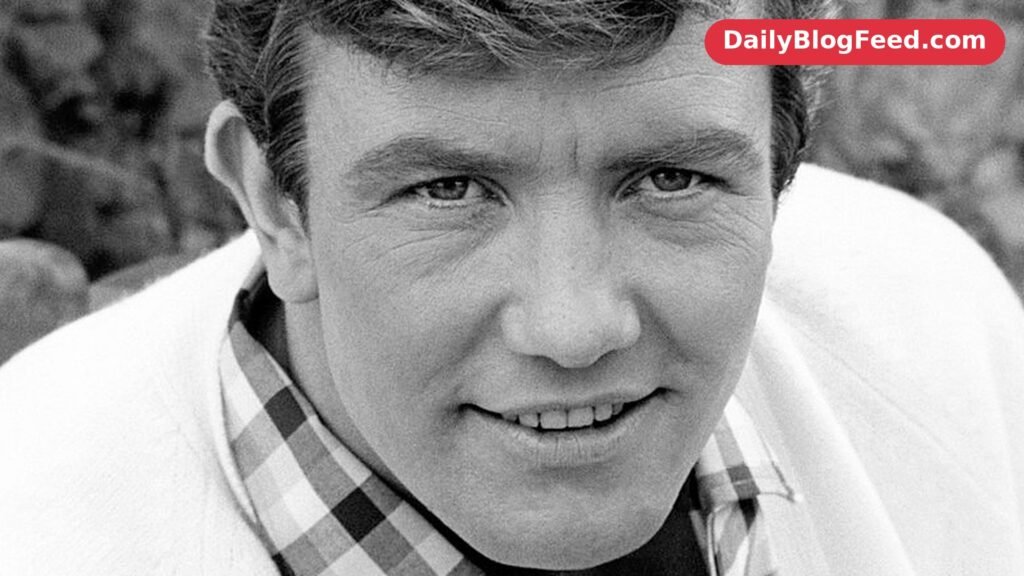

There are actors you admire from a distance, and then there are actors who feel like they belong to you. Albert Finney was the second kind. He never chased the glossy version of fame, and never seemed terribly interested in being a star in the way stars are supposed to be. He just acted, with a force that could fill a stage or a cinema screen without ever looking like effort.
For more than fifty years, from a Salford grammar school to a James Bond film, Finney played factory workers and kings, rogues and detectives, drunks and saints. He was nominated for the Academy Award five times and never won one, which tells you something about the Oscars and nothing at all about him.
This is the full story of that life: where Albert Finney came from, the three marriages that shaped his private years, the son who followed him into film, the fortune he left behind, and the roles that still hold up today.
Quick Facts
| Detail | Information |
|---|---|
| Full Name | Albert Finney |
| Born | 9 May 1936, Salford, Lancashire, England |
| Died | 7 February 2019, Chelsea, London, England, aged 82 |
| Nationality | English |
| Occupation | Actor, producer, director |
| Years Active | 1956–2012 |
| Spouses | Jane Wenham (1957–1961), Anouk Aimée (1970–1978), Penelope Delmage (2006–2019) |
| Children | 1 son, Simon Finney |
| Height | 5 feet 9 inches (1.75 m) |
| Net Worth | About $10 million at his death in 2019, according to Celebrity Net Worth |
Who Was Albert Finney?
Albert Finney was born on 9 May 1936 in Salford, Lancashire, the youngest of three children and the only son of Albert Finney, a bookmaker, and his wife Alice, née Hobson. Salford in those years was a working town of mills and terraced streets, and nothing in his background pointed obviously toward the stage. Young Albert, known to everyone as Albie, went to Tootal Drive Primary School and then Salford Grammar School.
What changed everything was a school play, or rather the feeling it gave him. Acting, he discovered, was not about showing off. It was about becoming someone else for a while, and doing it truthfully enough that strangers believed you. That feeling carried him to London and to the Royal Academy of Dramatic Art, where he graduated in 1956.
He did not wait long for work. While still a student he appeared on television, and after graduating he joined the Royal Shakespeare Company and worked in regional theatre. He turned down a contract from the Rank Organisation, the big British studio of the day, because he wanted to learn his craft at Birmingham Rep instead.
How Did Albert Finney Become Famous?
Finney’s film debut was a small one, playing Laurence Olivier’s son in Tony Richardson’s The Entertainer in 1960. It barely hinted at what was coming. Later that same year, Karel Reisz cast him as Arthur Seaton, the young factory worker at the centre of Saturday Night and Sunday Morning, adapted from Alan Sillitoe’s novel. Arthur was angry, funny, selfish and alive, and Finney played him without softening a single edge.
The film became the third most popular movie in Britain that year, and suddenly a new kind of leading man had arrived. He was not polished and he was not posh. He looked like someone you might actually meet in Nottingham on a Saturday night, and British cinema was changing with him at the front of it.
Three years later came the role that made him famous around the world. In Tom Jones (1963), again directed by Richardson, Finney played Henry Fielding’s lusty, good-hearted hero with a grin that seemed to carry the whole film. The picture won the Academy Award for Best Picture, and Finney earned his first Oscar nomination, for Best Actor. He was twenty-seven years old, and he could have had anything Hollywood wanted to give him.
Why Did Albert Finney Turn Down Lawrence of Arabia?
Here is the story that tells you most about the man. After his breakthrough, David Lean wanted Finney to play T. E. Lawrence in Lawrence of Arabia, and his four-day screen test was superb by most accounts.
The part was his if he wanted it, but the deal would have tied him to producer Sam Spiegel on a multi-year contract, and Finney refused to sign his freedom away.
He walked away from what would have become one of the most famous roles in cinema history, and Peter O’Toole played Lawrence instead. It sounds reckless, and in career terms it probably was, but Finney never regretted that kind of decision in public. When Tom Jones made him a star, he did not cash in with safe hits; he took a year off and went sailing around the world, following in the wake of Captain Cook, one of his boyhood heroes.
What Did Albert Finney Do in the 1960s and 1970s?
The years after Tom Jones were deliberately mixed. Finney produced and starred in Night Must Fall (1964), which failed, and he took stage roles that paid far less than films would have. He created the title role in John Osborne’s Luther, playing Martin Luther in London, Paris and New York, and earned a Tony nomination when it reached Broadway in 1963.
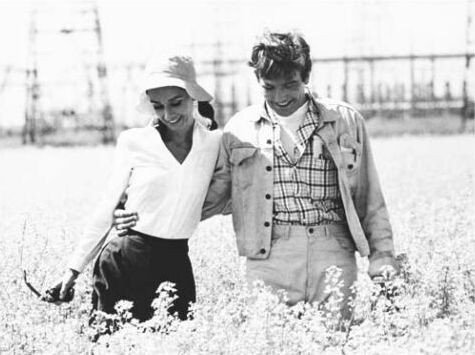
In 1967 he starred opposite Audrey Hepburn in Two for the Road, a bittersweet portrait of a marriage told out of sequence, and the film has only grown in reputation since. With his friend Michael Medwin he formed Memorial Productions, which backed early work by directors like Stephen Frears, Lindsay Anderson and Mike Leigh. Finney directed one film himself, Charlie Bubbles (1968), in which Liza Minnelli made her feature debut.
Then came the disguises. As Ebenezer Scrooge in the musical Scrooge (1970) he sang, scowled and softened his way through Dickens, winning a Golden Globe. As Hercule Poirot in Murder on the Orient Express (1974), buried under padding and a false accent, he earned his second Oscar nomination. He joked afterwards that people assumed he really was three hundred pounds with a French accent, and that the role typecast him for years.
After that he went back to the stage for a long stretch at the National Theatre, playing Hamlet, Macbeth, Tamburlaine and Chekhov. He said film work had stopped him breathing properly, and he wanted to feel part of a company again rather than a visitor dropping in for a few weeks.
Who Was Albert Finney Married To?
Albert Finney was married three times, and each marriage belonged to a different chapter of his life. His first wife was the actress Jane Wenham, whom he married in 1957, when he was just twenty-one and still finding his feet as an actor. Their marriage lasted four years, ending in divorce in 1961, but it gave him the most important relationship of his private life: their son Simon.
His second marriage was to the French actress Anouk Aimée, one of the great screen presences of European cinema. They married in 1970 and divorced eight years later, in 1978, and like much of Finney’s personal life the marriage was conducted away from the gossip columns. Between his second and third marriages he had a long relationship with the actress Diana Quick.
In 2006, at the age of seventy, Finney married Penelope Delmage, a travel agent known to friends as Pene. They stayed together until his death, and friends described those last years as settled and happy ones, spent largely in London.
How Many Children Did Albert Finney Have?
Albert Finney had one child: a son, Simon Finney, born during his first marriage to Jane Wenham. Simon grew up around film sets without ever chasing his father’s kind of fame, and he built a respected career of his own behind the camera as a camera operator, working on major films and television productions.
Finney was famously private about his family, and Simon has kept that same low profile. Friends said father and son stayed close, and that Finney was proud of a son who had made his own way in the same tough industry. Simon survives him, along with his stepmother Pene.
What Are Albert Finney’s Best Movies?
Picking a shortlist from a career this long is almost unfair, but a few films come up in every conversation about him. Saturday Night and Sunday Morning (1960) remains the rawest thing he ever did, a performance of pure working-class energy, while Tom Jones (1963) is the joyful opposite, all appetite and charm. Two for the Road (1967) shows his romantic side at its most grown-up, and Murder on the Orient Express (1974) shows his gift for total transformation.
The 1980s gave him two of his finest dramatic roles. In The Dresser (1983), opposite Tom Courtenay, he played Sir, an ageing actor-manager staggering through King Lear, and earned his third Oscar nomination. In Under the Volcano (1984), directed by John Huston, he played Geoffrey Firmin, a British consul drinking himself to death in Mexico, and earned his fourth.
Later audiences will know him best from a different kind of film altogether. In Erin Brockovich (2000) he played Ed Masry, the rumpled California lawyer who backed Julia Roberts’s clerk, and the warmth between them carried the film. In Big Fish (2003) he played the older Edward Bloom, a man whose tall tales might just be true, and in Skyfall (2012), his final film, he played Kincade, the gamekeeper who helps defend Bond’s childhood home.
He belonged to a generation of British actors who remade screen acting in the 1960s, and his career ran alongside contemporaries like Michael Caine, Richard Harris and Gene Hackman.

What Awards Did Albert Finney Win?
Finney was nominated for the Academy Award five times and never won, a fact that has become part of his legend rather than a footnote to it. His nominations were for Best Actor in Tom Jones (1963), Murder on the Orient Express (1974), The Dresser (1983) and Under the Volcano (1984), and for Best Supporting Actor in Erin Brockovich (2000). He also earned two Tony nominations and an Olivier Award for Orphans in 1986.
What he did win was substantial. He took a Golden Globe for Scrooge, a BAFTA Fellowship in 2001, and an Emmy and a Golden Globe for playing Winston Churchill in The Gathering Storm (2002). He won two Screen Actors Guild Awards and the Silver Bear at Berlin for The Dresser.
He also said no to honours most actors would have treasured. He declined a CBE in 1980 and a knighthood in 2000, saying such titles perpetuated snobbery. It was not a stunt. Friends said he genuinely believed that actors should be misters together, and that a title would have put a distance between him and the audiences he had spent his life trying to reach.
What Was Albert Finney’s Net Worth?
Albert Finney’s net worth at the time of his death in 2019 is most commonly put at about $10 million, according to Celebrity Net Worth. That figure is an estimate, not a confirmed accounting of his estate, and it should be read that way: Finney never published his finances, and no official probate figure has been widely reported. Other online estimates have ranged higher, but the $10 million figure is the one most consistently cited, and it is the only one this article relies on.
It is worth putting that number in context. Finney was never a blockbuster salary star in the modern sense. His best early payday came from Tom Jones itself, where he took ten percent of the film’s earnings instead of a large flat fee, a deal that made him more than $1 million at a time when that was a fortune. Later he earned a reported $1 million for Annie (1982), and steady fees for decades of stage and screen work.
He also lived without extravagance. He stayed in London rather than buying into the Hollywood lifestyle, and he worked because he loved the work rather than because he needed the money. A fortune of around $10 million, built slowly over sixty years, fits that life exactly: comfortable, but never the point of it.
What Happened in Albert Finney’s Later Career?
Finney’s final act was one of the happiest surprises in modern film. After a quieter stretch in the 1990s, during which he did fine television work including Dennis Potter’s last plays Karaoke and Cold Lazarus, he came roaring back as a character actor in his sixties and seventies. Erin Brockovich gave him his fifth Oscar nomination, Big Fish gave him one of his most loved roles, and The Bourne Ultimatum (2007) showed he could still dominate a scene with a look.
His very last film role was Kincade in Skyfall, and it was a perfect farewell, even if nobody knew it at the time. He is the old retainer waiting at the end of the road, shotgun in hand, unimpressed by spies and gadgets alike, and his dry reply to Bond carries sixty years of stagecraft in a single line. He retired from acting after that film, his last stage appearance having come in 1997 in Yasmina Reza’s Art.
Away from the screen he remained a devoted Manchester United supporter, and in 2008 he narrated Munich, a documentary about the air crash that killed most of the Busby Babes in 1958, for the club’s television channel.
How Did Albert Finney Die?
In May 2011, Finney disclosed that he had been receiving treatment for kidney cancer. A year later he explained that he had actually been diagnosed five years earlier, had undergone surgery, and had been through six rounds of chemotherapy. He spoke about it plainly, without self-pity, and then got on with his life.
He died of a chest infection at the Royal Marsden Hospital in London on 7 February 2019, at the age of eighty-two, with those closest to him by his side. The tribute that stuck came from his old friend Tom Courtenay, who said Finney did not need any tricks as an actor: he just came on with a bit of sunshine.
Lesser-Known Facts About Albert Finney
- He turned down the title role in Lawrence of Arabia rather than sign a multi-year contract, one of the most famous refusals in film history.
- At the height of his Tom Jones fame, he took a year off to sail around the world instead of cashing in on his success.
- He took ten percent of Tom Jones’s earnings rather than a big salary, a gamble that made him more than $1 million.
- He declined both a CBE and a knighthood, saying honours perpetuated snobbery.
- He directed one feature film, Charlie Bubbles (1968), and called it the most intense creative experience of his life.
- He released an album through Motown in the 1970s, a side of his career few fans know about.
- He was the voice of Finis Everglot in Tim Burton’s Corpse Bride (2005), still working in animation in his late sixties.
- He was a lifelong Manchester United fan and narrated a documentary about the 1958 Munich air disaster.
- His stage career ran from Shakespeare at Stratford in the 1950s to Yasmina Reza’s Art in 1997, a span of more than forty years.
Frequently Asked Questions About Albert Finney
How old was Albert Finney when he died?
Albert Finney was eighty-two when he died on 7 February 2019. He had been born on 9 May 1936 in Salford, England, so he was just a few months short of his eighty-third birthday.
Was Albert Finney married?
Yes, Albert Finney was married three times. His wives were Jane Wenham (1957–1961), Anouk Aimée (1970–1978) and Penelope Delmage, whom he married in 2006 and who remained his wife until his death in 2019.
Did Albert Finney have children?
Albert Finney had one child, a son named Simon Finney, from his first marriage to Jane Wenham. Simon works in the film industry as a camera operator.
What was Albert Finney’s net worth?
According to Celebrity Net Worth, Albert Finney had a net worth of about $10 million at the time of his death in 2019. The figure is an estimate, as Finney never publicly disclosed his finances.
What was Albert Finney’s most famous movie?
Most people would name Tom Jones (1963), which won Best Picture and earned Finney his first Oscar nomination. Saturday Night and Sunday Morning (1960), Murder on the Orient Express (1974) and Erin Brockovich (2000) are the other titles that come up most often.
Did Albert Finney ever win an Oscar?
No, Albert Finney never won an Academy Award, despite five nominations across four decades. He did win an Emmy, a Golden Globe, a BAFTA Fellowship and an Olivier Award, among many other honours.
What was Albert Finney’s last movie?
Albert Finney’s final film was Skyfall (2012), in which he played Kincade, the gamekeeper at Bond’s childhood home in Scotland. He retired from screen acting after that film.
Why did Albert Finney refuse a knighthood?
Finney declined a CBE in 1980 and a knighthood in 2000 because he believed such honours perpetuated snobbery. He said he thought actors should all be misters together, without titles setting them apart.