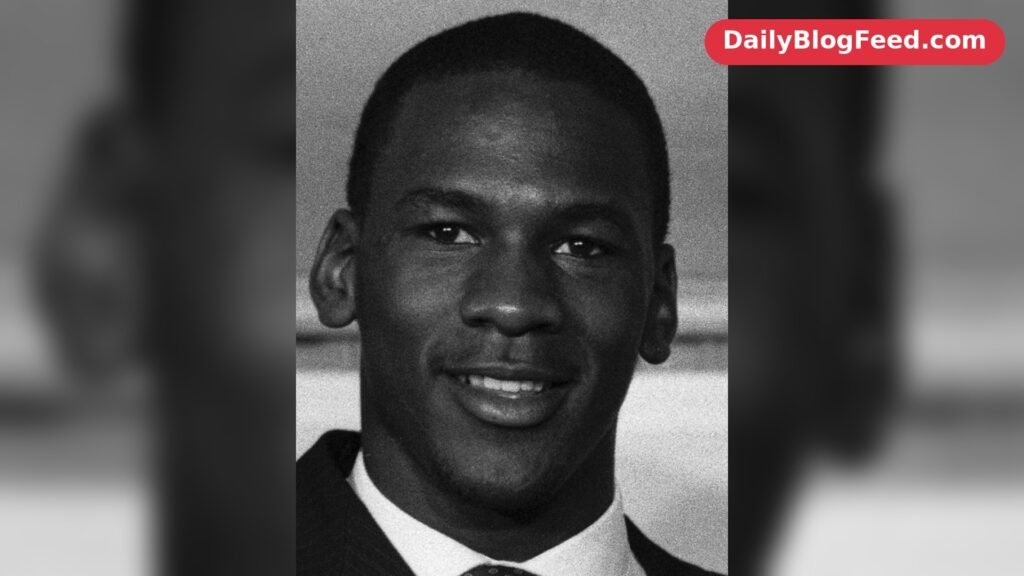

Michael Jordan did not just play basketball. He changed what basketball meant to the rest of the world. Before him, the NBA was a popular American league. After him, it was a global brand, and his name — and his silhouette, mid-air, legs spread — was recognizable on playgrounds from Chicago to Shanghai.
He was also, by almost every account, the most competitive athlete of his generation. Teammates tell stories of practice sessions that felt like finals, of card games that turned into grudge matches, of a man who simply refused to lose at anything. That intensity produced six championships, five MVP awards, and a cultural footprint no other basketball player has matched.
This profile sticks to the verified facts: his North Carolina childhood, his Bulls dynasty, his baseball detour, his business empire, and his family life. Where wealth estimates conflict, the reporting source is named.
Quick Facts
| Fact | Detail |
|---|---|
| Full name | Michael Jeffrey Jordan |
| Born | 17 February 1963, Brooklyn, New York |
| Age | 63 in 2026 |
| First wife | Juanita Vanoy (married 1989, divorced 2006) |
| Second wife | Yvette Prieto (married 2013) |
| Children | Jeffrey, Marcus, Jasmine, Victoria, Ysabel |
| NBA titles | 6 with the Chicago Bulls (1991–1993, 1996–1998) |
| League MVP awards | 5 |
| Brand | Air Jordan line with Nike |
| Team ownership | Owned Charlotte Hornets; sold majority stake in 2023 |
Brooklyn Roots, North Carolina Childhood
Jordan was born on 17 February 1963 in Brooklyn, New York, the fourth of five children. His family moved to Wilmington, North Carolina, when he was young, and it was there that his competitive streak first took shape. His father worked as a supervisor at a General Electric plant, and his mother worked in banking; both emphasized discipline and hard work at home.
By his senior year, he was one of the most sought-after high school players in America. He chose the University of North Carolina, where coach Dean Smith ran a disciplined, team-first program that would shape Jordan’s understanding of the game — even if it sometimes frustrated a scorer of his talent.
The Shot at North Carolina
Jordan’s college career lasted three seasons, from 1981 to 1984, and it ended with one of the most famous shots in American sports. As a freshman in the 1982 NCAA championship game against Georgetown, Jordan hit the game-winning jump shot with seconds remaining, giving North Carolina the title. He was just nineteen, and the shot announced him to a national audience.
Jordan’s early NBA years were dazzling but frustrating. He won Rookie of the Year in 1985 and scored at a rate few players had ever managed, including a 63-point playoff game against the Boston Celtics in 1986 that prompted Larry Bird to call him “God disguised as Michael Jordan.” But the Bulls could not get past the Detroit Pistons, whose physical “Bad Boys” defense was designed specifically to stop him.
The First Three-Peat
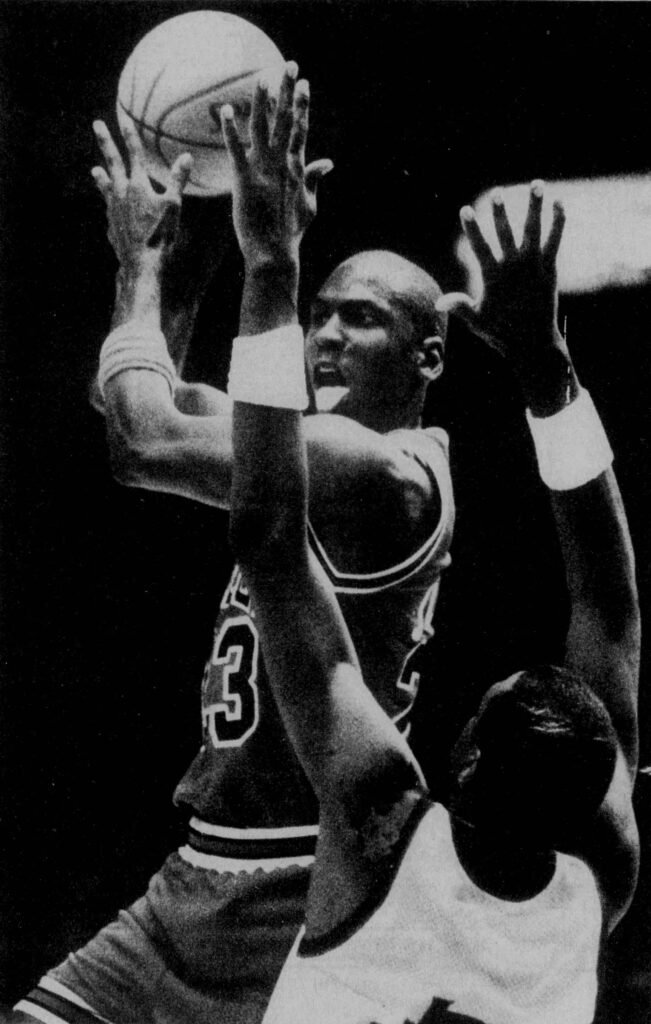
Everything changed when Phil Jackson became head coach and installed the triangle offense, a system that demanded ball movement and trust in teammates. With Scottie Pippen developing into an elite second star and Horace Grant providing interior toughness, the Bulls finally broke through.
Chicago beat the Los Angeles Lakers in the 1991 NBA Finals, giving Jordan his first championship and his first Finals MVP award. The Bulls then beat Portland in 1992 and Phoenix in 1993, completing a three-peat. Jordan was Finals MVP in all three series, and he had established himself as the league’s defining player.
That era — the early 1990s, when one figure dominated his field so completely — has parallels beyond sport. In Hollywood, for instance, Harrison Ford ruled the box office through the same decade while Jordan ruled the NBA, and both men became shorthand for an entire era of popular culture.
Baseball, Tragedy, and a Return
In October 1993, Jordan stunned the sports world by announcing his retirement from basketball at thirty. The decision followed the murder of his father, James Jordan, earlier that year — a personal tragedy that deeply affected him. Jordan later said he had lost the desire to play and wanted to honor his father’s dream of seeing him play baseball.
He signed a minor league baseball contract with the Chicago White Sox organization and played the 1994 season for the Birmingham Barons, a Double-A team. His baseball numbers were modest — he batted .202 — but his work ethic impressed teammates, and he drew enormous crowds to minor league parks. He also played in the Arizona Fall League that autumn.
By March 1995, Jordan was back. His comeback announcement consisted of two words faxed to the media: “I’m back.” The Bulls, though rusty, made the playoffs that spring but lost to Orlando. The following season, however, would become the greatest regular season in NBA history to that point.
The Second Three-Peat
The 1995–96 Chicago Bulls won 72 regular-season games, a record that stood for twenty years. With Dennis Rodman added to the roster alongside Jordan and Pippen, the team combined defensive ferocity with offensive precision. They beat Seattle in the Finals, and Jordan — who had lost his father three years earlier — wept on the locker room floor clutching the championship ball on Father’s Day.
That 1997–98 season, documented in the series “The Last Dance,” was the end of the dynasty. Jackson left, Pippen was traded, Rodman departed, and Jordan retired for a second time in January 1999. He had won six championships in eight years, with two retirements in between, and had been Finals MVP every single time.
Washington and the Final Chapter
Jordan returned once more in 2001, this time as a player for the Washington Wizards, where he also held a front-office role. He was thirty-eight, playing for a struggling team, and the results were mixed. He still scored 20-plus points per game and played all 82 games in his second Washington season, but the Wizards missed the playoffs both years.
He retired for the final time in April 2003, aged forty, after a farewell tour in which opposing crowds gave him standing ovations. His final game, fittingly, was in Philadelphia, where fans chanted his name. Across his NBA career, he averaged 30.1 points per game — the highest career scoring average in league history.
Jordan’s later playing years also revealed a different side of his intensity. Teammates from Washington have described a man who still practiced with the ferocity of a rookie, even when his body could no longer do everything his mind demanded. That perfectionism is a trait he shares with other famously exacting performers, such as Robert De Niro, whose intensity and perfectionism in preparation have become legendary in film, much as Jordan’s were in basketball.
Air Jordan and the Business Empire
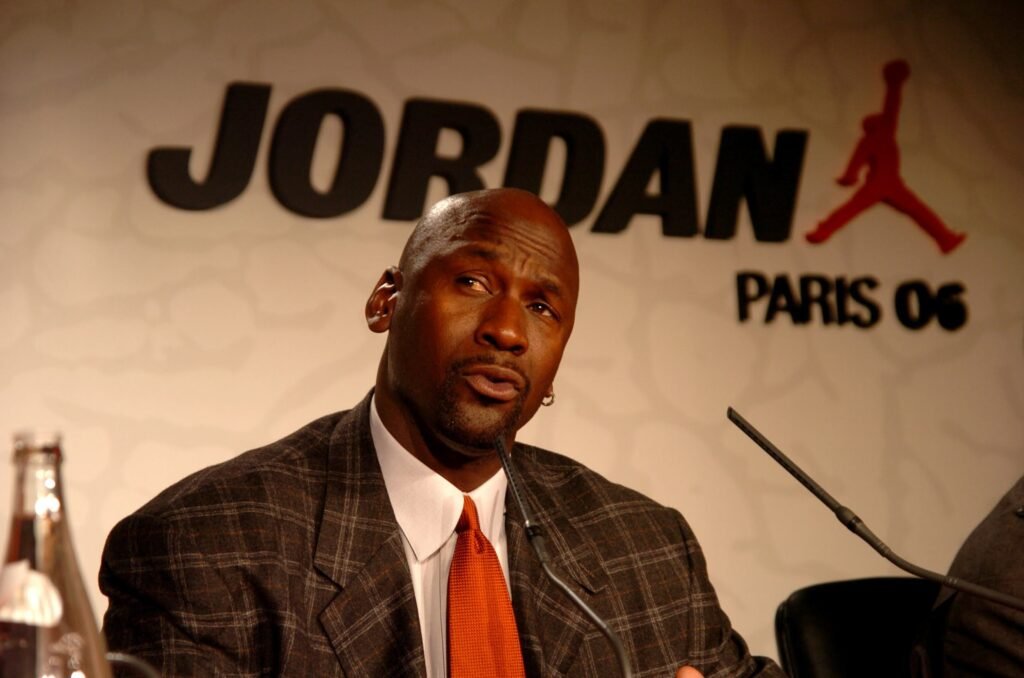
Jordan’s business legacy may ultimately rival his playing legacy. In 1984, Nike signed him to an endorsement deal and created the Air Jordan line, originally designed for him alone. The first Air Jordan shoe was banned by the NBA for violating uniform rules — Nike paid the fines and turned the ban into marketing gold. The shoes became a cultural phenomenon.
Over the decades, the Jordan Brand grew into a multi-billion-dollar subsidiary of Nike, selling shoes and apparel worldwide. Jordan’s deal, unusually for its time, gave him a percentage of sales rather than a flat fee, a structure that has paid him enormously as the brand expanded. Young fans who never saw him play now wear his shoes, a sign of how completely the brand outgrew the man.
Owning a Team
In 2010, Jordan became the majority owner of the Charlotte Bobcats, later renamed the Hornets, making him the first former NBA player to become majority owner of a league franchise. It was a historic milestone, and Jordan spoke about wanting to build a winning culture in North Carolina, the state where he had become a star.
In 2023, Jordan sold his majority stake in the Hornets for a reported $3 billion valuation, retaining a minority stake. The sale crystallized an enormous profit on his original investment and marked the end of his tenure as a majority owner, though he remains involved in basketball through his brand and other ventures.
Family Life
Jordan married Juanita Vanoy in 1989. The couple had three children together: Jeffrey, born in 1988; Marcus, born in 1990; and Jasmine, born in 1992. Their marriage ended in divorce in 2006, in what was reported at the time as one of the most expensive celebrity divorce settlements in history, though the exact terms were not publicly disclosed.
In 2013, Jordan married Yvette Prieto, a Cuban-American former model, in a lavish ceremony in Palm Beach, Florida. The couple welcomed twin daughters, Victoria and Ysabel, in February 2014. Jordan has generally kept his younger children out of the spotlight, while his older sons have pursued basketball and business careers of their own.
There is something about Jordan’s cool, era-defining presence that transcends basketball itself. In that sense, he belongs in the same conversation as Steve McQueen, a cool, era-defining icon whose image still defines an entire period, just as Jordan’s still defines the 1990s.
Net Worth
Jordan’s net worth is among the highest of any athlete in history, and — unusually — most of it was earned after his playing career ended. Forbes has reported his net worth at approximately $3.5 billion as of recent estimates, following the 2023 sale of his majority stake in the Charlotte Hornets. That figure made him, according to Forbes, the first professional athlete to rank among America’s wealthiest people on its Forbes 400 list.
Other outlets have reported slightly different totals, and the precise number moves with the valuation of his Jordan Brand royalties, his minority stake in the Hornets, and his other investments. Celebrity Net Worth, for example, has published figures in a similar multi-billion-dollar range, though its methodology differs from Forbes. The direction of travel, however, is consistent across sources: Jordan’s wealth grew dramatically after retirement, driven overwhelmingly by the Jordan Brand.
His playing salary, by contrast, was modest by modern standards. His largest single-season NBA salary was about $33 million in 1997–98, but for most of his career he earned far less than today’s stars. The bulk of his fortune comes from Nike royalties, the Hornets sale, and endorsement and investment income accumulated over three decades.
Lesser-Known Facts
- Jordan was cut from his high school varsity team as a sophomore — not, as is sometimes claimed, from basketball entirely. He played junior varsity that year, grew several inches, and made varsity the next season.
- His famous number 23 was chosen partly because his brother Larry wore 45, and Jordan reasoned that he wanted to be at least half as good as his brother — so he picked 23, roughly half of 45.
- Jordan once scored 63 points in a playoff game against Boston in 1986, still an NBA playoff record, in a game the Bulls actually lost in double overtime.
- He has a well-documented love of golf and has said that his competitive drive transferred almost entirely to the golf course after basketball.
- Jordan’s “Flu Game” in 1997 may not have been the flu at all: later accounts, including from his trainer, suggested food poisoning from a late-night pizza delivery in Utah.
- He appeared as himself in the 1996 film “Space Jam,” which grossed more than $230 million worldwide and introduced him to a generation of children who had never watched an NBA game.
- Jordan briefly owned a motorcycle racing team and has been involved in motorsport, fishing tournaments, and restaurant ventures alongside his basketball business interests.
Frequently Asked Questions
How old is Michael Jordan?
Jordan was born on 17 February 1963 in Brooklyn, New York, which makes him 63 years old in 2026. He was drafted by the Chicago Bulls in 1984, won his first championship in 1991, and played his final NBA game in April 2003, aged forty.
Who is Michael Jordan’s wife?
Jordan is married to Yvette Prieto, whom he wed in 2013 in Palm Beach, Florida. The couple have twin daughters, Victoria and Ysabel, born in 2014. Jordan was previously married to Juanita Vanoy from 1989 to 2006, with whom he has three children: Jeffrey, Marcus, and Jasmine.
What is Michael Jordan’s net worth?
Forbes has reported Jordan’s net worth at approximately $3.5 billion, following his 2023 sale of a majority stake in the Charlotte Hornets. Other outlets report figures in a similar multi-billion-dollar range. Most of his wealth comes from Jordan Brand royalties and the Hornets sale, rather than his NBA playing salary.
How many championships did Michael Jordan win?
Jordan won six NBA championships, all with the Chicago Bulls: in 1991, 1992, and 1993, and again in 1996, 1997, and 1998. He was named Finals MVP in all six series, and he never lost an NBA Finals. He also won five regular-season MVP awards during his career.
Why did Michael Jordan retire in 1993?
Jordan retired in October 1993 following the murder of his father earlier that year and, by his own account, a loss of desire to play basketball. He then pursued professional baseball, playing minor league ball in 1994, before returning to the Bulls in March 1995 with his famous two-word announcement: “I’m back.”
What is the Air Jordan brand?
Air Jordan is a line of basketball shoes and apparel created by Nike for Michael Jordan, beginning in 1984. The brand grew into a multi-billion-dollar Nike subsidiary, with Jordan earning a percentage of sales. Its shoes remain among the most popular sneakers in the world, decades after Jordan’s retirement.
Conclusion
Michael Jordan’s story is about more than points and championships, though the numbers alone would secure his legacy. It is about a player who turned competitiveness into an art form, who made basketball a global spectacle, and who built a business empire that outlasted his playing days by decades.
Six titles, five MVPs, and a brand that still dominates sneaker culture — few athletes in any sport can match that combination. Jordan did not just dominate the 1990s. In many ways, he defined them, and his influence is still visible every time a young player pulls on a pair of Air Jordans and heads for the court.