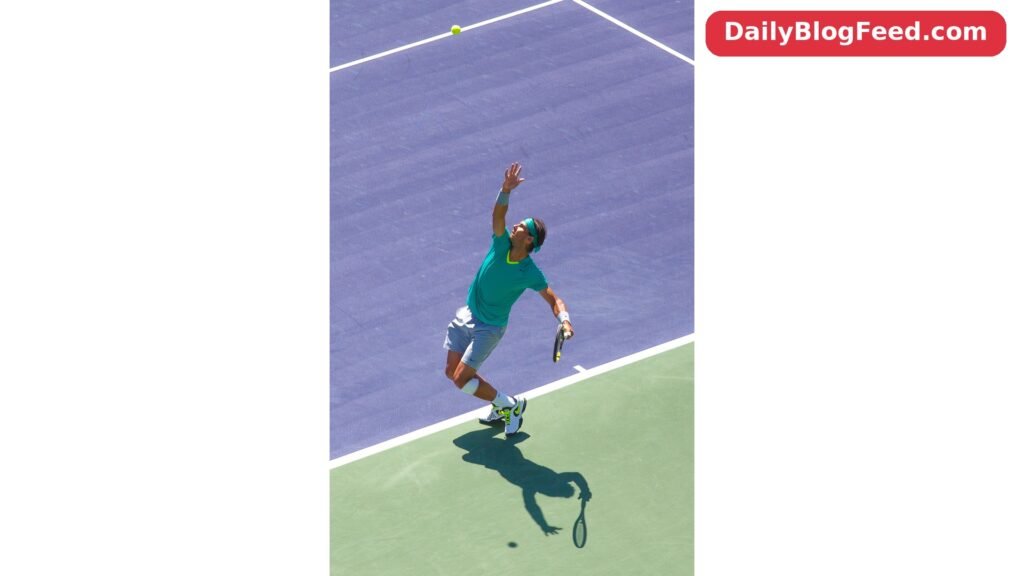

Rafael Nadal did not just win tennis matches. He changed what people expected from effort on a tennis court. Every point looked like a contest of will, every rally stretched a little longer than seemed reasonable, and every comeback carried the same message: he was not finished yet.
That style made him beloved, especially on clay, where his heavy topspin and relentless movement turned long matches into tests of endurance. It also made his career unusually physical. Injuries interrupted him again and again, and each time the question was whether his body would allow one more return.
By October 2026, the playing career was over, but the story was not. Nadal had moved into family life, coaching, and business in Mallorca, the island where it all began. This profile covers his age, wife, career, retirement, and wealth, based on documented reporting rather than guesswork.
Quick Facts
| Detail | Information |
|---|---|
| Full name | Rafael Nadal Parera |
| Born | 3 June 1986, Manacor, Mallorca, Spain |
| Age | 40 in October 2026 |
| Height | 6 feet 1 inch (185 cm) |
| Plays | Left-handed, two-handed backhand |
| Turned professional | 2001 |
| Retired | 19 November 2024 |
| Wife | Maria Francisca Perelló, married October 2019 |
| Children | Two sons |
| Grand Slam singles titles | 22 |
| French Open titles | 14, a record |
| Career prize money | More than $134 million |
Growing Up in Manacor, Mallorca
Nadal was born on 3 June 1986 in Manacor, a town on the Spanish island of Mallorca. His father, Sebastián Nadal, ran businesses including a restaurant and, later, other ventures, while his mother, Ana María Parera, worked in a perfumery business. Sport was part of family life from the start.
His uncle Toni Nadal became his coach and a central influence on his game. Toni emphasized discipline, humility, and hard work, and he famously made young Rafael train with old or imperfect equipment so he would not blame his tools. Another uncle, Miguel Ángel Nadal, had been a professional footballer, so elite sport was not an abstract idea in the family.
Nadal played football as a boy as well as tennis, and he was reportedly good enough that a choice had to be made. Tennis won, and the decision shaped the next two decades of Spanish sport. He turned professional in 2001, still a teenager, and began climbing the rankings with a game built on speed, spin, and stamina.
The King of Clay Takes Over
Nadal won his first French Open in 2005, at the age of 19, beating Mariano Puerta in the final. It was the start of one of the most dominant runs in the history of any sport at a single event. He would go on to win the French Open 14 times, a record that stands far above the next best totals at Roland Garros.
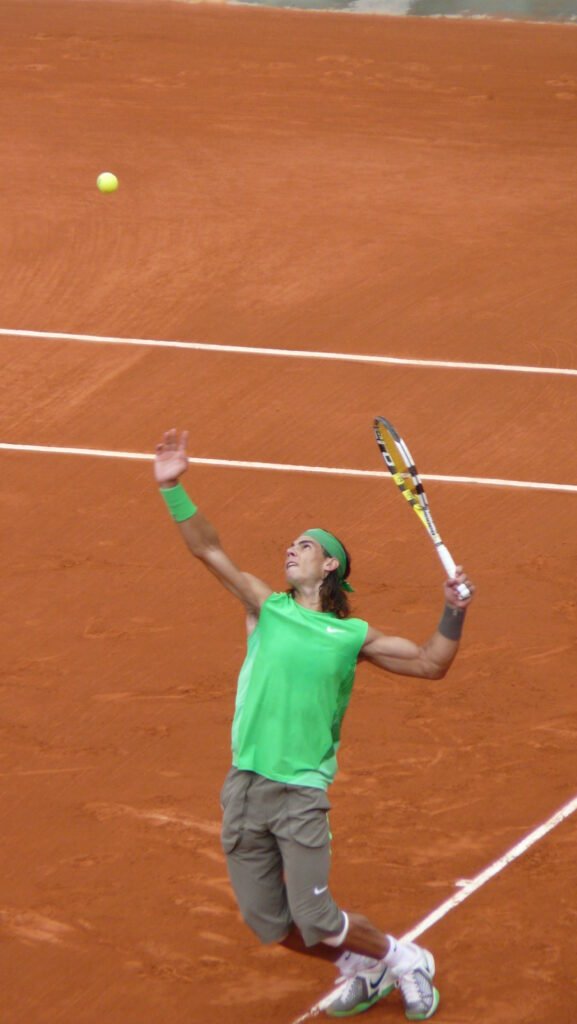
His clay-court dominance was not just about one tournament. At his peak, he won 81 consecutive matches on clay, a streak that stretched from 2005 to 2007. Opponents knew his patterns, knew where the ball would bounce, and still struggled to stop him. His forehand, loaded with topspin, pushed rivals far behind the baseline and opened the court for winners.
Yet Nadal was never only a clay-court player. He won the Australian Open in 2009 and again in 2022, Wimbledon in 2008 and 2010, and the US Open four times, in 2010, 2013, 2017, and 2019. That spread gave him 22 Grand Slam singles titles in total, and completed a Career Grand Slam, winning each major at least once.
His 2008 Wimbledon final against Roger Federer is still widely described as one of the greatest matches ever played. Played in fading light, it lasted nearly five hours and ended with Nadal winning in five sets. That match, more than any statistic, captured his reputation for refusing to lose a point he could still chase.
Rivalries, Injuries, and Repeated Comebacks
Nadal’s career cannot be told without Federer and Novak Djokovic. The three men pushed each other to higher standards for nearly two decades, and their matches became the sport’s main attraction. Nadal’s head-to-head battles with Federer, especially on clay and grass, and his long rivalry with Djokovic, defined an era fans now call a golden age.
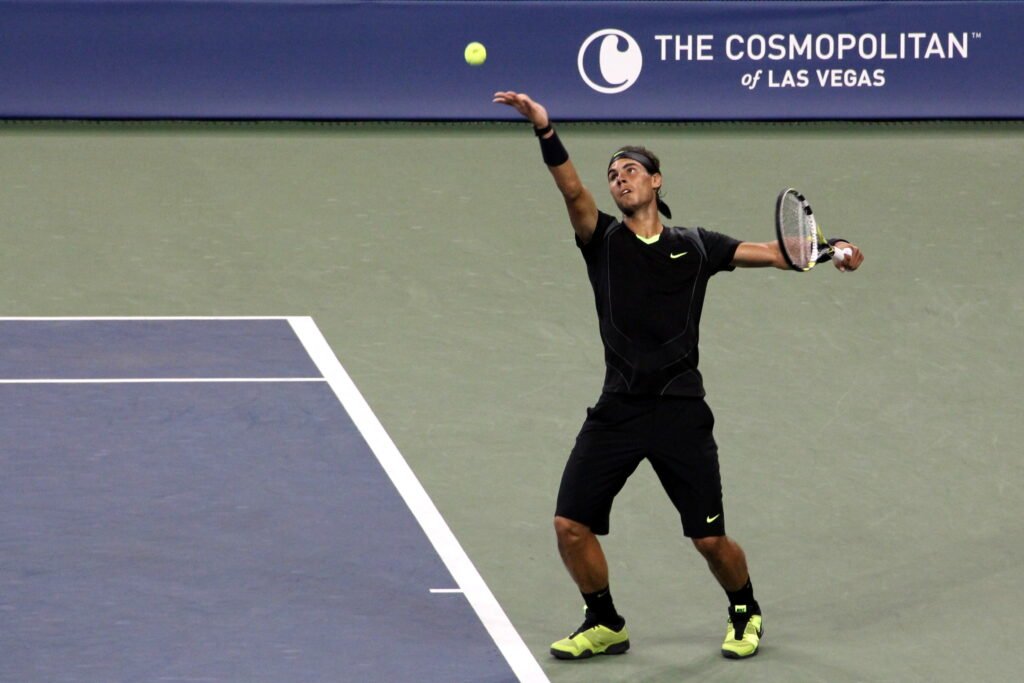
Injuries were the other constant. Nadal dealt with knee problems, wrist trouble, and a chronic foot condition known as Müller-Weiss syndrome, which affects a bone in the foot and caused him long periods of pain. He missed major tournaments, withdrew from events he wanted to win, and repeatedly rebuilt his fitness from a low base.
His comebacks became part of his legend. After long absences, he returned to win major titles, including the Australian Open in 2022 after a foot injury had limited him severely in 2021. That victory, won from two sets down in the final against Daniil Medvedev, was one of the most emotional wins of his later career.
He also represented Spain with distinction. He won Olympic singles gold in Beijing in 2008 and Olympic doubles gold in Rio de Janeiro in 2016, and he helped Spain win the Davis Cup five times, in 2004, 2008, 2009, 2011, and 2019. Those team achievements mattered deeply to him, and they explain why his farewell came in a team event.
Maria Francisca Perelló and Family Life in Mallorca
Nadal married his longtime partner, Maria Francisca Perelló, known as Mery, in October 2019. The couple had been together since 2005, having met through mutual connections in Mallorca, and their wedding at La Fortaleza castle in Mallorca was a private ceremony with close family and friends.
Perelló has worked with the Rafa Nadal Foundation, which supports education and sport programmes for young people, and she has generally kept a low public profile. Nadal has often credited her steady support during a career defined by travel, pressure, and injury rehabilitation.
The couple have two sons. Their first son, Rafael Jr., was born in October 2022, and reporting in 2025 described the arrival of a second son. Nadal and Perelló have kept their children largely out of public view, in keeping with a family approach that values privacy in Mallorca over celebrity exposure.
That grounded, home-centered life has a parallel in the career of Sean Connery, who remained closely identified with his Scottish roots even after becoming a global film star. Nadal, similarly, built his training base and academy in Mallorca rather than relocating permanently to a larger tennis centre. Home was not a retreat from ambition; it was the base for it.
Retirement: The Davis Cup Farewell in November 2024
Nadal announced during 2024 that the season would be his last as a professional. His final event was the Davis Cup Finals in Málaga in November 2024, where he played for Spain. His last professional singles match came on 19 November 2024, when he lost to Botic van de Zandschulp of the Netherlands, and Spain were then eliminated from the competition.
The farewell was emotional rather than triumphant, which suited the occasion. Teammates, rivals, and fans paid tribute to a career that had lasted more than two decades. Nadal spoke about gratitude, his family, and the difficulty of leaving a sport that had shaped his entire adult life.
He has not returned to professional competition since that Davis Cup tie. This profile therefore makes no claim about matches in 2025 or 2026, because none are documented as professional singles matches. His post-retirement work has been in coaching, his academy, business, and foundation activities, not on the ATP Tour.
The Academy, Business, and Life After Tennis
The Rafa Nadal Academy, based in Manacor, Mallorca, is now the center of his post-playing life. It combines tennis training with education and values-based coaching, and it attracts young players from around the world. Nadal is closely involved in its philosophy, which reflects the discipline his uncle Toni taught him as a boy.
He has also built business interests beyond tennis. These include hotel ventures, notably the ZEL hotel brand developed with Meliá Hotels International, restaurant investments such as Tatel, and long-standing endorsement partnerships with brands including Nike, Babolat, and Kia. His foundation work continues alongside those ventures.
That combination of sport, charity, and public responsibility recalls Gregory Peck, an actor widely admired for roles built on integrity and for humanitarian work away from the screen. Nadal’s academy and foundation give his post-tennis years a clear purpose in a similar spirit, turning reputation into something useful for others.
His durability also invites a comparison with Steve McQueen, whose screen reputation was built on toughness, physical commitment, and a refusal to look comfortable. Nadal’s tennis had a similar quality: opponents knew they would have to earn every point, and audiences respected him for that honesty of effort, win or lose.
How Much Is Rafael Nadal Worth?
Nadal’s career prize money alone was more than $134 million, the second-highest total in men’s tennis history at the time of his retirement. That figure is documented by the ATP and is not an estimate. It covers only tournament winnings, not endorsements or business income.
For his total net worth, published estimates in 2025 and 2026 have generally placed him at around $220 million, with some outlets giving a range up to about $250 million. Those figures combine prize money, endorsements, and business interests, and they should be read as estimates, not audited totals.
The range matters because different outlets count business stakes differently. What is consistent across reporting is the shape of his wealth: a huge playing fortune, long-term endorsement deals, and a growing portfolio of academy, hotel, and restaurant interests after retirement.
Lesser-Known Facts About Rafael Nadal
- He is naturally right-handed in everyday life, but he plays tennis left-handed.
- He won five Davis Cup titles with Spain across 15 years, from 2004 to 2019.
- He held the world No. 1 ranking for a total of 209 weeks.
- He won 36 ATP Masters 1000 titles during his career.
- His career singles record was 1,080 wins against 228 defeats.
- He completed the Career Golden Slam, winning all four majors plus Olympic singles gold.
- He was awarded the Legion of Honour, France’s highest order of merit, for his contribution to sport.
Frequently Asked Questions
How old is Rafael Nadal?
Nadal was born on 3 June 1986, so he was 40 years old in October 2026, having turned 40 in June 2026. He retired from professional tennis at 38, in November 2024.
Who is Rafael Nadal’s wife?
His wife is Maria Francisca Perelló, known as Mery. They married in October 2019 in Mallorca after being together since 2005. She has worked with the Rafa Nadal Foundation and keeps a low public profile.
When did Rafael Nadal retire?
He retired from professional tennis on 19 November 2024, after playing his final match for Spain in the Davis Cup Finals in Málaga. He announced during 2024 that it would be his final season.
How many Grand Slam titles did Rafael Nadal win?
He won 22 Grand Slam singles titles: 14 French Opens, two Australian Opens, two Wimbledons, and four US Opens. The 14 French Open titles are a record at a single Grand Slam tournament.
What is Rafael Nadal’s net worth?
Published estimates in 2025 and 2026 generally put his net worth at around $220 million, with some outlets reporting up to about $250 million. His documented career prize money alone exceeded $134 million, with endorsements and business ventures adding to the total.
Does Rafael Nadal still play professional tennis?
No. He has not played professional tennis since his Davis Cup farewell in November 2024. His work since then has focused on his academy in Mallorca, business ventures, and foundation activities.
Conclusion
Rafael Nadal’s legacy is not captured by one number, even a number as large as 22 Grand Slams or 14 French Opens. It is captured by the way he played: full effort on every point, respect for opponents, and a willingness to come back after injuries that would have ended many careers.
His retirement in Málaga closed a remarkable chapter in tennis history. What followed in Mallorca, through his academy and foundation, suggests the next chapter will be quieter but no less serious. For fans, the image that endures is simple: a young man from Manacor who turned hard work into greatness, and never stopped treating the sport with respect.