
Israel–Lebanon Tensions: Is a Full War Now Inevitable?: For decades, Israel and Lebanon exist under the threat of war in their region. However, Israel and Lebanon are neither at war nor after it, yet their borders are always quiet less. Yet in this past period, due to escalated militancy and political statements in addition to regional instability, this situation has again come under global attention given that many people have had to raise such an ultimate question: Can an absolute war between Israel and Lebanon occur?
The way to fully comprehend the extent of the ‘situation’ has been to look past the ‘breaking news’ reports towards the ‘political, military, and regional’ dynamics involved in the tensions.
A Conflict That Never Truly Ended
The Israel-Lebanon conflict traces back many years but one of the most defining moments of the past few years is the conflict in 2006 between Israel and Hezbollah. The conflict led to devastating damage in both countries and produced many security concerns for Israel. The conflict stopped when there was an established ceasefire, but it offered nothing in terms of resolution.
Since then, direct war has been averted on both sides, but its reaction has continued through a series of limited attacks, border flare-ups, and tacit threats. The consequence has so far averted a major conflict but not a real peace.
Why Tensions Are Rising Again
The current escalation has been caused by a number of factors which have interacted with each other. These include: “One major factor has been the instability which has permeated the Middle East.” Conflicts in Gaza, Syria and rising Iran-Israel rivalry have increased pressure throughout the region.
Military activity along the Israel–Lebanon border has also intensified. Drone surveillance, airstrikes and rocket fire though limited signal growing volatility. Political uncertainty on both sides further complicates efforts to contain the situation.
The Central Role of Hezbollah
In any consideration of the tensions existing between Israel and Lebanon, Hezbollah must be mentioned. Although a country in its own right, the presence of Hezbollah is a major part of the armed and political landscape.
Hezbollah claims to be a resistance movement fighting to protect Lebanon. Israel however views it as a serious security threat supported by Iran and armed with advanced weapons. If a full war erupts then it would primarily be fought between Israel and Hezbollah with Lebanon bearing much of the damage.
Israel’s Security Calculations
Historically, Israel’s northern frontier has, without a doubt, represented a highly vulnerable security area for the Israelis. Israeli leaders have repeatedly emphasized that they have neither a desire for conflict with neighboring Lebanon nor a willingness to accept the escalating threat from forces poised so close.
The Israeli approach emphasizes deterrence, sufficient to deter attack but not enough to embark on a larger conflict. Nevertheless, in view of escalated tensions, this becomes a growing challenge.
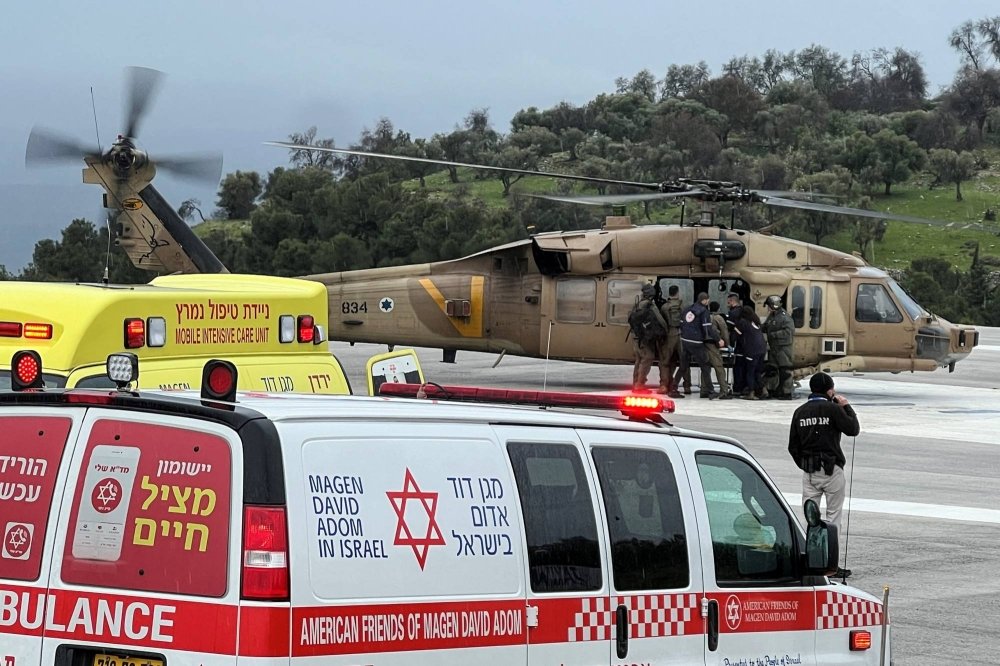
Lebanon’s Fragile Situation
The country of Lebanon is facing an economic and political crisis. It faces problems in the form ofinflation and unemployment and unstable currency. If Lebanon witnesses an entirely different situation whereby an all-out conflict could be seen, then it will lead to the deterioration of infrastructure and displacement.
A number of Lebanese are fearful that they might become victims in a conflict that is a result of struggles for power in the region rather than in Lebanon itself.
Regional and International Influence
The tension there exists between the states of Israel and Lebanon has been driven by regional as well as global powers. Iran’s support of Hezbollah and that of America for Israel are central in the conflict, with other global powers still trying to prevent the escalation of this conflict through the use of diplomatic channels
These external pressures have often helped contain tensions, even during periods of heightened conflict.
Could a Single Incident Trigger War?
One of the most profound risks is that of miscalculation. History is replete with wars that have started unintended. A single deadly incident, mistaken strike, or rapid escalation could push both sides beyond control.
This is why analysts describe the situation as unstable but contained—a balance that could shift suddenly.
Is a Full War Inevitable?
Although there is an escalation of tensions, a full-blown war is still not on the horizon as yet. This is because both nations are aware of the huge cost of war.
However, without the political fix, the threat of war is always there. Indeed, the situation can well be said to border on war, and not on the road to peace.
Conclusion
Israel–Lebanon tensions are serious and growing but full war is not unavoidable. The future requires moderation, diplomacy, and wise decision-making.
The hope for both side’s civilians is stability, not escalation. Whether it is attained or not would be determined by decisions taken when faced with extreme pressures, decisions which might determine the destiny of the regions.