
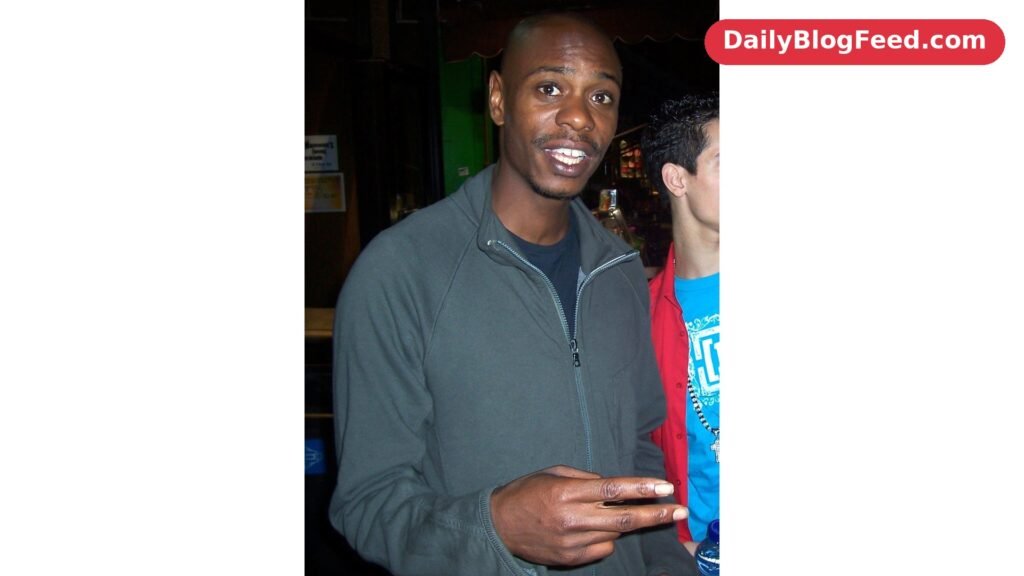

Dave Chappelle is the comedian other comedians study. He can hold a stage for a long time with little more than a stool, a microphone, and a story that seems to wander before it lands exactly where he intended. He can also disappear from that stage for years, turn down an enormous amount of money, and return on his own terms. Few performers have managed both halves of that career with such control.
That control is the thread running through his life. Chappelle became famous young, became more famous still with a sketch show that reshaped American comedy, walked away at the height of its success, and then rebuilt his career through live stand-up and a landmark Netflix deal. Along the way he collected Emmy Awards, Grammy Awards, and the Mark Twain Prize for American Humor, while keeping his family life in Ohio deliberately private.
This profile follows the documented record: his Washington childhood, his early clubs, the rise and sudden end of Chappelle’s Show, the Netflix comeback, his marriage to Elaine, their three children, and a net worth figure that is attributed to its source rather than presented as an exact bank balance.
Quick Facts
| Detail | Information |
|---|---|
| Full name | David Khari Webber Chappelle |
| Born | 24 August 1973, Washington, D.C., United States |
| Age | 53 in August 2026 |
| Height | 6 ft (183 cm) |
| Occupations | Stand-up comedian, actor, writer, producer |
| Spouse | Elaine Mendoza Erfe (married 2001) |
| Children | 3: Sulayman, Ibrahim, and Sanaa |
| Residence | Yellow Springs, Ohio |
| Known for | Chappelle’s Show; Netflix stand-up specials |
| Major honours | Mark Twain Prize for American Humor (2019); multiple Emmy and Grammy Awards |
Why Did Dave Chappelle Walk Away at the Top?
The question has followed Chappelle for twenty years, and it is worth answering first because it explains everything that came after. In 2003, Chappelle’s Show premiered on Comedy Central, co-created by Chappelle and Neal Brennan. It became a cultural phenomenon. Sketches such as the Rick James sketch and the Clayton Bigsby sketch entered everyday language, and the show’s mix of satire, race, politics, and absurdity felt unlike anything else on television.
Then, during production of the third season in 2005, Chappelle left. He walked away from a reported $50 million deal and travelled to South Africa, prompting a wave of speculation. He later explained, in interviews and in his own stand-up, that he was exhausted, uncomfortable with the direction of the work, and troubled by who was laughing and why.
He did not frame it as a single incident. He described a growing sense that the show’s success was pulling him away from the comedian he wanted to be.
That decision cost him in the short term. It also gave him something rare in entertainment: proof that he would not stay for money alone. When he returned to stand-up in earnest in the 2010s, audiences and networks treated him differently.
He was no longer just a television star. He was a comedian who had chosen the stage over a contract, and that reputation has shaped his career ever since.
Growing Up Between Washington and Ohio
David Khari Webber Chappelle was born on 24 August 1973 in Washington, D.C. His father, William David Chappelle III, was a professor and dean of students at Antioch College in Yellow Springs, Ohio. His mother, Yvonne Seon, worked as a professor and university administrator and as a Unitarian Universalist minister, and she had earlier worked for Congolese Prime Minister Patrice Lumumba. Chappelle grew up in Silver Spring, Maryland, in a household where politics, education, and social justice were part of everyday conversation.
That background matters to his comedy. Chappelle’s jokes often begin with history or politics and then turn personal. He learned early that race in America was not an abstract topic, and he learned to talk about it with a mix of anger, curiosity, and humour.
His parents’ world gave him the material. The stage gave him a way to test it.
He attended the Duke Ellington School of the Arts in Washington, D.C., where he studied theatre arts. He began performing stand-up while still a teenager, and his mother sometimes had to accompany him to clubs because he was underage. Those early sets were not always kind. He was famously booed off stage at the Apollo Theater in New York, an experience he has returned to in jokes and interviews as a lesson in persistence rather than a reason to quit.
From Clubs to the Big Screen to Chappelle’s Show
After high school, Chappelle moved to New York City to pursue comedy full time. He built a reputation in clubs, appeared on Def Comedy Jam, and began picking up film roles. His early screen work included Robin Hood: Men in Tights (1993), The Nutty Professor (1996), Con Air (1997), and You’ve Got Mail (1998). His first lead film role came in Half Baked (1998), which he co-wrote with Neal Brennan and which later became a cult favourite.
He also starred in the short-lived ABC comedy series Buddies in 1996. None of those projects, on their own, made him a household name. Together, though, they showed a performer who could move between stand-up, sketch, and film without losing his voice. Like Robin Williams, another comedian who moved between stand-up and screen work while keeping a distinctive stage presence, Chappelle treated live performance as his home base, even when film and television offered larger audiences.
Chappelle’s Show changed the scale of his fame. The series ran from 2003 to 2006, although Chappelle left during the third season, and it remains his most influential television work. Esquire called him the “comic genius of America” in 2006, and in 2013 a Billboard writer called him “the best.” In 2017, Rolling Stone ranked him ninth in its list of the 50 best stand-up comics of all time. Those labels are opinions, but they reflect a broad consensus: Chappelle’s Show did not simply succeed, it altered what sketch comedy could discuss and how directly it could discuss it.
The Netflix Return and a Second Act
Chappelle’s return was gradual rather than sudden. He toured again, performed long sets in clubs and theatres, and rebuilt his relationship with live audiences. In 2016, he signed a deal with Netflix reportedly worth $20 million per special. Under that deal he released six stand-up specials, with further specials following, including The Age of Spin, Deep in the Heart of Texas, Equanimity, Sticks & Stones, and The Closer.
The specials brought awards as well as argument. He won Grammy Awards for Best Comedy Album for The Age of Spin, Equanimity and The Bird Revelation, Sticks & Stones, The Closer, What’s in a Name?, and The Dreamer, according to later tallies, and he won Emmy Awards including two for Outstanding Guest Actor in a Comedy Series for hosting Saturday Night Live in 2016 and 2020. In 2019, the Kennedy Center presented him with the Mark Twain Prize for American Humor, described as America’s highest comedy honour.
Not every special was universally praised, and Chappelle has often courted controversy, particularly around his material on gender and identity. That controversy is part of his recent story, but it has not ended his career. If anything, it has reinforced his image as a comedian who will not soften a joke to keep a deal. Whether audiences agree with him or not, they tend to know where he stands, and that clarity has kept his live shows in demand.
His later film work included a supporting role as Noodles in A Star Is Born (2018), a reminder that he can still act when a role interests him. He has also appeared in Dave Chappelle’s Block Party (2005) and Chi-Raq (2015). Acting, however, has remained secondary to stand-up. The stage is where his reputation was made, lost, and remade, and it remains the centre of his work.
Family Life in Yellow Springs
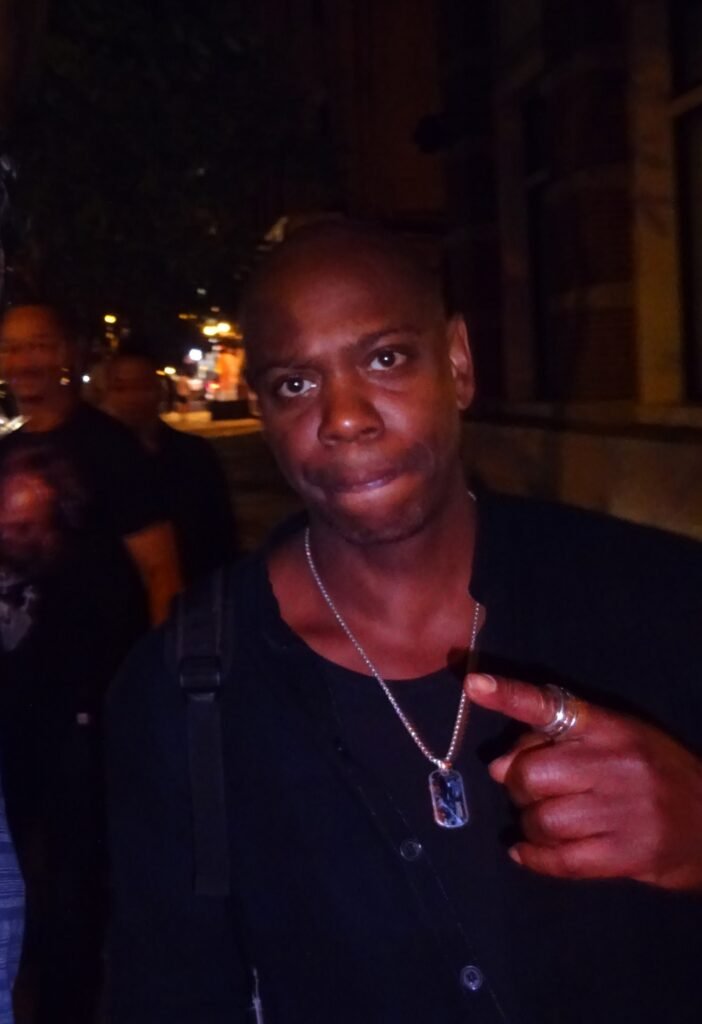
Chappelle married Elaine Mendoza Erfe in 2001. Elaine, who is of Filipino descent and was born in Brooklyn, New York, has stayed largely out of the public eye. The couple have three children: sons Sulayman and Ibrahim, and daughter Sanaa. They live on a farm near Yellow Springs, Ohio, the town where Chappelle’s father worked at Antioch College.
That choice of home is deliberate. Yellow Springs is not a celebrity hub, and Chappelle has spoken about valuing a quieter life for his family away from Los Angeles and New York. Like Steve Martin, a comedian who also stepped back from the most intense periods of fame to protect his private life and pursue other interests, Chappelle has treated privacy as part of his work, not as an escape from it.
He converted to Islam in the late 1990s, a fact he has discussed publicly, and he has kept his children’s lives private. Their names are widely reported, but details about their schooling and daily lives are not, and this profile does not add speculation. What is clear is that his family life is separate from his stage persona.
On stage, he is frank, provocative, and expansive. At home, by his own account and by the absence of publicity around his family, he is deliberately ordinary.
Dave Chappelle’s Net Worth, Attributed
Celebrity Net Worth estimates Dave Chappelle’s net worth at around $70 million, and that figure is widely repeated by other outlets. Some reports put the estimate lower, at around $60 million, which shows why any net worth number should be read as an estimate rather than an audited total. The $70 million figure reflects his Netflix deal, his touring income, his earlier television earnings, and his film work, but it does not come from a published financial statement.
The Netflix deal alone explains much of the total. At a reported $20 million per special, a multi-special agreement represents a very large share of a comedian’s lifetime earnings. Touring, where Chappelle can sell out large venues and long residencies, adds a second major stream. His decision to walk away from the reported $50 million Chappelle’s Show deal in 2005 makes the later total more striking: he turned down a fortune, rebuilt his career, and then earned a comparable fortune on different terms.
Readers should therefore treat the net worth as a reported estimate, not a fact. What is not in doubt is that Chappelle is among the highest-paid stand-up comedians of his generation, and that his earnings now come primarily from live performance and streaming specials rather than from a weekly television series.
Lesser-Known Facts About Dave Chappelle
- He was booed off stage at the Apollo Theater early in his career, an experience he later turned into material about persistence.
- His mother sometimes accompanied him to comedy clubs when he was underage, because venues would not admit him alone.
- He co-wrote Half Baked (1998) with Neal Brennan, his later collaborator on Chappelle’s Show.
- His great-grandfather, Bishop William D. Chappelle, was a prominent figure in the African Methodist Episcopal Church and an educator.
- He has hosted Saturday Night Live multiple times, including after major United States elections, winning Emmys for his 2016 and 2020 appearances.
- He lives on a farm in Ohio and has spoken about farming and a quieter rural life as a counterweight to touring.
- He received the Mark Twain Prize for American Humor in 2019, joining a list of recipients that spans generations of American comedy.
- Like Robert De Niro, whose career has also spanned decades and crossed between very different kinds of projects, Chappelle has sustained his relevance by returning to live performance rather than relying on one hit.
Frequently Asked Questions
How old is Dave Chappelle?
Dave Chappelle was born on 24 August 1973, which made him 53 years old in August 2026. He began performing stand-up as a teenager and moved to New York City after high school to pursue comedy full time.
Who is Dave Chappelle’s wife?
Dave Chappelle’s wife is Elaine Mendoza Erfe, whom he married in 2001. Elaine is of Filipino descent, was born in Brooklyn, New York, and has largely stayed out of the public eye while raising their family in Ohio.
How many children does Dave Chappelle have?
Dave Chappelle has three children: sons Sulayman and Ibrahim, and daughter Sanaa. The family lives near Yellow Springs, Ohio, and Chappelle has kept his children’s private lives out of publicity.
Why did Dave Chappelle leave Chappelle’s Show?
Dave Chappelle left Chappelle’s Show during production of its third season in 2005, walking away from a reported $50 million deal. He later described exhaustion and discomfort with the direction of the work and with how the material was being received, and he chose to return to live stand-up rather than continue the series.
What is Dave Chappelle’s net worth?
Celebrity Net Worth estimates Dave Chappelle’s net worth at around $70 million, although some outlets report a lower figure of around $60 million. The estimate reflects his Netflix specials, touring, and earlier television and film work, but it is an estimate, not an audited financial statement.
What awards has Dave Chappelle won?
Dave Chappelle has won multiple Emmy Awards and Grammy Awards, including Grammys for Best Comedy Album for several Netflix specials, and Emmys for hosting Saturday Night Live in 2016 and 2020. In 2019, he received the Mark Twain Prize for American Humor from the Kennedy Center.
Conclusion
Dave Chappelle’s career is best understood as two careers joined by a decision. The first made him famous through film roles and a sketch show that became a cultural event. The second, after he walked away, made him respected in a different way: as a stand-up comedian who controls his material, his schedule, and his audience relationship.
The awards and the Netflix deal followed that second career, but they did not create it. The live stage did.
That is why his story still interests people who do not agree with every joke he tells. Chappelle proved that a comedian could leave at the top, survive the silence that followed, and return without asking permission. Whether his next special divides opinion or unites it, it will be judged on the same terms he has always set for himself: on stage, in his own words, and on his own time.