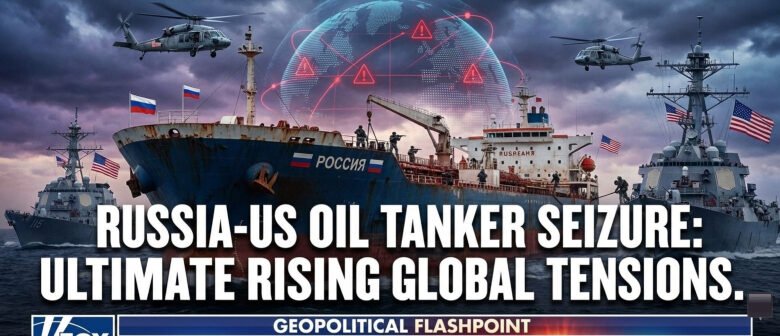
Russia-US Oil Tanker Seizure: Ultimate Rising Global Tensions: In a dramatic escalation of global geopolitical tensions, Russia has sharply condemned the United States for seizing a Russian flagged oil tanker in the North Atlantic, calling the move illegal, dangerous and a potential trigger for broader military political confrontation. This incident has instantly become one of the most trending world news stories right now, with ripple effects across sanctions policy, maritime law debates and U.S Russia relations.
What Happened? The Tanker Seizure Explained
On January 7, 2026 U.S. naval and Coast Guard forces intercepted and seized a Russian flagged oil tanker known as the Marinera (formerly Bella 1) in the North Atlantic Ocean.
According to U.S authorities the tanker had been under long standing sanctions and was suspected of participating in efforts to transport sanctioned oil including Venezuelan crude in violation of U.S embargoes. U.S officials justified the action by citing court warrants and legal authority under sanctions enforcement.
The tanker had evaded an earlier boarding in the Caribbean last month and had been chased across international waters before being finally intercepted.
This davorous act has generated fervent diplomatic tensions and international debate regarding the jurisdiction of maritime law and the bounds of the unilateral act in the high seas.
🇷🇺 Russia’s Response: Strong Condemnation and Legal Objections
Russia reacted angrily to the seizure, accusing the United States of violating international maritime law and engaging in unlawful conduct on the high seas. Moscow asserts that the action was not justified under the 1982 United Nations Convention on the Law of the Sea and labeled the seizure as tantamount to piracy by some lawmakers.
The Russian Foreign Ministry stated that:
- The tanker was peacefully sailing under the Russian flag and had complied with legal requirements.
- U.S. actions constituted an illegal use of force against a vessel outside territorial waters.
- The seizure endangers crew welfare and risks military and political escalation.
Russia formally protested to Washington and demanded the immediate humane return of its citizens who were aboard the vessel.
Sanctions, International Law and “Shadow Fleets”
One of the core issues fueling this crisis is the broader context ofsanctions against Russia, Venezuela and Iran. As well as the emergence of so called shadow fleets groups of older ships using deceptive tactics to move sanctioned oil around the world.
The United States claims the Marinera was part of this network that bypasses global sanctions and therefore justified its seizure. It has recently intensified efforts to intercept vessels suspected of helping, the sanctioned regimes not just in territorial waters but on the high seas as well.
Critics also argue that the unilateral seizure of foreign vessels in international waters by the U.S. sets a very dangerous precedent, risking open conflict and creating a slippery slope. Where powerful nations assert control over global shipping under the guise of sanctions enforcement.
Global Reactions: Allies, Lawmakers and Diplomatic Tensions
The seizure has reverberated worldwide:
🇨🇳 China condemned the U.S. action as a serious violation of international law, criticizing Washington’s maritime policies.
🇬🇧 The United Kingdom admitted to providing support for the operation, drawing further ire from Russia.
Experts in international law and various policy analysts have indicated that this move could destabilize. Maritime security and undermine established conventions on the protection of freedom of navigation.
In Washington, U.S officials defended the seizure, insisting that the move forms part of legitimate enforcement of sanctions on energy shipments tied to authoritarian regimes and illicit trade. The Trump administration has insisted that such actions are needed to curtail sanctions-busting networks and economic abuses.
Crew Released — The Only Diplomatic Breakthrough So Far
In a surprise move, the United States has released two Russian crew members from detention at Russia’s request a rare moment of bipartisan praise even amid tense relations. Moscow publicly thanked Washington for the move, stressing how the diplomatic channels between the two powers are still working.
While this mollified human rights concerns, it has not soothed deeper political disagreements over the seizure itself. READ MORE

Why This Matters: Broader Implications
This isn’t just a single maritime incident — it has wider geopolitical implications:
📍 1. U.S.–Russia Relations at a New Low
The tanker seizure comes at a time when U.S Russia tensions are already high due to the ongoing Ukraine conflict and disputes over sanctions. This incident could further freeze diplomatic cooperation on other global issues.
📍 2. International Maritime Law Under Strain
If powerful states begin to take enforcement into their own hands on the high seas, it could weaken international legal frameworks and encourage other nations to act unilaterally.
📍 3. Sanctions Enforcement Will Become Harder
Russia, China and other nations affected by U.S sanctions may respond by strengthening covert trade networks or diverting trade to less regulated regions complicating global sanction regimes.
📍 4. Potential for Military Escalation
Although there’s no immediate risk of open war, Russia’s warnings about escalation including claims of threats to maritime sovereignty raise the specter of accidental conflict or miscalculation at sea.
Looking Ahead: What to Watch
Here are key developments to monitor:
1: Whether Russia officially challenges the legality of the seizure in an international court.
2: If more tanker seizures occur as part of U.S. sanctions enforcement.
3: How the maritime insurance industry and global oil markets react to heightened risks.
4: Diplomatic moves by the European Union, United Nations, or neutral states urging restraint and legal clarity.
This story is not just breaking, it’s reshaping how nations navigate power, energy politics and international law in 2026.
Conclusion
The U.S seizure of the Russian flagged oil tanker and Russia’s fierce condemnation marks a critical flashpoint in modern geopolitics. It highlights the deep divisions in how global powers enforce sanctions, interpret maritime law and assert their influence on the world stage. As events continue to unfold, this incident could have lasting impacts on international relations, shipping security and global energy dynamics.
Stay tuned — this is trending world news shaping the future of global politics.