
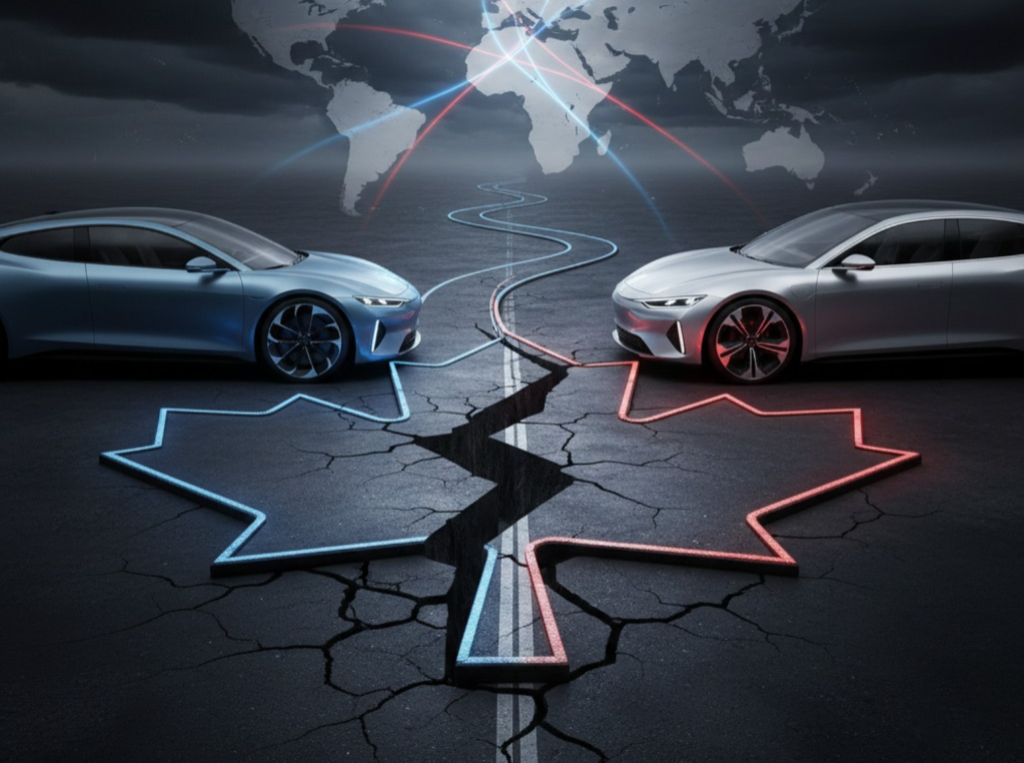
US–China EV Trade War: Why Canada Is Now Under Pressure: In a major development on January 16, 2026 the United States government publicly criticized Canada’s decision to allow the import of Chinese electric vehicles (EVs) into the Canadian market. According to U.S. Trade Representative Jamieson Greer, Canada may later “regret” this move, which has fueled heated debate in international trade and automotive policy circles.
This blog explains why this issue matters from economic strategy, trade dynamics, EV market trends to political reactions and explores what this means for consumers, manufacturers and global markets. We’ll also evaluate the broader implications for North America’s EV landscape.
What’s Happening?
- Canada agreed with China to drop tariffs on Chinese EVs from 100% to a much lower 6.1%, allowing up to 49,000 Chinese EVs per year into Canada’s market.
- 🇺🇸 The U.S criticized this decision, calling it “problematic” and warned Canada might regret it in the long term.
- The deal also includes China cutting tariffs on Canadian canola seeds, part of a broader economic partnership.
- U.S officials highlighted concerns about tariffs and cybersecurity standards for vehicles connected to the internet.
Why Chinese EVs Matter
Electric vehicles have become one of the most competitive and transformative sectors of the global automotive industry. For the past few years:
- Chinese EV manufacturers like BYD, NIO and others have grown rapidly in global market share due to affordable pricing and advanced features.
- Chinese EVs now compete strongly against traditional Western automakers and battery technology firms.
- The global push for zero-emission vehicles has accelerated EV adoption, making tariff policies and market access vitally important to future growth.
This context helps explain why Canada’s tariff shift is significant it signals a departure from a more protectionist stance taken by the U.S in recent years.
Canada’s Tax and Trade Deal With China
In late January 2026, Canadian Prime Minister Mark Carney announced a trade deal with China that:
- Reduces Canadian tariffs on Chinese EV imports to 6.1% from 100%.
- Caps the number of imported Chinese EVs at 49,000 units annually, increasing over five years.
- Includes reciprocal tariff reductions on Canadian agricultural goods in China (e.g. canola).
Canadian officials argue that this deal will:
Provide cheaper EV options for Canadian consumers
Encourage investment in auto sector joint ventures
Strengthen ties with a major trading partner outside of the U.S.
However, many questions remain about how this will affect domestic industries and North American trade relations.
US Response: “Problematic” and Potential Regret
The U.S. position has been outspoken. According to U.S. Trade Representative Jamieson Greer:
- The move is “problematic” for Canada because it may undermine protections for North American auto workers.
- The U.S. maintains high tariffs and cybersecurity checks that still restrict Chinese EV access to the U.S. market.
- Greer suggested Canada might later regret reducing tariffs and opening its market.
This position reflects Washington’s ongoing concern about China’s expanding role in strategic sectors like EVs and technology, even as the U.S itself struggles with domestic EV competitiveness.
Mixed Signals: Trump’s Reaction
U.S President Donald Trump was even more differentiated in his response: whereas some U.S. officials are criticizing the Canada China deal, Trump said he is “OK” with Canada seeking a trade deal with China. He stated that if Canada could get a beneficial agreement, “that’s a good thing.”
This contrast highlights complex political dynamics in U.S. policy toward allies and China:
- On one hand, trade representatives are warning about economic risks.
- On the other, the U.S executive branch appears less unified in messaging.
What This Means for the Auto Market
1. Competition for Traditional Automakers
Chinese EV brands have increasingly challenged Western companies:
- They often offer lower prices with competitive tech.
- In some markets, Chinese EVs are gaining share due to affordability and innovation.
This dynamic is likely to spur pressure on U.S. and Canadian automakers to innovate and remain cost-competitive.
2. Consumer Benefits
For many consumers, reduced tariffs often translate to:
- Lower prices on imported EVs
- More choice in vehicles
- Potentially faster adoption of zero-emission transport
Canadian buyers may benefit from access to brands previously priced out of reach.
3. Investment and Jobs
Canada hopes that new agreements will:
- Encourage joint ventures with Chinese manufacturers
- Lead to investment in Canadian EV infrastructure
- Create new jobs in manufacturing and supply chains
However, critics worry about possible long term impacts on domestic manufacturing competitiveness.
Regional Trade Tensions and Geopolitics
This issue is not just about cars it’s part of a larger geopolitical economic puzzle, including:
- North American trade agreements like USMCA.
- Ongoing U.S China tech and trade tensions.
- Canada’s desire to diversify trade partners beyond the U.S.
While Canada’s move may bring short term gains, it could redefine regional alliances and economic relationships.
Expert Opinions and Public Reaction
Opinions on this move vary widely:
- Automotive analysts warn that opening the market could challenge Western producers.
- Economists note that affordable EVs may help overall adoption.
- Public discussions across forums show a mix of regional nationalism, skepticism of U.S warnings and enthusiasm for new EV options.
These debates highlight how polarizing trade decisions can be in the digital age.
Conclusion: Will Canada Really Regret It?
Canada’s decision is a major shift in North American trade policy.
It could benefit consumers and diversify trade relations.
It poses competitive challenges and raises political concerns for the U.S.
Whether Canada will “regret” the move remains speculative and depends on future economic trends, market outcomes and diplomatic ties.
In a world where EV adoption is accelerating and global supply chains are in flux, this decision could be either visionary or risky time will tell.