

US Secretary of State Marco Rubio wrapped up a three-day visit to India on October 22, declaring that a long-awaited US-India trade agreement was “very, very close” to being finalised. The visit, which took him to Mumbai and the Jamnagar refining hub in Gujarat, put energy cooperation, trade and Russian oil purchases at the centre of the two countries’ renewed diplomatic push.
Rubio arrived in Mumbai on Tuesday, October 20, for his second official trip to India this year — his first, in May, included a meeting with Prime Minister Narendra Modi. This time he held talks with External Affairs Minister S. Jaishankar before travelling to Jamnagar to tour Reliance Industries’ vast oil refinery and meet members of the Ambani family. Summing up the trip, Rubio said continued work on the economic partnership and energy security cooperation would make both nations stronger.
Trade deal “very, very close,” Rubio says
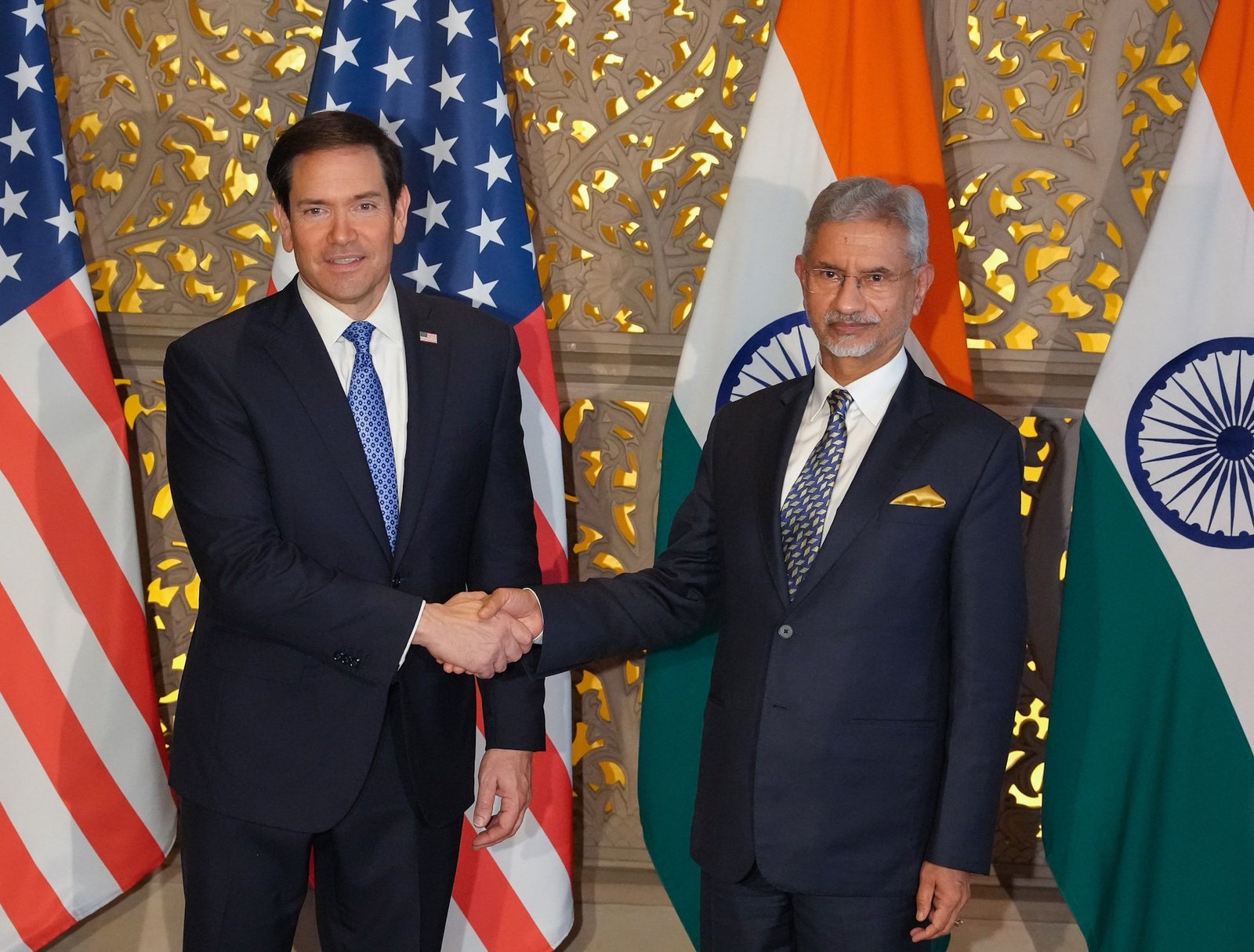
Speaking to reporters in Mumbai after his meeting with Jaishankar, Rubio struck an upbeat tone on the stalled trade negotiations. “We’re very, very close. I would say we’re about as close as you can be without having executed the agreement. I think there’s a small number of items left to wrap up, so I think that will happen shortly,” he said, adding that the leaders of the two countries could sign the deal once the remaining items were resolved.
The two ministers discussed “energy security and defence cooperation while reaffirming the importance of advancing the US-India strategic partnership,” Rubio said afterwards. India’s foreign ministry said the Mumbai talks covered the full range of the relationship — trade, investment, energy security, defence cooperation and emerging technologies — and that both sides welcomed the progress in the trade negotiations.
The two countries had agreed an interim trade framework in February 2026 under which Washington cut its reciprocal tariff on Indian goods from 25 per cent to 18 per cent and dropped the extra Russia-linked duty, while India committed to reducing tariffs on US industrial goods and selected agricultural products.
Since then, though, talks had stalled. Indian Finance Minister Nirmala Sitharaman said earlier this month that the negotiations had reached a plateau, while US Trade Representative Jamieson Greer said on October 2 that a deal was not imminent. Analysts cautioned that Rubio’s visit improved the mood but did not guarantee an immediate signing: “I don’t think anyone really expected a trade deal to be announced at this point, but this trip seems to have helped get the relationship back on track,” said Michael Kugelman, a senior fellow at the Atlantic Council.
Russian oil and the tariff waiver
Energy dominated much of the conversation, reflecting the central irritant in US-India ties: India’s large-scale purchases of Russian crude. India became one of the biggest buyers of Russian oil after Russia’s 2022 invasion of Ukraine; research group CREA estimates that between December 2022 and July 2026, India accounted for 37 per cent of Russia’s crude oil exports.
Days before Rubio’s arrival, Trump removed one potential flashpoint. In an executive order signed on October 16, the president waived the substantive provisions of legislation signed in September that had authorised tariffs of up to 100 per cent on the top five importers of Russian oil — a list on which India ranks second after China. Rubio has said the effort to finalise the trade deal was among the factors behind the waiver decision, and that Washington was entering a 60-day review period during which it would consider which new tariffs, if any, to impose.
Rubio acknowledged that pivoting away from Russian crude would not happen overnight, but said India had been diversifying its energy mix. “What India has expressed repeatedly is their desire to diversify their energy portfolio, which is a smart thing to do,” he said in Mumbai. “Obviously, it’s not easy to do that from one day to the next, so I think they’ve made substantial progress in that regard, and we’re happy to see that.”
The US position carries its own contradictions: the same administration that pressed India to cut Russian oil imports signed a deal last week to buy diesel from Russia in a bid to bring down domestic fuel prices ahead of November’s midterm elections. When asked about the contrast, Rubio pointed to the complexities of energy policy. “Every country has a complex set of factors that they have to take into account,” he told reporters. “Geography is real. For some countries, it’s very difficult to acquire energy from alternative sources.”
Why Jamnagar mattered
The choice of Jamnagar — rather than New Delhi — as the trip’s other destination underlined how central energy was to the visit. The Reliance Industries refinery there is the world’s largest refining complex, capable of processing about 1.4 million barrels of crude a day — roughly 1.5 per cent of global refining capacity — and a major exporter of diesel and other petroleum products.
Rubio toured the facility on Wednesday and met Mukesh Ambani and members of his family, describing India as a “refining superpower.” The discussion touched on Venezuelan crude: with Washington having eased sanctions on Venezuela’s energy sector after Nicolás Maduro’s ouster, Rubio said he wanted Reliance — once among the largest buyers of Venezuelan oil — to refine more of it. “They have the capability to refine heavy crude. They’ve done so in the past, and I think as more and more Venezuelan oil comes online, that’s something they could do,” he told reporters, adding that Venezuelan oil could provide short-term relief as the US works to stabilise fuel prices before the midterms.
Reliance later said the visit included “wide-ranging discussions on the global energy landscape and opportunities for commercial partnerships across conventional and new energy,” without announcing specific commitments.
What happens next
No trade agreement was signed during the visit, and Rubio did not meet Prime Minister Modi this time. But both sides signalled the negotiations are entering their final stretch: a small number of outstanding items must be wrapped up, after which the leaders could formally sign. The 60-day US tariff review period will run in parallel, and India’s tariff trajectory — including whether its final rate stays competitive with other manufacturing exporters such as Vietnam — will be watched closely by industry on both sides.
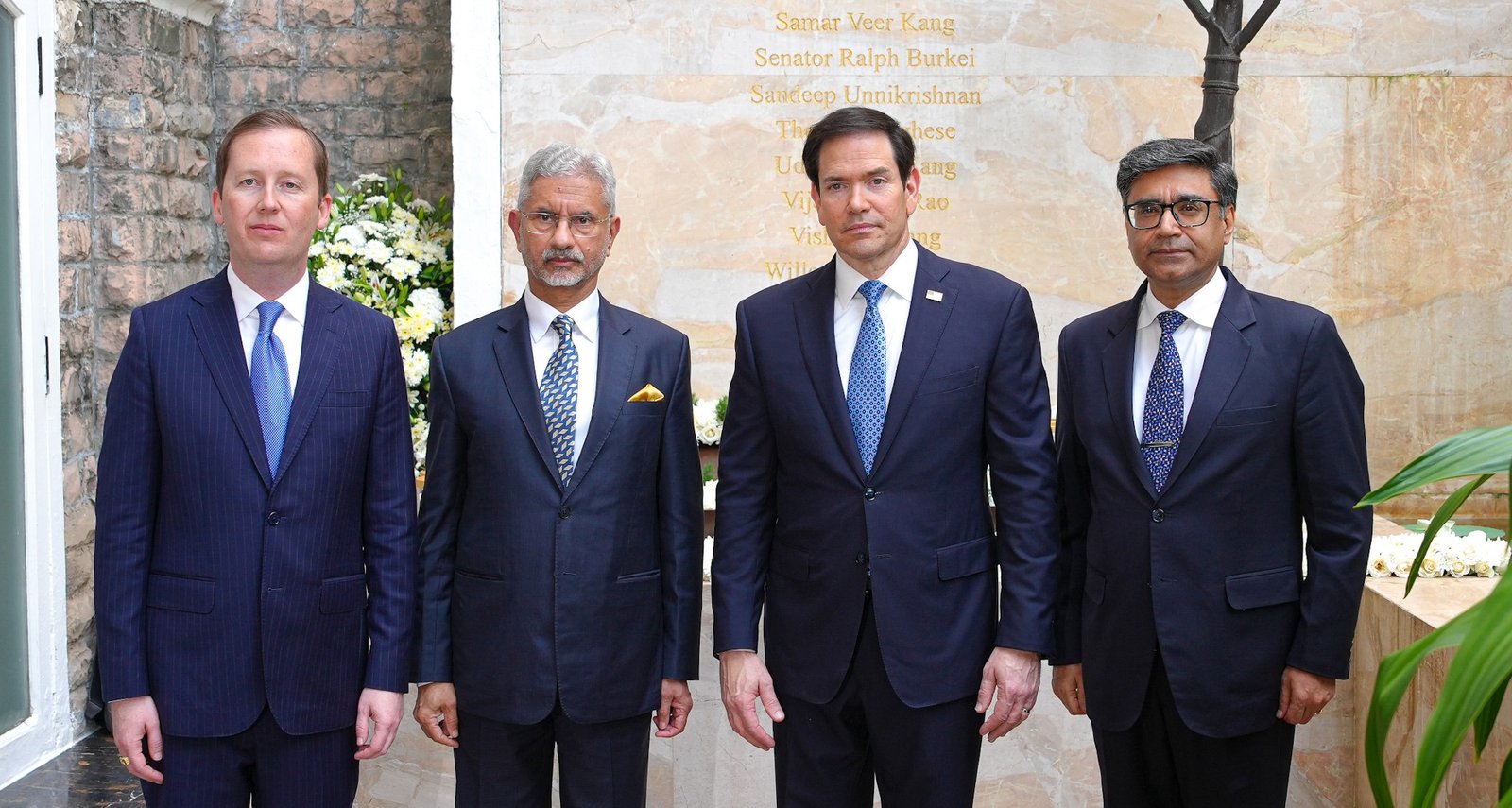
Symbolically, the visit also included a stop at Mumbai’s 26/11 memorial, where Rubio laid a wreath to honour the victims of the 2008 attacks alongside Jaishankar. For now, the trip appears to have steadied a relationship that had been wobbling: trade talks are back in motion, the tariff clock is ticking, and energy — Russian, Venezuelan and American — will remain at the heart of the bargain.