
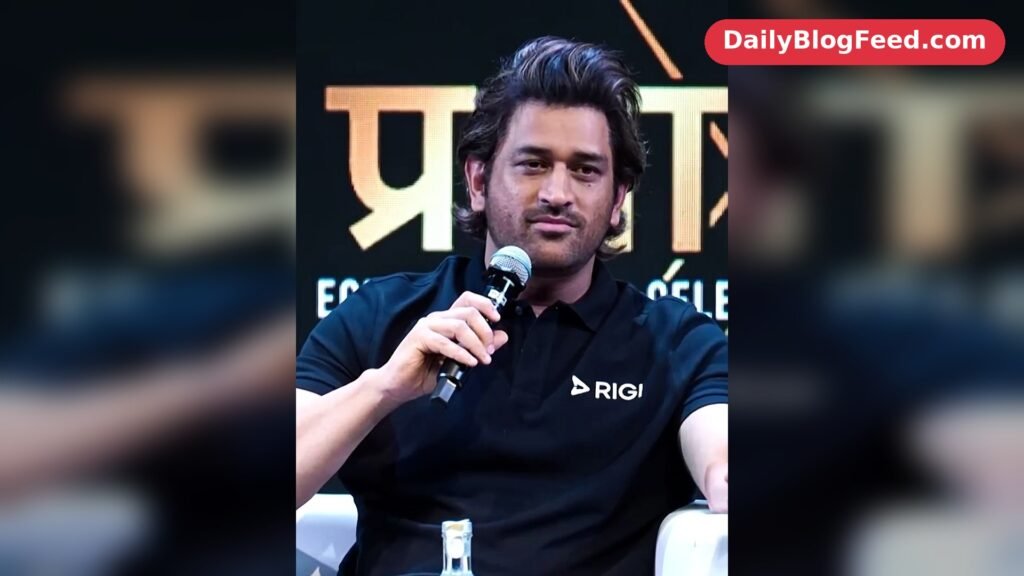

There are cricketers who win matches, and then there is MS Dhoni, who seemed to win them in the last over, with a calm face, while an entire stadium held its breath. For more than a decade he was the man India turned to when a game was slipping away, and more often than not, he found a way to pull it back.
Dhoni’s story is also one of the great sporting journeys of modern India. He came from Ranchi, a city far from cricket’s traditional power centres, worked as a railway ticket examiner, and rose to captain his country to every major white-ball trophy in the game. Along the way he became “Captain Cool”, “Mahi” and, to Chennai’s fans, simply “Thala”, the leader.
Even after retiring from international cricket in 2020, Dhoni never really left the stage. He stayed on with Chennai Super Kings in the IPL, and every season since has brought the same question: is this the last time we will see him? In October 2026, he said he would decide before December. On 17 November, the answer came — and it closed his playing career for good.
Quick Facts
| Detail | Information |
|---|---|
| Full name | Mahendra Singh Dhoni |
| Born | 7 July 1981, Ranchi, Bihar (now Jharkhand), India |
| Age | 45 (as of November 2026) |
| Height | 1.75 m (5 ft 9 in) |
| Role | Wicketkeeper-batter, former captain |
| Batting style | Right-handed |
| Wife | Sakshi Dhoni (married 4 July 2010) |
| Daughter | Ziva Dhoni (born 6 February 2015) |
| International career | 2004–2020 (ODI debut 23 December 2004 vs Bangladesh) |
| IPL team | Chennai Super Kings (player 2008–2026; Team Mentor from 2027) |
| ICC titles as captain | T20 World Cup 2007, ODI World Cup 2011, Champions Trophy 2013 |
| IPL titles as captain | 5 (2010, 2011, 2018, 2021, 2023) |
| Honours | Padma Bhushan (2018), ICC Hall of Fame (2025) |
A Ranchi Boy Who Kept Goal Before He Kept Wicket
Mahendra Singh Dhoni was born on 7 July 1981 in Ranchi, which was then in Bihar and is now the capital of Jharkhand. His father, Pan Singh, worked for MECON, a public sector company, and his mother, Devaki Devi, kept the family home. It was an ordinary, middle-class upbringing in a small city, far removed from the academies and networks of Mumbai or Delhi.
Sport came first, but cricket was not the first game. At school, Dhoni played football and badminton, and he was a goalkeeper for his school football team. It was his football coach who, spotting his reflexes and safe hands, suggested he try wicketkeeping instead. The switch changed Indian cricket forever.
He studied at DAV Jawahar Vidya Mandir in Shyamali, Ranchi, and played his way through local and age-group cricket with a style that was already unmistakable. There was no coaching-manual elegance to his batting; there was power, improvisation and an extraordinary eye. He also worked as a travelling ticket examiner at Kharagpur railway station while chasing his cricket dream, a job that has since become part of his legend.
The breakthrough came in domestic cricket, where his explosive batting for Bihar and then Jharkhand forced the selectors to take notice. Small-town players rarely got fast-tracked in that era, but Dhoni’s numbers were impossible to ignore. When the India call came in December 2004, it felt like a door opening for every young cricketer outside the big cities.
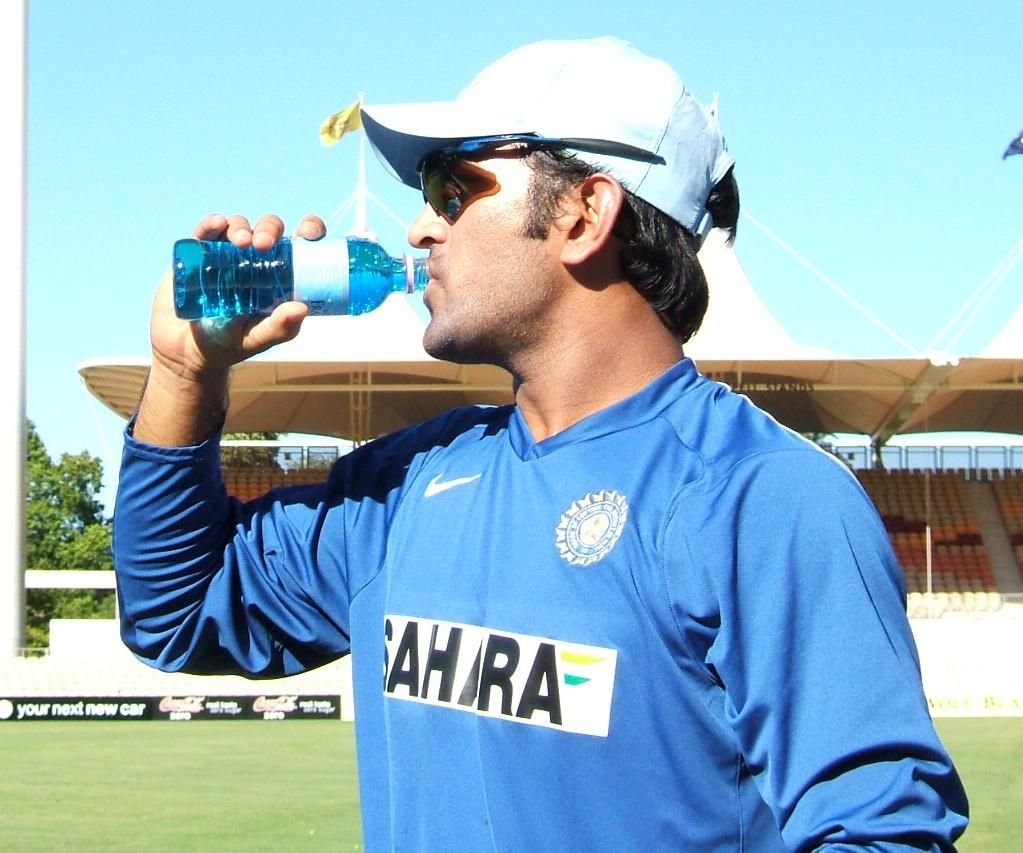
The Rise: From a Duck on Debut to India’s Captain
Dhoni’s international debut was, by his own later admission, forgettable. He was run out for a duck against Bangladesh on 23 December 2004, and his first few matches gave little hint of what was coming. Then came Visakhapatnam in April 2005, where he smashed 148 off 123 balls against Pakistan, and later that year an unbeaten 183 against Sri Lanka in Jaipur, still one of the greatest innings by a wicketkeeper in one-day cricket.
His Test debut followed on 2 December 2005 against Sri Lanka, and his T20 international debut on 1 December 2006 against South Africa. But it was his temperament, even more than his batting, that marked him out: he never seemed rattled, and he read a game the way a chess player reads a board.
In 2007, after India’s early exit from the ODI World Cup, Dhoni was handed the captaincy of a young team for the first-ever ICC World Twenty20 in South Africa. Few gave India a chance. Dhoni led them to the title, beating Pakistan in a thrilling final, and Indian cricket had a new leader. The full-time ODI captaincy followed soon after, and the Test captaincy in 2008.
What made his leadership different was its stillness. Other captains shouted and gestured; Dhoni watched, waited and then made the move nobody had seen coming. That calm under pressure earned him the nickname “Captain Cool”, and it became his trademark as surely as the helicopter shot became his signature stroke.
World Cup Glory and the Night of the Winning Six
If one night defines Dhoni’s career, it is 2 April 2011, at Mumbai’s Wankhede Stadium. India were chasing Sri Lanka’s 274 in the World Cup final, and when the great Sachin Tendulkar fell early, the stadium fell silent. Dhoni promoted himself up the order, ahead of the in-form Yuvraj Singh, and played one of the most famous innings in Indian cricket history.
He finished unbeaten on 91, and the tournament ended with his towering six over long-on, a shot that sent a billion people into celebration and ended India’s 28-year wait for a second World Cup. The image of Dhoni, bat raised, watching the ball sail into the stands, remains one of the defining pictures of Indian sport.
Two years later, he completed a set no other captain has matched. India won the 2013 ICC Champions Trophy in England, making Dhoni the only captain to win all three major ICC white-ball trophies: the T20 World Cup, the ODI World Cup and the Champions Trophy. Under him, India also reached number one in the Test rankings.
His Test career ended in December 2014, when he retired from the format mid-series in Australia, and on 15 August 2020 he announced his retirement from international cricket altogether, with a short, understated social media post. There was no farewell series and no long goodbye, which somehow felt entirely in character. His dignified, understated way of carrying fame invites comparison with screen greats such as Gregory Peck, whose quiet authority defined his most celebrated roles.
Chennai Super Kings: Five Titles and a Second Home
If India gave Dhoni his legend, Chennai gave him a second home. From the first IPL season in 2008, he was the face of Chennai Super Kings, and the bond between captain and city became one of the league’s great love stories. Fans called him “Thala”, meaning leader, and the yellow jersey became synonymous with him.
The titles followed: 2010, 2011, 2018, 2021 and 2023. The 2018 triumph, in CSK’s comeback season after a two-year suspension, was perhaps the most emotional, with a squad many had written off as too old. The 2023 final, won off the last ball against Gujarat Titans, was Dhoni’s fifth title as captain.
Individually, his IPL numbers are remarkable for a man who batted mostly in the lower middle order. As of 2026, he stands seventh on the tournament’s all-time run-scorers’ list, with 5,439 runs at an average of 38.30, including 24 half-centuries in 242 innings across 278 matches. He also holds the record for the most dismissals by a wicketkeeper in IPL history, and shares the record for the most titles won as captain.
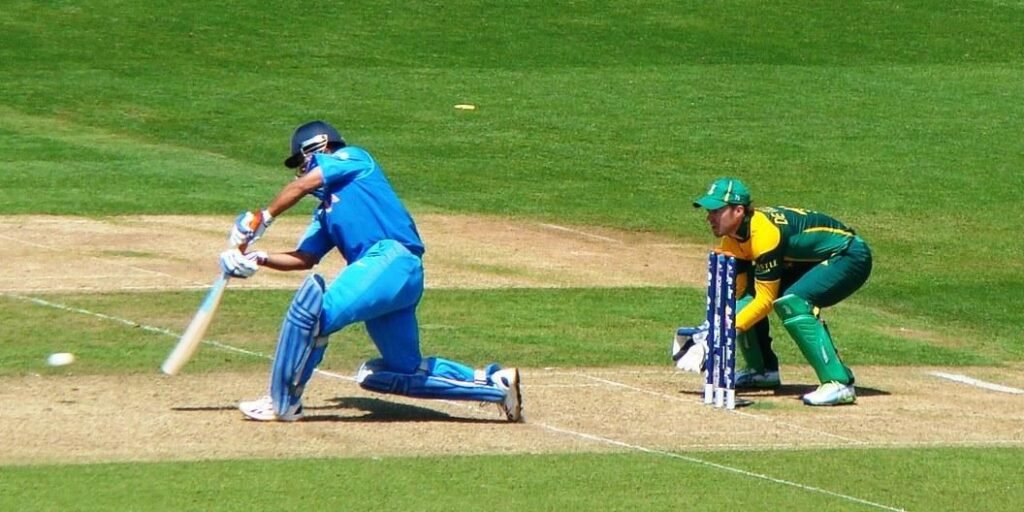
Dhoni stepped down as CSK captain in 2024, handing the role to Ruturaj Gaikwad, but he stayed on as a player and mentor. CSK have not reached the playoffs since, finishing fifth, tenth and eighth in the three seasons that followed. His cool, unflappable presence has long drawn comparisons with the effortless charisma of stars like Paul Newman, whose appeal only deepened with age.
The Captain Cool Method
So what actually made Dhoni different? Ask his teammates and the same words come back: calm, instinct and trust. He rarely showed emotion on the field, whether his team was winning or losing, and that steadiness spread through the side. Young players knew they would get a fair run, and bowlers knew their captain would back them even after a bad over.
His tactical instincts were famously unconventional. He would hand the ball to a part-timer at a crucial moment, or bring a spinner on when everyone expected pace, and more often than not it worked. The 2007 T20 World Cup final, when he gave the final over to the inexperienced Joginder Sharma, remains the classic example. Critics called it a gamble; Dhoni called it reading the game.
As a wicketkeeper, he was revolutionary in his own way. His stumpings were lightning-fast, often completed before the batsman realised his foot had lifted. He was not the tidiest keeper of his generation, but he was among the most effective, because his anticipation was unmatched.
His batting evolved with age. The young Dhoni was a destroyer; the older Dhoni became a finisher, pacing chases and taking games deep. The helicopter shot, a whippy flick over midwicket that he made famous, remains his gift to cricket’s vocabulary.
Wife, Daughter and Life Beyond Cricket
Dhoni married Sakshi Singh Rawat on 4 July 2010 in Dehradun, in a quiet ceremony that took the media almost entirely by surprise. The couple had met in Kolkata in 2007, when Sakshi was interning at the Taj Bengal hotel where the Indian team was staying. They kept the relationship private, and the wedding, announced at short notice, was a small, family affair.
Their daughter, Ziva, was born on 6 February 2015, and she has grown up as one of Indian cricket’s most recognisable young faces, often seen at matches and in her father’s social media posts. The family lives at Dhoni’s farmhouse outside Ranchi, where he keeps dogs and rides his beloved motorcycles.
Dhoni’s life away from cricket is deliberately low-key. He has a famous collection of vintage and modern motorcycles, and he prefers his garage to celebrity events. He also holds the honorary rank of Lieutenant Colonel in the Territorial Army, conferred in 2011, and earned his paratrooper wings in 2015.
He has been recognised with some of India’s highest honours, including the Padma Bhushan in 2018, and in 2025 he was inducted into the ICC Hall of Fame. His story was told on screen in the 2016 biopic “M.S. Dhoni: The Untold Story”, which became one of the most successful sports films in Indian cinema. His ability to reinvent himself late in his career, from explosive young batsman to elder statesman and mentor, echoes the long second acts of screen legends like Clint Eastwood, who kept finding new ways to matter decades into his career.
Net Worth and Business Ventures
MS Dhoni has no officially disclosed net worth, and published estimates vary, so the figures below should be read as informed estimates rather than facts. Most Indian media estimates in 2025 and 2026 put his fortune at over ₹1,000 crore, roughly $120 million or more. TechnoSports estimated around $125 million (₹1,000 crore), while another outlet put the figure at about $111 million (around ₹920 crore). The broad consensus, in other words, is a fortune comfortably above ₹1,000 crore, with the exact number depending on the source.
His income has come from several streams. His IPL pay dropped to ₹4 crore a season from 2025, when CSK retained him as an uncapped player. Endorsements have long been a bigger earner: even years after his international retirement, Dhoni remains one of India’s most marketable sportspeople.
He is also a businessman in his own right. He co-owns the Indian Super League club Chennaiyin FC, runs the lifestyle brand SEVEN, and has invested in companies including Cars24 and Shaka Harry.
What Happened in 2026: The Fitness Question
The most recent chapter of Dhoni’s playing career has been defined by fitness. He missed the entire IPL 2026 season due to fitness problems, primarily involving his calf, and CSK again failed to reach the playoffs. For a player who turns 46 in July 2027, it was natural for speculation about retirement to grow louder.
Dhoni himself addressed the question in October 2026, speaking at a healthcare event in Bengaluru. With characteristic humour, he said he would need to undergo medical tests before deciding whether he could play one more season. “You will know before December,” he told the audience, explaining that he would assess how strong he was and whether his body could handle another campaign.
He described himself, with a smile, as an “old vintage vehicle” that needed to be running well on the road. CSK’s management said publicly that the decision rested entirely with Dhoni, and the franchise’s chief executive said he remained optimistic that the veteran would play on.
The answer came sooner than December. On 17 November 2026, on the deadline day for IPL 2027 retentions, CSK announced that Dhoni had retired from the IPL as a player and would become the team’s mentor from the 2027 season. Dhoni himself had quietly told the franchise three days earlier to add his name to the list of released players. “There is no CSK without MS Dhoni,” owner N Srinivasan said in the announcement, and the franchise said Chennai would always be his home.
His playing career is over, but his place is already assured. CSK have begun an overhaul ahead of next season, parting ways with long-time coach Stephen Fleming and bringing in Zaheer Khan as head coach. Dhoni’s next role is off the field, guiding the next generation — and his influence will be felt for years.
Lesser-Known Facts
- Before cricket took over, Dhoni was a goalkeeper for his school football team; a coach moved him to wicketkeeping, where his reflexes made him a natural.
- He worked as a travelling ticket examiner for Indian Railways at Kharagpur station while trying to break into professional cricket.
- Dhoni is the only captain to have won the T20 World Cup, the ODI World Cup and the Champions Trophy.
- He holds the IPL record for the most dismissals by a wicketkeeper, and the most runs by any player without ever scoring an IPL century.
- He served with the Territorial Army and completed parachute jumps in 2015 to earn his paratrooper wings.
Frequently Asked Questions
How old is MS Dhoni?
MS Dhoni was born on 7 July 1981, which makes him 45 years old as of November 2026. He will turn 46 in July 2027.
Who is MS Dhoni’s wife?
MS Dhoni’s wife is Sakshi Dhoni (née Singh Rawat). They married on 4 July 2010 in Dehradun, and their daughter Ziva was born on 6 February 2015.
What is MS Dhoni’s net worth?
There is no official figure. Most media estimates in 2025 and 2026 put his net worth at over ₹1,000 crore (roughly $120 million or more), with individual estimates ranging from about $111 million to around $125 million depending on the source.
Is MS Dhoni retired from cricket?
Dhoni retired from international cricket on 15 August 2020, and on 17 November 2026 he retired from the IPL as a player too. He missed the entire IPL 2026 season through injury, and CSK then named him Team Mentor from the 2027 season.
How many IPL titles has MS Dhoni won as captain?
Dhoni led Chennai Super Kings to five IPL titles as captain, in 2010, 2011, 2018, 2021 and 2023. He shares the record for the most IPL titles won as a captain.
Why is MS Dhoni called Captain Cool?
He earned the nickname because of his calm, unflappable temperament under pressure. Whether his team was winning or losing, Dhoni rarely showed emotion on the field, and his composed decision-making in tight finishes became his trademark.
Conclusion
MS Dhoni’s career is a reminder that greatness does not always arrive loudly. He came from a small city, took an unglamorous job to keep his dream alive, and went on to captain India to trophies that no other captain has collected together. He finished matches, he trusted young players, and he stayed calm when everyone around him was losing their nerve.
He has played his last IPL match, and his legacy is already complete. In Ranchi, in Chennai and across India, young cricketers still copy the helicopter shot and dream of finishing a game the way Dhoni did. That is why, years after his last international match, his farewell still stopped the cricket world in its tracks.