
With three days remaining before the United States midterm elections on Tuesday, November 3, 2026, Democrats are leading national polls and are favoured to take control of the House of Representatives, while the battle for the Senate remains considerably closer — a combination that could reshape the final two years of Donald Trump’s presidency.
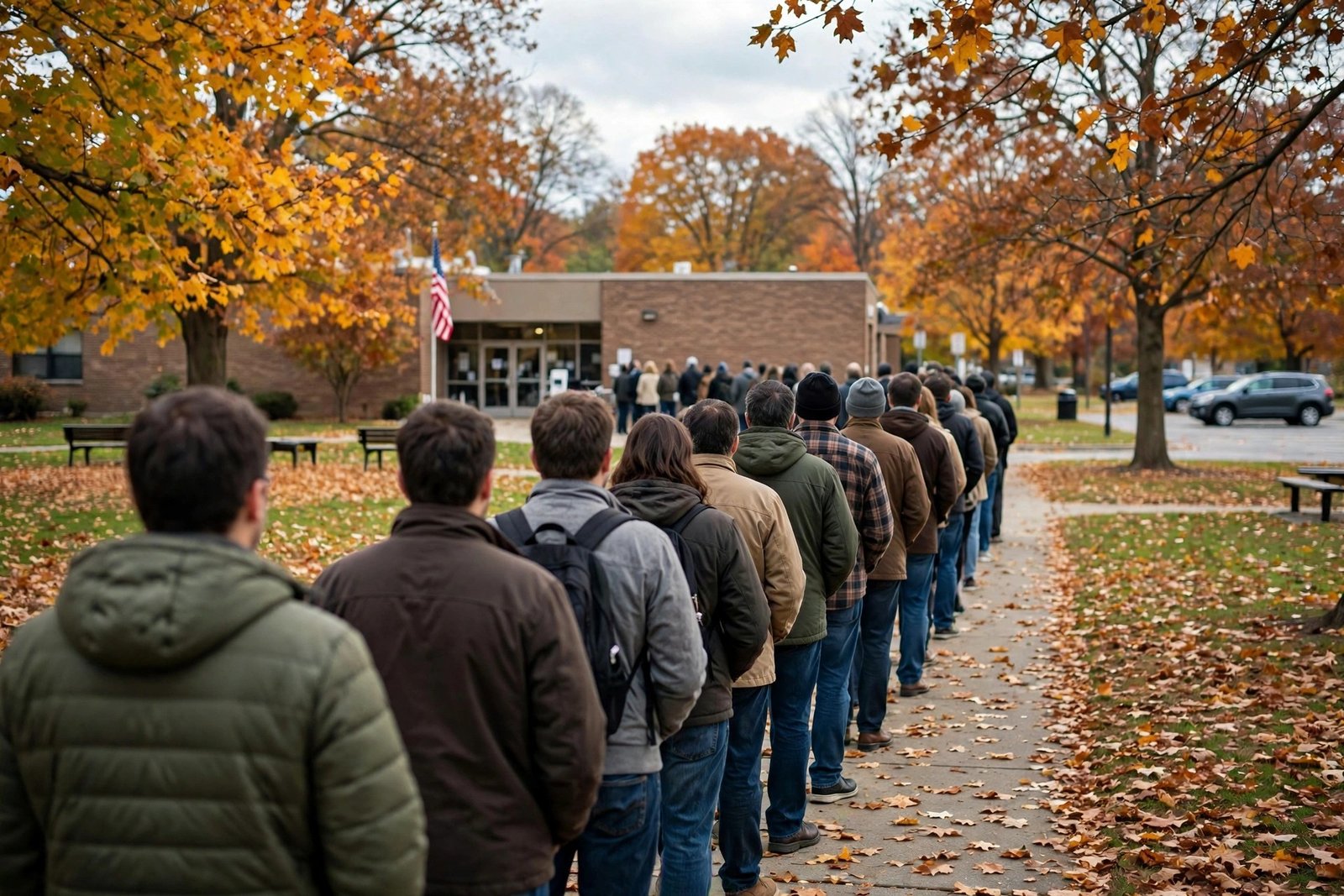
More than 43 million Americans had already voted in person or returned mail-in ballots by five days before Election Day, according to an Associated Press analysis released on Friday, significantly surpassing 2022 figures, particularly in competitive states. Early voting figures do not reveal which candidates voters have supported and cannot, on their own, predict the final result, but they underline how much of the electorate has already made its choice.
The national picture is clear: Democrats lead Republicans by 8.2 percentage points on the RealClearPolling national congressional ballot average, with 51.4 percent support against 43.2 percent, according to reports published on November 1. A Reuters/Ipsos poll conducted October 22–26 found Democrats ahead by nine points, with 47 percent of voters supporting Democrats compared with 36 percent for Republicans, and 50 percent to 41 percent when undecided voters’ leanings were taken into account, Al Jazeera reported.
What is at stake
All 435 seats in the House of Representatives are up for election, along with a third of the Senate. Republicans currently hold a 53–47 advantage in the Senate and a narrow majority in the House, with 218 Republican seats, 214 Democratic seats, one independent and two vacancies, according to the Economic Times.
The magic number in the House is 218 seats. Whichever party reaches at least 218 of the 435 voting seats will control the chamber when the new Congress begins. In the Senate, Democrats need a net gain of four seats to secure an outright majority, because Vice-President JD Vance can break a 50–50 tie in favour of Republicans — meaning Democrats would need 51 seats to take control.
If Democrats win the House, they would gain the power to set the legislative agenda, launch investigations and block much of the president’s programme. If they also win the Senate, they would control confirmations and could reshape the administration’s remaining years. If Republicans hold either chamber, they would retain a significant check on Democratic ambitions — which is why the Senate, where the race is tighter, is being watched so closely.
The forecasts: House favoured, Senate closer
Forecasters give Democrats a strong chance in the House but a narrower edge in the Senate. Silver Bulletin’s forecast, updated on October 29, gave Democrats a 95.1 percent chance of winning the House, projecting an average of 240 Democratic seats against 195 Republican seats. It put their chances of taking the Senate at 77.7 percent, with an average projected split of 53 Democratic seats to 47 Republican seats.
Decision Desk HQ, in its forecast updated on October 29, gave Democrats an 80 percent chance of winning the House and a 60 percent chance of taking the Senate, projecting 238 seats in the House. VoteHub gave Democrats an 89 percent chance of controlling the House and a 63 percent chance of winning the Senate. An Economist/YouGov survey released on Thursday found that 44 percent of registered voters expected Democrats to control the House after the election, compared with 31 percent who thought Republicans would retain it. Expectations for the Senate were much closer: 39 percent anticipated a Democratic majority, while 36 percent expected Republicans to remain in control.
Those forecasts are probabilities, not predictions of a certain outcome. They reflect polling, fundraising, candidate quality and historical patterns — including the long-standing tendency for the president’s party to lose seats in midterm elections — but they can shift quickly, and individual races will decide control.
The Senate races to watch
The final stretch is increasingly focused on a handful of Senate races in Alaska, Iowa, Maine, Michigan, Ohio and Texas. In Texas, where Democrats have not won a Senate election since 1988, Democrat James Talarico and Republican Ken Paxton are virtually tied in the polls, according to Al Jazeera. The RealClearPolling average put Talarico ahead by a narrow margin, 48.5 percent to 46.7 percent.
In Michigan, Democrat Abdul El-Sayed and Republican Mike Rogers are also competing in a closely contested race. A Mitchell Research poll conducted for CBS Detroit on October 26–27 found El-Sayed leading Rogers 51 percent to 44 percent, up from a 4.2-point advantage earlier in October, while RealClearPolling showed a narrower race, with El-Sayed at 48 percent and Rogers at 46 percent.
In Ohio, former Democratic Senator Sherrod Brown led Republican Senator Jon Husted by 3.1 points in the RealClearPolling average, 47.4 percent to 44.3 percent. In Maine, Democrat Troy Jackson was favoured in prediction markets, while in Iowa, Republican Ashley Hinson remained favoured. Those state-level differences are why a national Democratic lead does not automatically translate into Senate control: the Senate is decided state by state, not by the national vote.
Cost of living dominates the campaign
Across the campaign, the cost of living has been the dominant issue. A Reuters/Ipsos poll found that 73 percent of US adults said the cost of living was going in the wrong direction, and Trump’s approval rating stood at 32 percent in that survey, up one percentage point from the previous round, according to Al Jazeera.
That backdrop helps explain the Democratic lead in national polling, but it does not guarantee it will hold on Election Day. Republican strategists have argued that their voters are more likely to turn out on the day itself, and that early voting totals — which do not show who people voted for — should not be read as a Democratic advantage.
The campaign’s final days have seen both parties’ leading figures on the trail. President Trump, former President Barack Obama and Vice-President JD Vance were all out campaigning in the final week, in states including Ohio, Georgia and North Carolina, as both parties fought for control of Congress.
What happens next
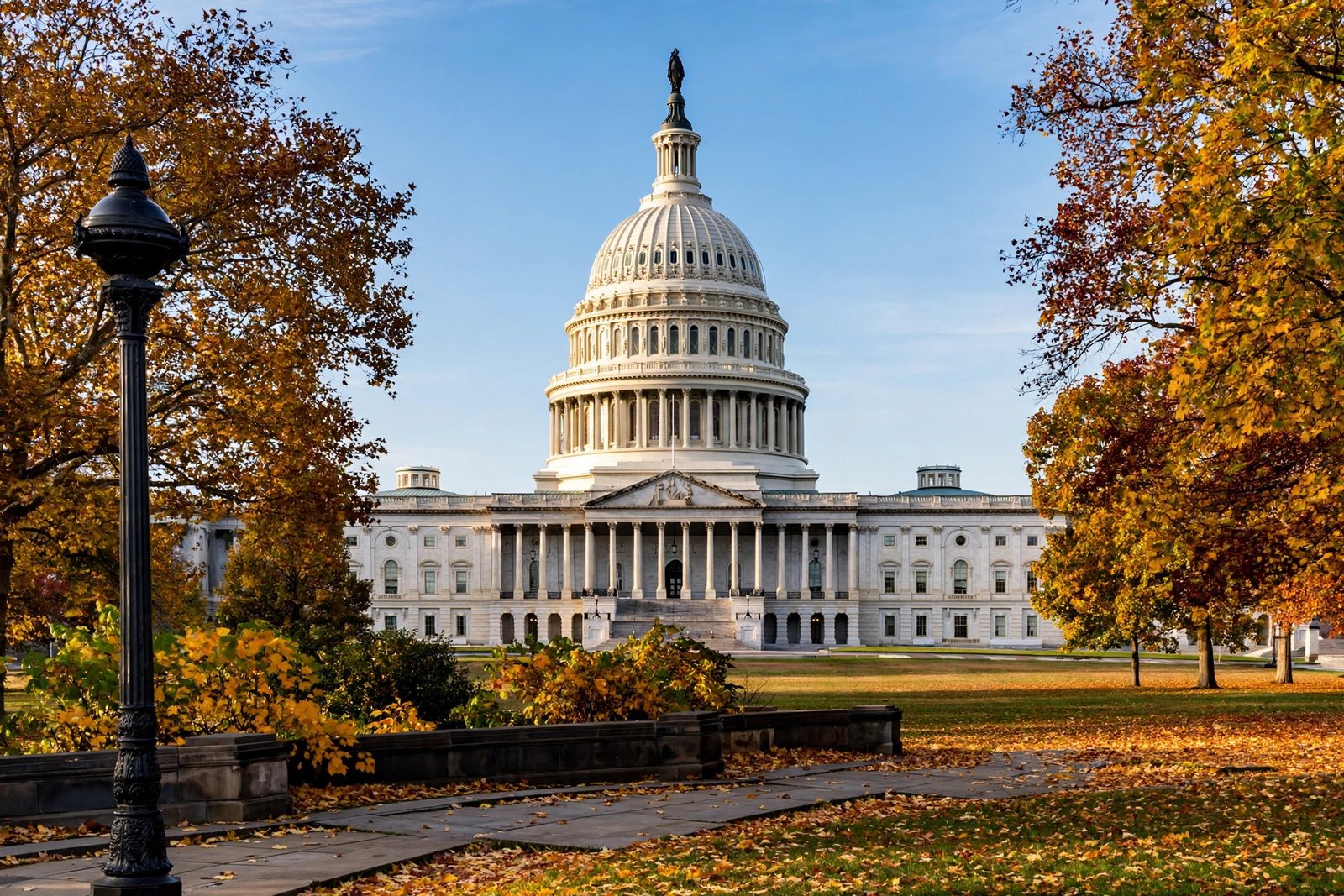
Polling stations open across the United States on Tuesday, November 3, and results will begin to emerge on Tuesday night, although close races — particularly in the Senate — may take days to call if margins are narrow and mail-in ballots are still being counted.
If the polls are right, Democrats will wake up on Wednesday with control of the House and a chance of the Senate. If they are wrong — as polls have been before — Republicans could retain one or both chambers and claim a vindication for the president’s agenda. Either way, the result will define the final two years of Trump’s presidency: whether he faces a Congress willing to advance his programme, or one determined to block it.
For voters who have already cast their ballots, the wait is almost over. For the millions yet to vote, Tuesday is the day that decides it.
Sources: Al Jazeera; Times Now News (RealClearPolling, AP, Silver Bulletin, Decision Desk HQ); BBC; Economic Times.