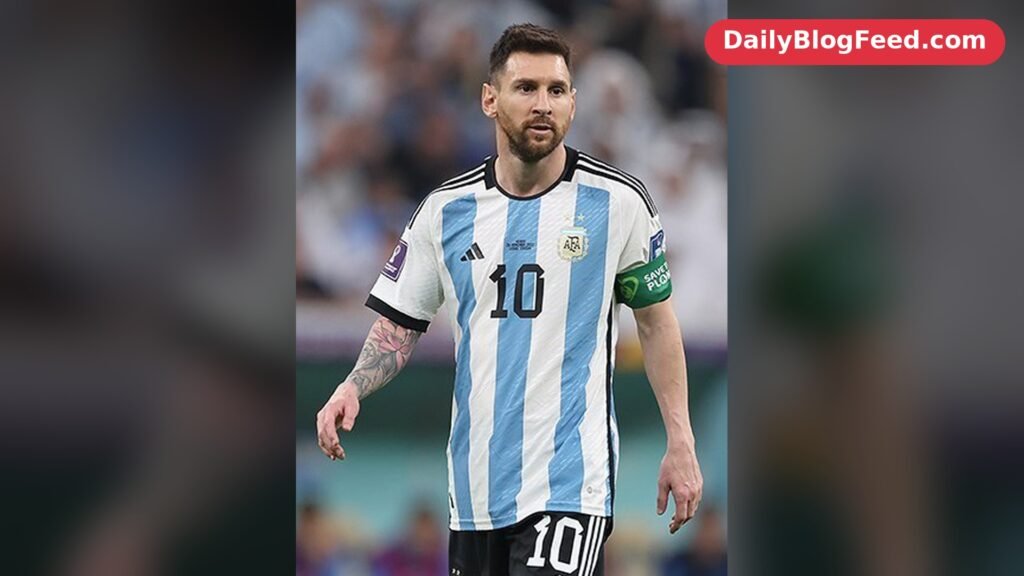

There are athletes who dominate a sport for a season or two, and then there is Lionel Messi. For nearly two decades, the Argentine forward has set the standard for what a footballer can do with a ball at his feet. His low center of gravity, his vision, and his almost quiet way of deciding matches have made him a familiar figure far beyond football stadiums.
What makes Messi unusual is not just the trophies. It is the consistency. Season after season, league after league, he has produced numbers and moments that other great players manage only in flashes. Fans who watched him as a teenager in Barcelona are now watching him in Miami, still bending games to his will.
This profile looks at the facts of his life and career: where he came from, how his career unfolded, who his family is, and what his wealth is reported to be. Where figures differ between sources, that is noted rather than smoothed over.
Quick Facts
| Fact | Detail |
|---|---|
| Full name | Lionel Andrés Messi |
| Born | 24 June 1987, Rosario, Argentina |
| Age | 39 in 2026 |
| Wife | Antonela Roccuzzo (married 2017) |
| Children | Thiago, Mateo, Ciro |
| Clubs | Barcelona (2004–2021), Paris Saint-Germain (2021–2023), Inter Miami (from 2023) |
| National team | Argentina |
| Ballon d’Or wins | 8 (record) |
| World Cup | Winner with Argentina, 2022 |
A Childhood in Rosario
Messi was born on 24 June 1987 in Rosario, a port city in Argentina’s Santa Fe province. He grew up in a working-class family, the third of four children, and football was part of daily life from an early age. His father worked in a steel factory and coached a local youth team, while his mother worked in a magnet manufacturing workshop.
As a boy, Messi played for local club Grandoli, where his father coached, and later for Newell’s Old Boys, one of Rosario’s big clubs. Even then, coaches and opponents noticed something different: a tiny player who could run through entire youth defenses without losing the ball. His size, though, became a serious concern.
At around ten years old, Messi was diagnosed with a growth hormone deficiency. Treatment was expensive, and his family faced a difficult question about how to pay for it. That medical reality would shape the next, life-changing decision his family made, and it remains one of the most widely reported parts of his early story.
The Move That Changed Everything
Barcelona stepped in with an offer that has since become football legend. The Spanish club agreed to pay for Messi’s treatment if he moved to Spain and joined its famed La Masia academy. At thirteen, Messi left Rosario with his father and began a new life in Catalonia.
Messi made his first-team debut for Barcelona in October 2004, aged seventeen, in a league match against Espanyol. It was a modest beginning — a brief substitute appearance — but it marked the start of a senior career that would last seventeen years at the club. Within a couple of seasons, he was no longer a promising youngster. He was a starter, and soon, the team’s defining player.
Barcelona: Seventeen Years of Dominance
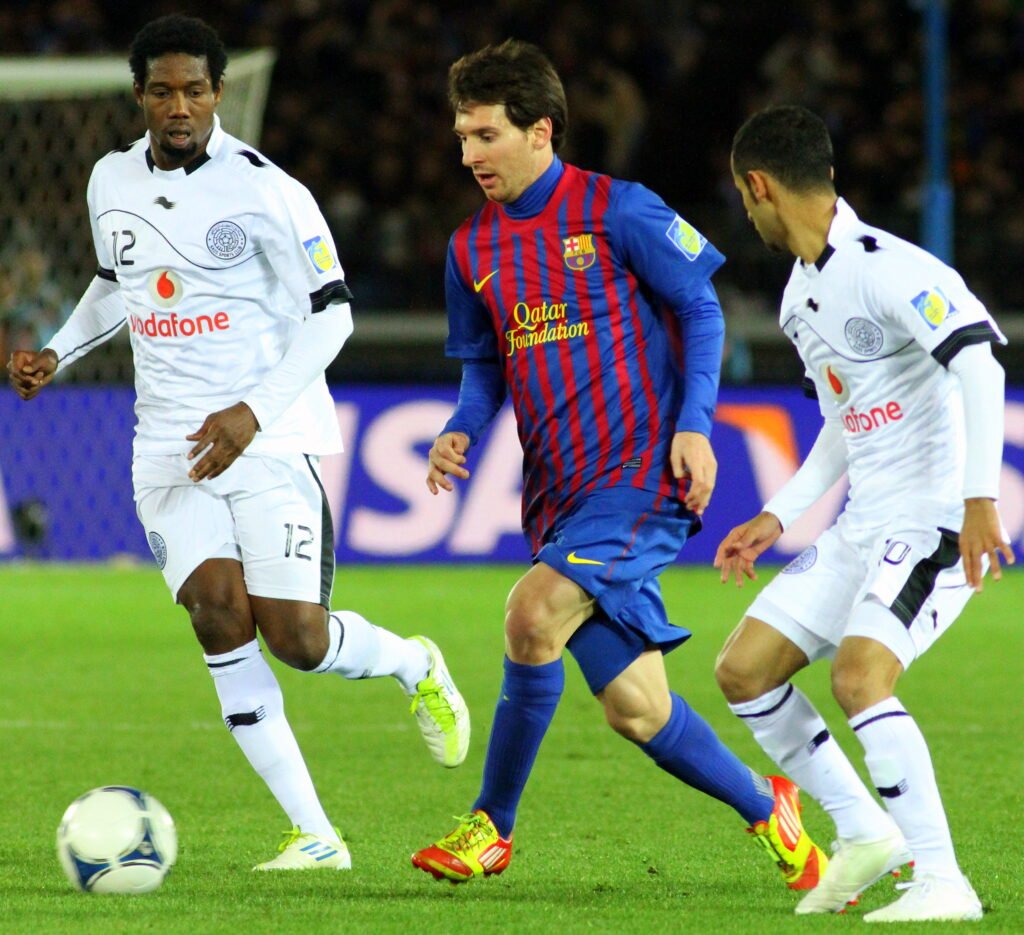
Messi’s Barcelona career is difficult to summarize without sounding like a list of superlatives, yet the record genuinely supports them. He won ten Spanish league titles with the club, along with multiple Copa del Rey trophies and four UEFA Champions League titles. He became Barcelona’s all-time top scorer by a wide margin, passing marks that had stood for generations.
Individually, he won the Ballon d’Or, football’s most prestigious individual award, multiple times while at Barcelona. His record eight Ballon d’Or wins overall put him ahead of every other player in the award’s history, a point that connects him to the kind of award-season story covered in a live DailyBlogFeed report on a Ballon d’Or ceremony mix-up. The award has become almost synonymous with his name, even though he has always deflected individual praise toward his teams.
The end came in the summer of 2021, and it shocked football. Barcelona, weighed down by financial problems, could not register a new contract for Messi even though both sides reportedly wanted to continue. He left in tears at a farewell press conference, ending one of the longest and most successful player-club relationships in modern sport.
Paris and a New Challenge
Messi joined Paris Saint-Germain in August 2021, reuniting with Neymar and playing alongside Kylian Mbappé. The move brought enormous attention to French football, and PSG won the Ligue 1 title in both of his full seasons there. Individually, Messi still produced strong numbers, particularly as a creator, but the fit never quite felt as natural as Barcelona had.
Even so, his Paris years contained the crowning moment of his international career — though it happened away from club football entirely, in Qatar, wearing Argentina’s colors.
The World Cup That Completed the Story
For years, the one gap in Messi’s résumé was a World Cup winners’ medal. He had reached the final in 2014, when Argentina lost to Germany in extra time, and he had endured painful defeats in Copa América finals. Critics, fairly or not, used those losses to question whether he could lead Argentina to a major trophy.
That changed in 2021, when Argentina won the Copa América in Brazil, beating the hosts in the final. It was Messi’s first senior international trophy, and the relief was visible. Then, in December 2022, came the tournament that sealed his legacy. Messi scored seven goals at the World Cup in Qatar, including two in a thrilling final against France that Argentina won on penalties after a 3–3 draw.
Life in Miami
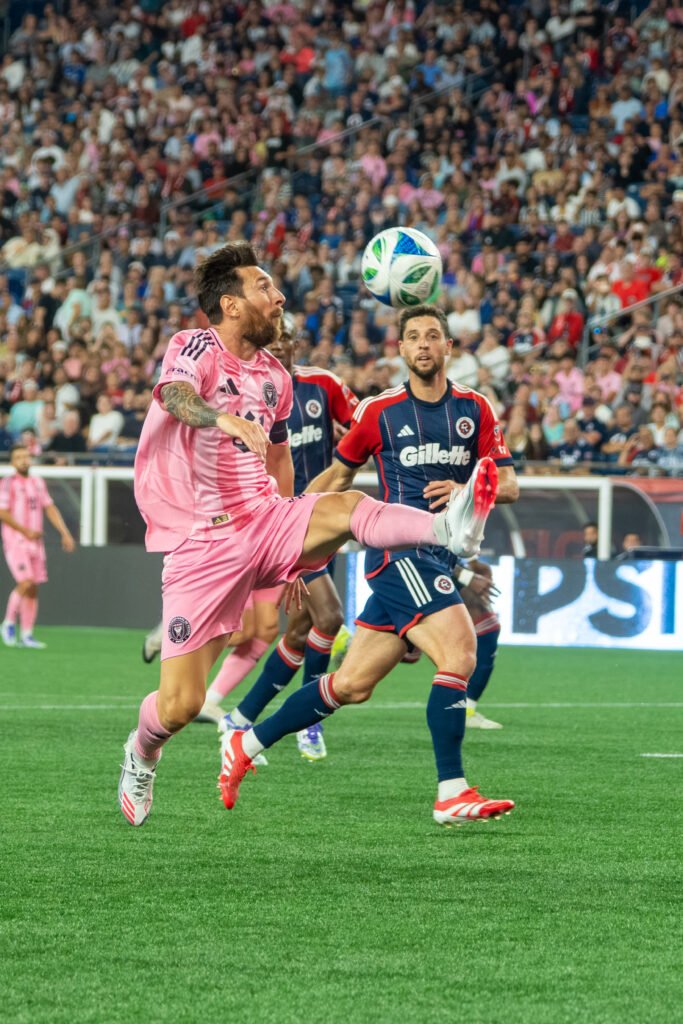
In the summer of 2023, Messi surprised many observers by choosing Inter Miami in Major League Soccer over offers to return to Barcelona or to play in Saudi Arabia. He said he wanted a different kind of life for his family after two decades at the top of European football, and Miami — with its large Spanish-speaking community and proximity to Argentina — offered it.
His impact was immediate. Inter Miami, which had been struggling near the bottom of the league, won the Leagues Cup shortly after his arrival, the club’s first trophy. Attendance, shirt sales, and television interest in MLS rose sharply, a phenomenon commentators quickly dubbed the “Messi effect.” Stadiums across North America sold out when Miami visited.
Family and Life Away From Football
Messi married Antonela Roccuzzo in 2017 in their hometown of Rosario. The two had known each other since childhood — Antonela is the cousin of one of Messi’s close childhood friends — and their wedding was a major event in Argentina, attended by teammates and celebrities alike.
Together they have three sons: Thiago, born in 2012; Mateo, born in 2015; and Ciro, born in 2018. Messi is famously private about his family life compared with many global stars, but he regularly shares family moments on social media and has spoken about fatherhood changing his perspective. His sons have been seen playing youth football, though Messi has been careful not to put public pressure on them.
Off the pitch, Messi has supported children’s charities through the Leo Messi Foundation, which focuses on education and healthcare for vulnerable children. He has also served as a UNICEF Goodwill Ambassador. Unlike some athletes whose fame rests on controversy, Messi’s public image has largely been built on consistency, humility, and an almost obsessive focus on the game itself.
That kind of fame, where a name travels far beyond its own field, invites comparison with other global icons. In film, for example, Marlon Brando became a name that transcended acting itself, much as Messi’s name now transcends football. Both reached a point where even people with little interest in their craft knew who they were.
Style of Play: Why He Is So Hard to Stop
Ask defenders what makes Messi difficult and they tend to give the same answer: he does not look fast until he is past you. His dribbling is built on short, quick touches and sudden changes of direction rather than raw pace. Because he keeps the ball so close to his feet, defenders cannot tell when he will shoot, pass, or accelerate.
His left foot is one of the most precise in football history, capable of curling shots into the top corner from distance or sliding passes through the smallest gaps. As his career progressed, his passing and vision became just as dangerous as his scoring. In his later Barcelona and PSG years, he regularly led his leagues in assists as well as goals.
Net Worth
Messi’s net worth is reported differently depending on the source, so any single figure should be treated as an estimate rather than an exact accounting. Celebrity Net Worth lists his net worth at approximately $650 million, reflecting career salaries, endorsements, and business interests. Forbes, which tracks athlete earnings year by year rather than publishing a single lifetime net worth figure in the same way, has repeatedly ranked him among the world’s highest-paid athletes, with annual earnings in some years exceeding $100 million when salary and endorsements are combined.
His income has come from several streams. At Barcelona, he was for years the highest-paid player in world football. At PSG, he earned a large salary, and at Inter Miami, his deal reportedly includes salary, equity options, and revenue-sharing arrangements with major commercial partners. Endorsements with brands such as Adidas, which has been his boot sponsor since early in his career, have added tens of millions over time.
It is worth noting that published net worth figures are estimates built from public contracts, reported endorsements, and property holdings. They do not reflect private debts, taxes, or investments that are not publicly disclosed. The honest summary is that Messi is one of the wealthiest footballers in history, with estimates clustering in the several-hundred-million-dollar range.
Lesser-Known Facts
- Messi’s first contract with Barcelona was famously written on a napkin. Club official Carles Rexach reportedly scribbled the commitment on a paper napkin in December 2000 because no formal contract paper was available at the meeting.
- He is not the tallest player on the pitch — he stands about 5 feet 7 inches — and his growth hormone treatment as a child is part of why his size became such a talking point early in his career.
- Messi holds the record for most goals in a single calendar year, scoring 91 goals for club and country in 2012, breaking a record that had stood for four decades.
- Despite his fame, Messi has long avoided the nightclub-and-headline lifestyle associated with some stars, preferring quiet family time and, famously, long naps before matches.
- He once turned down a chance to play for Spain’s national team. Although he moved to Spain as a teenager and could have represented his adopted country, he always intended to play for Argentina.
- Messi’s jersey number 10 at Barcelona carried enormous weight — it had previously been worn by club legends — and he inherited it in 2008 after Ronaldinho left the club.
Longevity at the very top is rare in any field, and it is something Messi shares with performers who stayed relevant for decades rather than a single era. Clint Eastwood, for instance, built an era-defining career that stretched across decades at the top of his field, a kind of staying power that echoes Messi’s own long run at football’s summit.
Frequently Asked Questions
How old is Lionel Messi?
Messi was born on 24 June 1987 in Rosario, Argentina. That makes him 39 years old in 2026. He made his Barcelona first-team debut at seventeen and was still playing at the highest level well into his late thirties, which is unusual longevity for an outfield player in a physically demanding position.
Who is Lionel Messi’s wife?
Messi is married to Antonela Roccuzzo, whom he wed in 2017 in Rosario, Argentina. The couple had known each other since childhood, and they have three sons together: Thiago, Mateo, and Ciro. Antonela is frequently seen supporting Messi at matches and is active in fashion and business ventures of her own.
What is Lionel Messi’s net worth?
Estimates vary by source. Celebrity Net Worth reports his net worth at approximately $650 million, while Forbes has regularly ranked him among the world’s highest-paid athletes based on annual salary and endorsements. These figures are estimates drawn from public contracts and endorsement deals, not audited personal accounts, so they should be read as approximate.
How many Ballon d’Or awards has Messi won?
Messi has won a record eight Ballon d’Or awards, more than any other player in history. The awards span his Barcelona, Paris Saint-Germain, and Inter Miami eras, with the eighth coming after Argentina’s 2022 World Cup triumph. The award is voted on by journalists and is widely regarded as football’s top individual honor.
Which clubs has Lionel Messi played for?
Messi played for Barcelona from 2004 to 2021, Paris Saint-Germain from 2021 to 2023, and Inter Miami from 2023 onward. Before Barcelona, he played youth football for Grandoli and Newell’s Old Boys in Rosario. His Barcelona spell alone lasted seventeen years and produced ten league titles and four Champions League titles.
Did Lionel Messi win the World Cup?
Yes. Messi captained Argentina to victory at the 2022 World Cup in Qatar, beating France on penalties after a 3–3 draw in the final. He scored seven goals during the tournament, including two in the final, and was named the tournament’s best player. It was his first World Cup title, following a runner-up finish in 2014.
Conclusion
Lionel Messi’s career is, in the simplest terms, a story of sustained brilliance. From a small boy in Rosario facing an expensive medical condition to the captain who lifted the World Cup, he has combined extraordinary talent with remarkable consistency. Eight Ballon d’Or awards, a World Cup, and a club career that reshaped Barcelona are achievements that will take a very long time to match.
What endures beyond the statistics, though, is the way he played: quietly, brilliantly, and with a joy that was visible even to people who did not follow football closely. Whether his final chapters are written in Miami or elsewhere, his place in the sport’s history is already secure.