

The United States economy grew at a 3.4% annualised rate in the third quarter of 2026, beating economists’ forecasts, as resilient consumer spending and surging investment in artificial intelligence more than offset the drag from higher oil prices.
The Commerce Department’s Bureau of Economic Analysis published its advance estimate of third-quarter gross domestic product on Thursday, October 29, 2026. Economists polled by Reuters had forecast growth of 3.2%, with estimates ranging from 1.0% to 4.2%. The 3.4% figure marked an acceleration from the 2.2% rate recorded in the second quarter and the strongest quarterly growth in roughly a year.

Consumer spending, which accounts for more than two-thirds of the American economy, increased at a 3.8% pace in the July-September quarter, matching its rate in the second quarter. Business investment rose sharply, led by equipment purchases, particularly computers and related technology, which increased at a 20.9% annualised rate, according to analysts summarising the report. Investment in intellectual property products also increased, reflecting the ongoing build-out of AI infrastructure.
The report landed less than a week before midterm elections on November 3, which will determine control of Congress, and a day after the Federal Reserve left interest rates unchanged. The combination of stronger growth and stubborn inflation is likely to sharpen the debate over the Fed’s next move.
Strong spending, higher prices
The headline growth figure came with a more complicated inflation picture. The GDP price index, which measures price changes across the whole economy, fell sharply to 2.2% in the third quarter from 6.1% in the second, well below the 3.2% estimate, according to market reporting of the release. That suggested the quarter’s growth came without broad-based price acceleration.
Monthly inflation data told a hotter story, however. The September personal consumption expenditures price index, the Federal Reserve’s preferred inflation gauge, rose 0.5% month over month, up from 0.3% in August. Year over year, headline PCE inflation climbed to 3.6% in September from 3.4% in August, the highest reading in four months, while core PCE, which strips out food and energy, rose to 3.1% from 3.0%. Both figures remained well above the Fed’s 2% target.
Personal income rose only 0.2% in September, below the 0.3% estimate, while real disposable personal income fell 0.3%, and the personal saving rate dropped to 3.8%, its lowest since October 2022, according to market reporting. Households, in other words, kept spending but saved less to do so, dipping into savings built up in earlier years.
Average gasoline prices remained above $4 a gallon as the US-Israeli war with Iran dragged on, according to Reuters, and economists anticipated that higher fuel costs could eventually slow consumer spending. For now, historically low layoffs and moderate hiring have helped underpin spending, even though wage gains have at times lagged inflation.
The Fed’s dilemma
The Federal Reserve on Wednesday left its benchmark interest rate in the 3.75%-4.00% range while acknowledging that inflation “remains elevated.” Fed Chairman Kevin Warsh told reporters that “economic activity is expanding at a strong pace,” noting that “while uncertainty remains, owing in part to geopolitical developments, domestic spending has been resilient.”
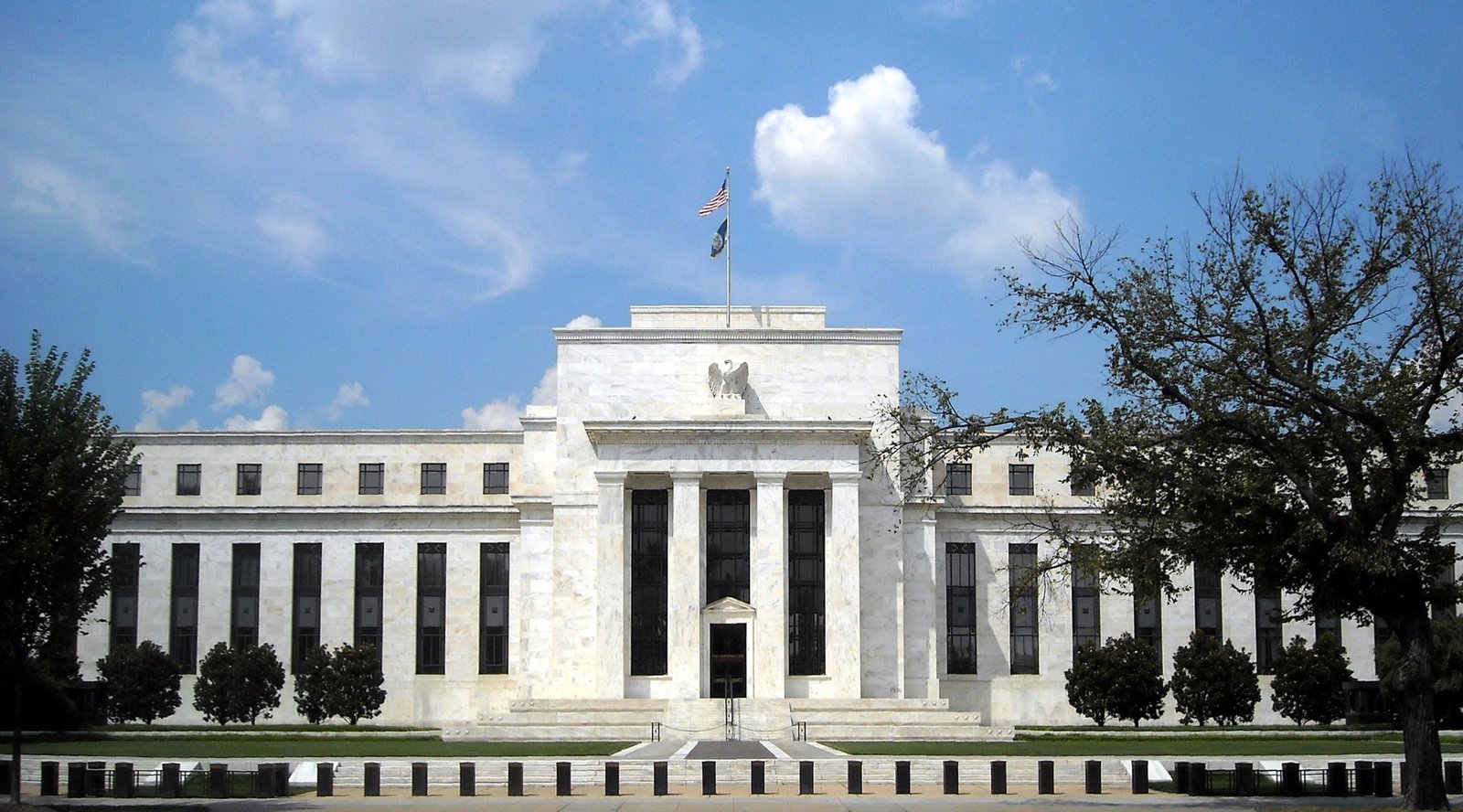
Economists had expected the Fed to raise rates in December, and Thursday’s data strengthened the case for some analysts. Peter Earle, senior director of research for the American Institute for Economic Research, told The Center Square: “Accelerating growth amid persistent inflation is going to complicate the Federal Reserve’s already complicated policy picture.”
The economy is expanding at a pace well above what some Fed officials regard as the non-inflationary growth rate of around 2%. At the same time, the central bank raised rates last month for the first time in three years, and that increase has yet to slow business investment, as companies continued to build AI-related infrastructure last quarter. Business investment overall rose at an annualised pace of 12.7% in the quarter, up from 9% in the prior quarter, according to CNN’s summary of the report.
Some economists cautioned against reading too much into the headline number. Given the dominance of AI-related spending, some said the strong GDP growth was probably not a true picture of the broader economy, and warned that tech firms have borrowed huge sums over the past year for AI projects whose payoff remains uncertain. A pullback in that spending, they said, could weaken growth in coming quarters.
Exports were a drag on the quarter: they declined by 5.7%, while imports surged at a nearly 20% annualised pace, according to CNN, a pattern analysts linked in part to businesses stockpiling ahead of Canadian tariffs taking effect, combined with data-centre-related purchases. Government spending rebounded, partly reflecting fewer sales of oil from the Strategic Petroleum Reserve, which are subtracted from government spending in GDP accounting.
A divided picture for households
The strength in the official data contrasts with households’ downbeat assessment of the economy, reflected in weak consumer sentiment surveys and President Donald Trump’s record-low approval ratings, according to Reuters. That gap between strong aggregate growth and strained household finances has become a defining feature of the current economic moment.

Lower-income households are likely to feel higher inflation more sharply than others, analysts noted, particularly as energy prices remain elevated. Food bought for consumption at home was unchanged in September, but gasoline and other energy goods rose 9.2% in the month and stood 35.4% above their level a year earlier, according to detailed breakdowns of the data.
For markets, Thursday’s data reinforced a familiar tension. Strong growth supports corporate earnings, but persistent inflation keeps alive the prospect of higher interest rates, which can weigh on stock valuations. Investors have increasingly focused on whether the enormous costs of AI projects will generate matching returns, a question that Thursday’s investment figures did little to settle.
What happens next
The Federal Reserve’s next policy meeting in December will be the immediate focus. Officials have said they want to see more data before deciding whether to raise rates again, and the next releases on jobs, inflation, and consumer spending will carry unusual weight.
The midterm elections on November 3 will also shape the economic outlook, determining whether the administration can advance its fiscal agenda through Congress. For now, the third-quarter data show an economy that is growing faster than expected, powered by consumers who keep spending and companies betting heavily on AI, but with inflation still too high for comfort and savings running thin. Whether that combination can hold into 2027 is the question that will define the months ahead.
Sources: Reuters; Bureau of Economic Analysis; CNN.