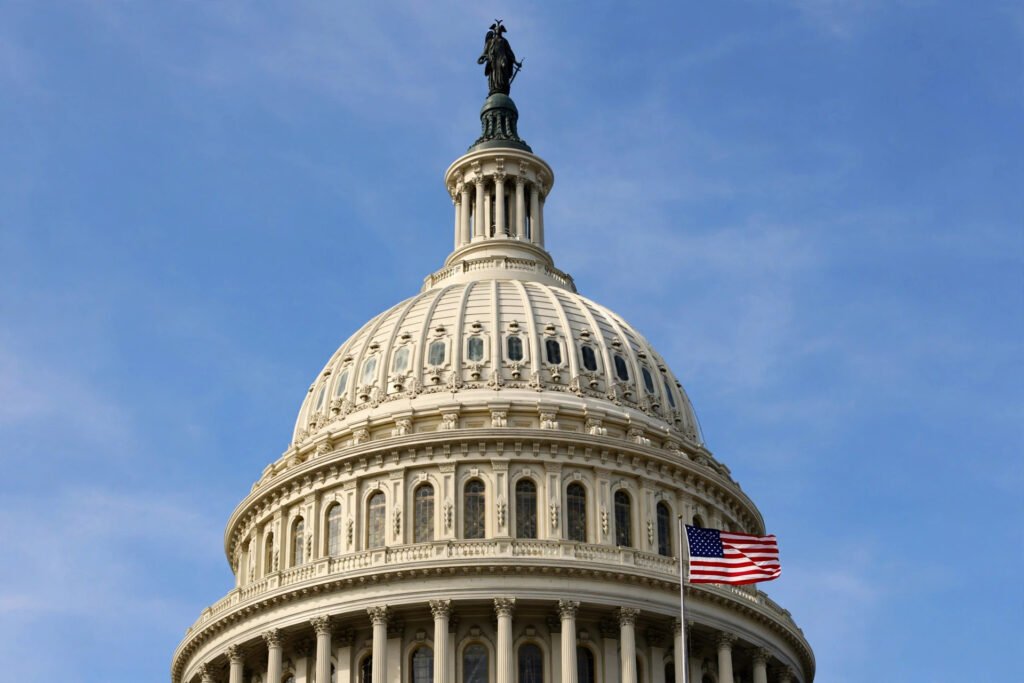


The Democratic Party has won control of both chambers of the United States Congress in the 2026 midterm elections, defeating President Donald Trump’s Republican Party in a sweeping result that reshapes the final two years of his presidency. Voters went to the polls on Tuesday, November 3, 2026, to elect all 435 members of the House of Representatives, more than a third of the Senate, 36 governors and a host of state and local offices, and the outcome was called late on Tuesday night local time in favour of the Democrats.
According to the Associated Press, Democrats had won 232 House seats that had been called, against 146 for Republicans, with dozens of districts still to be decided. Before the election, Republicans held 219 seats, Democrats 215, and one independent caucused with the Republicans, with two vacancies. Democrats needed to gain only a handful of seats to take the chamber, and they comfortably passed that mark as results came in through the night.
The result means that the Democratic leader in the House, Representative Hakeem Jeffries of New York, is expected to be chosen as Speaker when the new Congress is sworn in on January 3, 2027, according to Al Jazeera. The Senate also changed hands, with Democrats capturing at least seven seats previously held by Republicans, according to reporting of the results, in a night that produced several historic firsts.
A night of breakthroughs in the Senate
Some of the most striking results came in the Senate, where Democrats won seats in states that have voted reliably Republican for years. In Texas, James Talarico became the first Democrat to win a Senate seat in the state since 1988, according to reports of the results. In Kansas, Methodist minister Adam Hamilton became the first Democrat elected to the Senate from the state since 1932. In Maine, former logger Troy Jackson defeated longtime Republican Senator Susan Collins, one of the chamber’s best-known figures.
Democrats also won in North Carolina, South Carolina, Iowa and Ohio, according to the Economic Times’ live coverage of the results, and they held key seats of their own, including in Georgia and Michigan. In Michigan, Abdul El-Sayed defeated former Republican lawmaker Mike Rogers to become the first Muslim elected to the United States Senate, a milestone widely noted in coverage of the night.
In the House, Democrats flipped more than two dozen Republican-held seats, according to the same coverage, including districts that Mr Trump had carried comfortably in the 2024 presidential election. In Iowa, Democrat Sarah Trone Garriott unseated Republican Zach Nunn in the state’s 3rd Congressional District. In Virginia, Democrat Elaine Luria won a close race against Republican incumbent Jen Kiggans, while in Pennsylvania’s 10th Congressional District, Democrat Janelle Stelson unseated seven-term Republican Scott Perry, Al Jazeera reported. Democratic incumbents Ilhan Omar of Minnesota and Ro Khanna of California held their seats comfortably.
The governors’ races produced historic results of their own. In Georgia, former Atlanta mayor Keisha Lance Bottoms won the governorship to become the first Black woman ever elected governor of a US state, according to the Indian Express. In Ohio, Democrat Amy Acton defeated Republican Vivek Ramaswamy, while Democrats also won governors’ races in Iowa, Texas and Nevada, where Attorney General Aaron Ford defeated incumbent Republican Governor Joe Lombardo.
What voters were saying
The scale of the Democratic victory reflected broad dissatisfaction with the state of the country, according to early analysis of voter surveys. According to preliminary results from the AP Voter Poll cited in coverage, many voters were unhappy with the cost of living, the condition of the economy and Mr Trump’s job performance, and wanted Congress to exercise greater checks on his power.
The war with Iran also featured prominently in voters’ thinking. Mr Trump himself acknowledged that the conflict had contributed to Republican losses, according to the Indian Express, and Vice President JD Vance described the Iran war as the reason the party lost, in comments reported after the results. Iran’s Parliament Speaker, Mohammad Bagher Ghalibaf, said the results reflected Americans’ rejection of war, a claim reported by Iranian-linked coverage and by Indian outlets summarising the reaction.
Republican reaction was blunt. Some party figures described the night as a disaster and blamed Mr Trump directly, according to Jagran Josh’s summary of the results, while former President Barack Obama welcomed the Democratic gains and called for politics that brings people together, according to ABP News. Mr Trump, for his part, said he was ready to accept the results, according to the same summary, after sharing a photograph of a “VETO” hat in a post-election message.
Why the result matters for the next two years
Control of Congress changes what a president can do. With Democrats holding both chambers, Mr Trump’s legislative agenda faces a much harder path, and the new Democratic majorities gain the power to set the agenda in the House and Senate, to hold hearings and investigations, and to block or reshape presidential proposals. That is a sharp reversal from the position before the election, when Republicans controlled the House and Democrats needed to gain seats in both chambers to change the balance.
The result also matters for the war with Iran, which has dominated American politics since February 2026. A Democratic Congress is likely to press harder for oversight of military action and for a diplomatic path, although the president retains considerable authority over foreign policy and the armed forces. How far the new majorities go in challenging the administration’s war policy will be one of the defining questions of the next Congress.
Domestic policy is the other big battleground. Voters’ frustration with living costs was a central theme of the campaign, and Democrats will now face pressure to show that their victory translates into action on prices, jobs and household budgets. At the same time, the closeness of some races and the number of seats still uncalled serve as a reminder that the result, while sweeping, was not a landslide in every part of the country.
What happens next
Counting continues in the remaining House districts and in a small number of Senate races that were too early to call, including Alaska and Mississippi, according to the Associated Press results page. Once all races are called, attention will turn to the leadership elections in both parties and to the swearing-in of the 120th Congress on January 3, 2027.
Mr Trump has two years left in office, and the new Congress will shape how those years unfold — through legislation, through oversight, and through the politics of the next presidential election. For now, the verdict of November 3 is clear: voters handed control of Congress to the Democrats, and the Republican Party faces a period of reckoning about what went wrong.
Sources: Associated Press election results; Al Jazeera; The Economic Times live results coverage; The Indian Express; Deccan Herald.