

A drone hit one of the tallest towers in Riyadh on Tuesday. Eleven people were hurt. It was the second time in less than a week that the same landmark had been struck — and a sign that a war centred hundreds of kilometres away is now reaching into the heart of Saudi Arabia’s capital.
Saudi Arabia’s Civil Defence said the 11 injured people included two Saudi citizens, two Indians, three Nepalis and four Egyptians. The attack targeted a tower in the King Abdullah Financial District, the glass-and-steel quarter that has become the showcase of the kingdom’s economic ambitions. The Saudi-led coalition fighting Yemen’s Houthis called it a “terrorist attack” and said an investigation was under way at the scene.
The Houthis, who control much of western Yemen including the capital Sanaa, have been firing at Saudi airports, oil infrastructure and office buildings since Yemen’s frozen civil war reignited in July, in a knock-on from the US-Iran war. Riyadh’s financial district is now firmly on that list.
What happened on Tuesday
The strike came during the day on Tuesday, November 24. Saudi Civil Defence said emergency services responded after a tower in the financial district was hit, and confirmed 11 people had been injured. A civil defence spokesperson gave the breakdown of nationalities, and the Indian Embassy in Saudi Arabia said in a post on X that it had learned two Indian nationals were among the injured.
The coalition did not name the building that was struck. Its spokesman, Maj. Gen. Turki al-Malki, said in a statement that the attack was carried out using a drone and that the “deliberate targeting of civilians and civilian objects by the terrorist Houthi militia will be met with a firm response.”
Three separate witnesses told Al Jazeera the strike hit the Public Investment Fund tower — the PIF tower, Riyadh’s tallest building at 385 metres and the headquarters of Saudi Arabia’s sovereign wealth fund. The Wall Street Journal reported the same, describing a projectile striking the tallest tower in the Saudi capital.
Civil Defence posted a photograph of the tower after the attack. It showed damage to the building about halfway up its facade. The picture looked a lot like the one from the last strike.
The same tower, hit twice in five days
Last Thursday, November 19, the PIF tower was struck in a Houthi aerial attack. That one caused material damage but no injuries, according to Reuters. Tuesday’s strike was the second hit on the building in less than a week — and this time people were hurt.
It was not even the first attack on a high-profile Riyadh target this month. On November 8, the Houthis hit the Riyadh building of state oil company Aramco. The pattern is hard to miss: the group is picking targets that carry symbolic weight, not just military value.
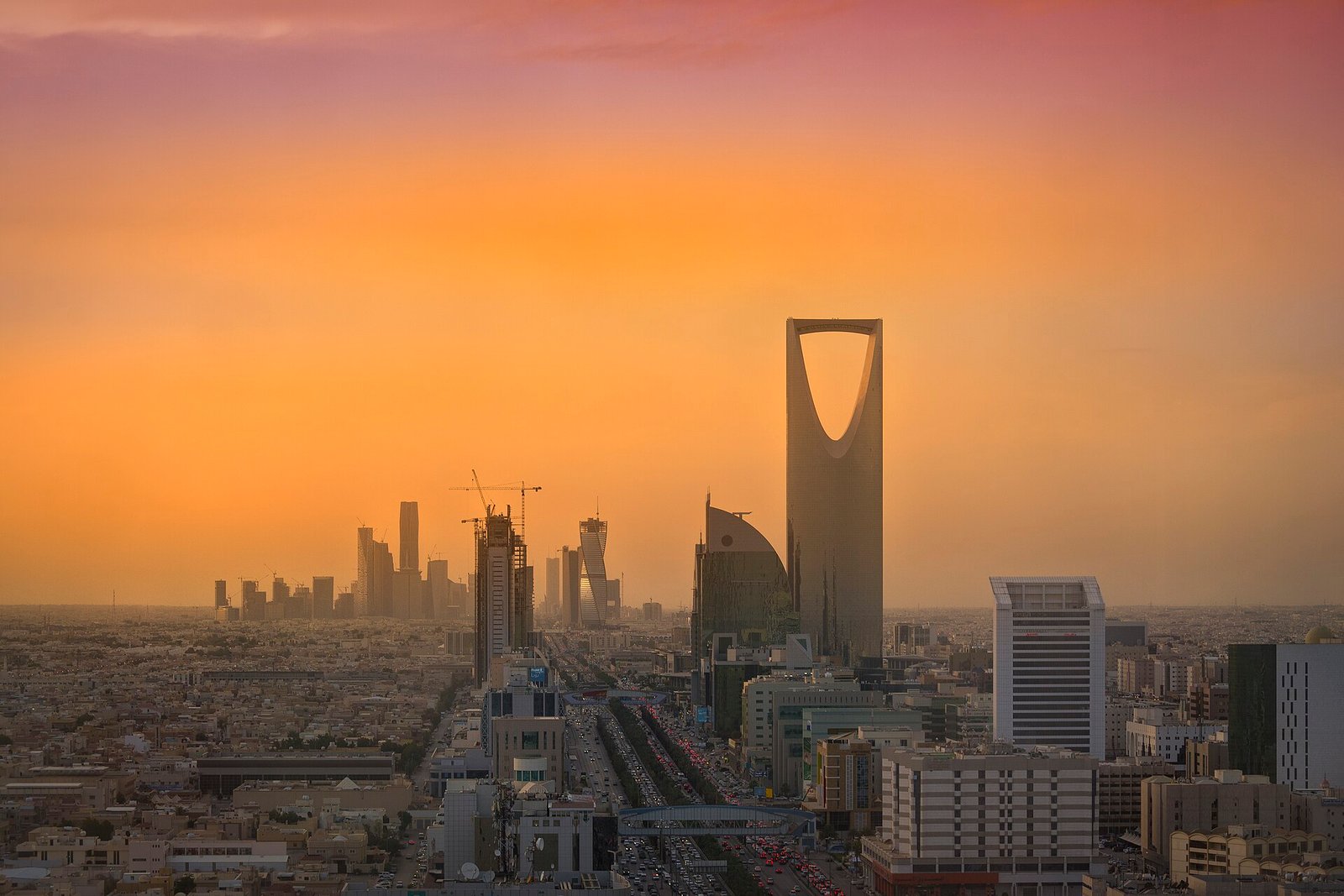
The PIF tower is about as symbolic as it gets. Standing 385 metres high, it is the most prominent landmark of the King Abdullah Financial District, a development built to show the world that Saudi Arabia’s economy is about more than oil. The Public Investment Fund itself is the vehicle driving that diversification — buying stakes in companies around the world, funding huge projects at home, and managing hundreds of billions of dollars. Hitting its headquarters sends a message that no amount of glass and steel can keep the war out.
A war that keeps spilling across borders
To understand why a tower in Riyadh is being hit, you have to look south, to Yemen. The Houthis control much of western Yemen, including Sanaa. The internationally recognised government, backed by Saudi Arabia, is based in the southern port city of Aden.
That war had been largely frozen for years. It reignited in July 2026, as a knock-on from the US-Iran war, and the Houthis have been on the offensive since. On the ground, the group has seized swathes of territory from the Saudi-backed government, forcing it into a major retreat this month. The coalition acknowledged setbacks on Tuesday, even as a military spokesman insisted the Houthis would not capture Aden, despite having pushed to within about 60 kilometres of the temporary capital.
The Houthis have also kept up a campaign of long-range strikes into Saudi Arabia — airports, oil facilities, and now office towers. They cannot match Saudi Arabia’s air power, so they reach for targets that embarrass Riyadh and rattle investors. From Riyadh’s side, every strike on a landmark like the PIF tower is a reminder that the war in Yemen is not contained, however much money is poured into new districts and new towers.
There were other claims flying around on Tuesday that could not be independently checked. Yemeni government forces said they had carried out 697 strikes against the Houthis over the past few hours, according to the army’s spokesman. The Houthis, for their part, accused Saudi Arabia of targeting civilian areas in Sanaa. Al Jazeera said it was unable to independently verify either claim. In a war where both sides announce big numbers, that caution matters.
Condemnation came fast
The reaction from the region was swift and near-unanimous. Qatar condemned the attack as a “shameful act of aggression” and a flagrant violation of Saudi sovereignty. Lebanon’s Prime Minister Nawaf Salam called it an act of “terrorism”. Pakistan’s Foreign Office said it strongly condemned the “terrorist attack carried out today by the Houthi militia” and warned of the threat to regional peace. Arab states and the Muslim World League added their own condemnations.
What is different this time is the target and the timing. A sovereign wealth fund headquarters is not a border post or an airbase. And the strike landed on a day when the wider region was already on edge — with tankers being hit by mines in the Strait of Hormuz and mediators scrambling to stop the US-Iran confrontation from widening further.
What happens next
Three things will be watched in the coming days.
The first is the injured. Eleven people were hurt on Tuesday, and Saudi authorities have not yet said how serious their injuries are. That number could change as more information comes out — casualty figures in the first hours after an attack are often revised.
The second is the response. Al-Malki promised a “firm response” to what he called the deliberate targeting of civilians. Saudi Arabia and its coalition partners have answered past Houthi strikes with air raids on Yemen. Whether that happens again, and how hard, will be clear within days.
The third is whether the PIF tower gets hit a third time. Two strikes in five days suggest the Houthis can reach it, and that they want to. Air defences can intercept plenty of drones. It only takes one getting through to shut down a district, injure a dozen people, and put a dent in the image Saudi Arabia has spent billions building.
For now, the facts are these: a drone struck a tower in Riyadh’s financial district on Tuesday, 11 people were injured, and the same tower was hit five days earlier. Everything else — the response, the next strike, the wider war — is still unfolding.
Sources: Reuters; Al Jazeera; Arab News; Dawn; The Wall Street Journal.