


NAIROBI, Kenya — Kenya’s Health Ministry announced late Friday that the country has recorded its second death from Ebola, a 65-year-old woman who was a close relative of the nation’s first patient.
The woman developed symptoms while in quarantine and was receiving supportive care at an infectious disease unit in Nairobi, the capital, before she died Friday evening, officials said. She had begun showing symptoms about 10 days earlier.

The ministry said medical personnel “did everything possible to save her life,” according to reporting by The Associated Press. Her family was notified, and the ministry said it would arrange a safe and dignified burial in consultation with relatives, AP reported.
The death brings Kenya’s confirmed Ebola toll to two, with nine confirmed cases in total. The remaining seven patients were receiving treatment at two isolation facilities, and no new infections were reported, according to both Reuters and the AP.
A Death Under Quarantine
The second victim was already known to health authorities when she fell ill. She had been identified as a direct contact of the index patient — the 40-year-old man whose case marked Kenya’s first-ever recorded Ebola infection — and was in quarantine when her symptoms began.
Health officials have described the quarantine system as the backbone of Kenya’s response. Roughly 135 contacts of the first patient have been traced, and the large majority were placed in quarantine, with health teams monitoring them daily for signs of illness. Eight people tested positive while in quarantine, including four health workers and four close family members, according to the AP.
The ministry also said some contacts who complete the 21-day quarantine period without developing symptoms would begin to be released on Saturday — a milestone officials had been counting down toward since the first case was detected.
Ebola is transmitted through direct contact with the bodily fluids of a person who is showing symptoms — including blood, vomit, or diarrhoea — or through contaminated materials such as bedding and clothing, the AP reported. Health authorities note that only people with symptoms can transmit the virus.
How Kenya’s Outbreak Began
Kenya announced its first-ever Ebola case on October 6. The index patient was a 40-year-old Kenyan man who had been living in the Democratic Republic of Congo. He travelled to Kenya via Uganda, arriving on October 3, and was driven by a relative to Nairobi Hospital, where he tested positive for Ebola on October 5. He died the same day.
His arrival set off one of the most intensive contact-tracing operations the country’s health ministry has undertaken. Investigators followed his movements through Uganda and into Nairobi, identifying about 135 contacts and placing nearly all of them in quarantine.
The cases confirmed since then have all been traced back to him. The health ministry has said there is no evidence of community transmission — that is, the virus spreading among people with no known link to the original patient.
Director-General for Health Patrick Amoth said in an earlier statement that the cases form a single contained cluster. “All nine cases belong to one cluster, and as of today there is no evidence of transmission outside this group,” Amoth said, according to reporting by Reuters on October 20.
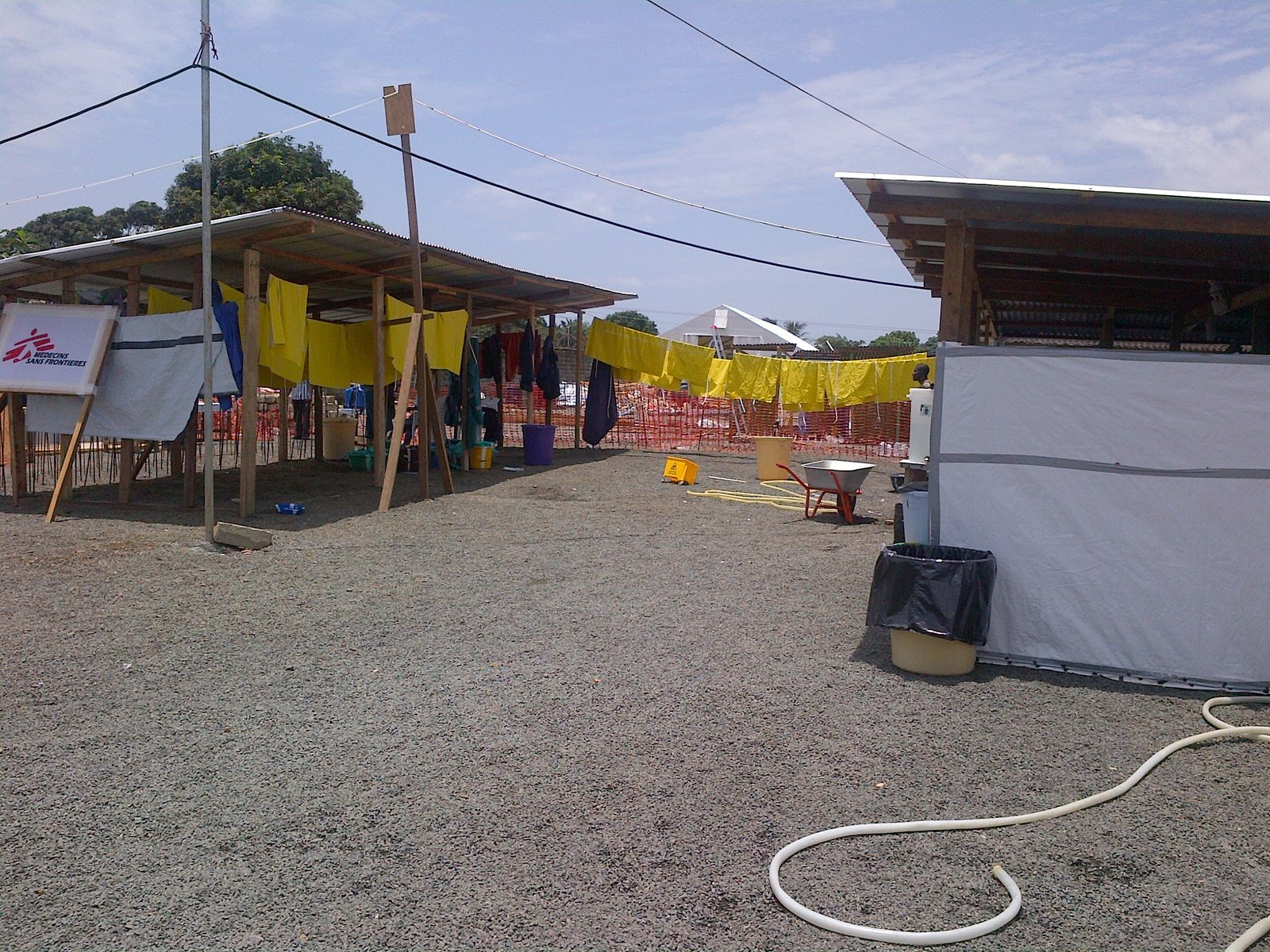
The infection of four health workers has been a sobering element of the outbreak. The workers were among those who managed the index case in his first days in Nairobi, and all were already in quarantine when they developed symptoms and tested positive.
An Outbreak Spanning Four Countries
Kenya’s experience is part of a far larger regional crisis. The current Ebola outbreak began in the Democratic Republic of Congo and has now been reported in four countries across eastern, central and western Africa — the widest geographic spread of any Ebola outbreak recorded on the continent, Reuters reported.
Uganda reported imported cases earlier this year before being declared Ebola-free in August. On Tuesday, Nigeria became the fourth affected country when it confirmed its first Ebola case in more than a decade in a traveller who had arrived in Abuja from Uganda and had not visited Congo.
On Friday, Nigeria’s Health Minister Muhammad Ali Pate said genomic analysis showed the virus in Nigeria’s case was closely related to the strain detected in Kenya’s index patient — the first genetic link between the outbreaks — though Nigerian authorities said there was no evidence of any direct connection between the two patients.
The scale of the epidemic in Congo remains staggering. The virus has infected nearly 10,000 people and killed more than 4,600 there, according to Reuters. The AP reported at least 4,000 deaths in Congo since May.
Health officials are contending with a particularly difficult strain: the Bundibugyo species of Ebola, for which there is no approved vaccine or treatment. Supportive care — fluids, oxygen, and close monitoring — remains the mainstay of treatment.
The outbreak’s expansion has rattled governments beyond Africa. Late on Monday, the U.S. State Department raised its travel advisory for Kenya, urging Americans to reconsider travel to the country because of health risks, Reuters reported.

Late detection has emerged as a serious concern elsewhere in the region. Nigeria’s first patient was not tested for Ebola until 13 days after falling ill, according to Reuters, complicating the work of tracing people she may have had contact with. The head of the Africa Centres for Disease Control and Prevention, Jean Kaseya, told Reuters that the episode showed no country could consider itself safe and that at-risk lists across the continent would have to be redrawn.
What Happens Next
For Kenya, the immediate focus is on finishing the quarantine cycle. Health officials said contacts who complete 21 days of monitoring without symptoms will start leaving quarantine on Saturday — the first large-scale release since the outbreak began. If no new infections emerge from those releases, it will strengthen the ministry’s assessment that transmission has been contained within the single known cluster.
Contact tracing continues in the background, and health teams remain on alert at border crossings and airports, where the index patient’s undetected journey into the country raised difficult questions about screening.
The seven patients still in isolation facilities will remain under care until they test clear of the virus. Because there is no approved treatment for the Bundibugyo strain, their care will rely on supportive measures — the same approach that health workers have used throughout this outbreak.
The situation remains developing. Kenya’s health ministry has pledged continued updates as quarantine periods end and as more is learned about how the virus reached the country in the first place. For now, officials insist the facts are encouraging: two deaths, nine cases, all linked to one traveller, and — so far — no sign of the virus spreading beyond that chain.