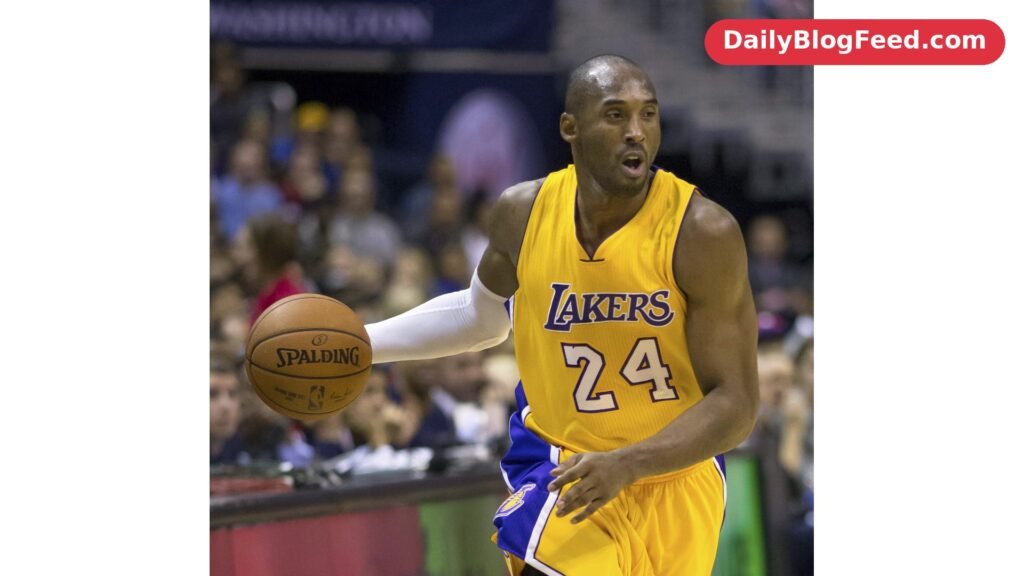

Few athletes ever owned a city the way Kobe Bryant owned Los Angeles. For twenty seasons, all of them in a Lakers uniform, he turned hard work into theatre and turned late-game pressure into a personal stage.
People still search for Kobe Bryant for different reasons. Some want the numbers: five championships, 33,643 career points, and one unforgettable 81-point night. Others want the person behind the nickname, the husband and father whose second career in storytelling earned him an Academy Award.
This profile brings those threads together. It covers his age and family, his rise from high school straight to the NBA, his greatest seasons, and the business career that followed retirement. It also looks honestly at the wealth estimates attached to his name and at the tragedy that ended his life far too soon.
Quick Facts
| Fact | Detail |
|---|---|
| Full name | Kobe Bean Bryant |
| Born | August 23, 1978, Philadelphia, Pennsylvania |
| Died | January 26, 2020, Calabasas, California (aged 41) |
| Height | 6 ft 6 in (1.98 m) |
| Team | Los Angeles Lakers (1996–2016) |
| Position | Shooting guard |
| Wife | Vanessa Bryant (married 2001) |
| Children | Natalia, Gianna, Bianka, Capri |
| NBA championships | 5 (2000, 2001, 2002, 2009, 2010) |
| League MVP | 2008 |
| NBA All-Star selections | 18 |
| Olympic gold medals | 2008, 2012 |
| Academy Award | Best Animated Short Film, 2018, for Dear Basketball |
A Philadelphia Kid Raised Partly in Italy
Kobe Bean Bryant was born in Philadelphia on August 23, 1978. His father, Joe Bryant, was a professional basketball player, and his mother was Pam Bryant. Basketball was therefore less a hobby than the family trade, something discussed at the dinner table as naturally as other families discuss work.
When Joe Bryant’s playing career took him to Italy, the family moved with him. Kobe spent much of his childhood there, and the experience shaped him in ways that stayed visible for life. He grew up speaking Italian, developed a lifelong love of soccer, and learned to see basketball through a European lens that valued footwork and spacing.
The family later returned to the Philadelphia area, where Kobe attended Lower Merion High School in Ardmore. By then he was already a serious student of the game. He studied great players on tape, copied their moves in driveways and gyms, and built a reputation as a teenager who practiced with unusual intensity.
Straight From High School to the NBA
In 1996, Kobe Bryant skipped college and entered the NBA draft directly from high school. The Charlotte Hornets selected him with the 13th overall pick, but he never played for them. The Lakers acquired his draft rights in a trade that sent veteran center Vlade Divac to Charlotte, a deal that now reads as one of the most lopsided in league history.
He arrived in Los Angeles at seventeen, the youngest player in the league at the time. His early minutes were limited, and his jump shot was not yet the weapon it would become. What coaches and teammates noticed first was his appetite for work, including early-morning sessions and a willingness to study opponents in exhaustive detail.
By his second season, the league had taken notice. He won the Slam Dunk Contest in 1997 and earned his first All-Star selection in 1998. The teenager who had arrived as a gamble was becoming a fixture, and the Lakers were building a team around two towering talents: Bryant and center Shaquille O’Neal.
The Three-Peat Years
The arrival of coach Phil Jackson in 1999 gave the Lakers the structure their talent needed. Jackson’s triangle offense asked Bryant and O’Neal to share the ball and trust the system rather than simply outscore opponents. The results were immediate and historic.
Los Angeles won championships in 2000, 2001, and 2002, completing a rare three-peat. Bryant was no longer a promising young scorer; he was a closer, a defender, and a player opponents game-planned around. His partnership with O’Neal produced some of the most dominant basketball of the era, even though the relationship between the two stars was often tense.
That tension eventually ended the partnership, with O’Neal traded to Miami in 2004. The split left Bryant as the unquestioned leader of the Lakers, but it also left him carrying a rebuilding team. The seasons that followed tested his patience and his reputation, and they set up the most remarkable individual scoring stretch of his career.
Eighty-One Points and the Solo Peak
On January 22, 2006, against the Toronto Raptors, Kobe Bryant scored 81 points. It remains the second-highest single-game total in NBA history, behind only Wilt Chamberlain’s 100. The performance was not a novelty act built on meaningless shots; the Lakers trailed at halftime and needed nearly every basket to win.
That season also brought him the first of two consecutive scoring titles. He averaged 35.4 points per game in 2005–06, a figure few modern players have approached over a full season. The scoring was spectacular, but critics asked whether one player could carry a team to a title, and the Lakers’ playoff exits kept that question alive.
The answer arrived in the form of better teammates and renewed trust. The Lakers acquired Pau Gasol in 2008, and Bryant finally won the league MVP award that same season. His game had matured: the footwork was sharper, the shot selection smarter, and the defense as committed as ever. He had become a complete player rather than simply a prolific scorer.
Back-to-Back Titles Without Shaq
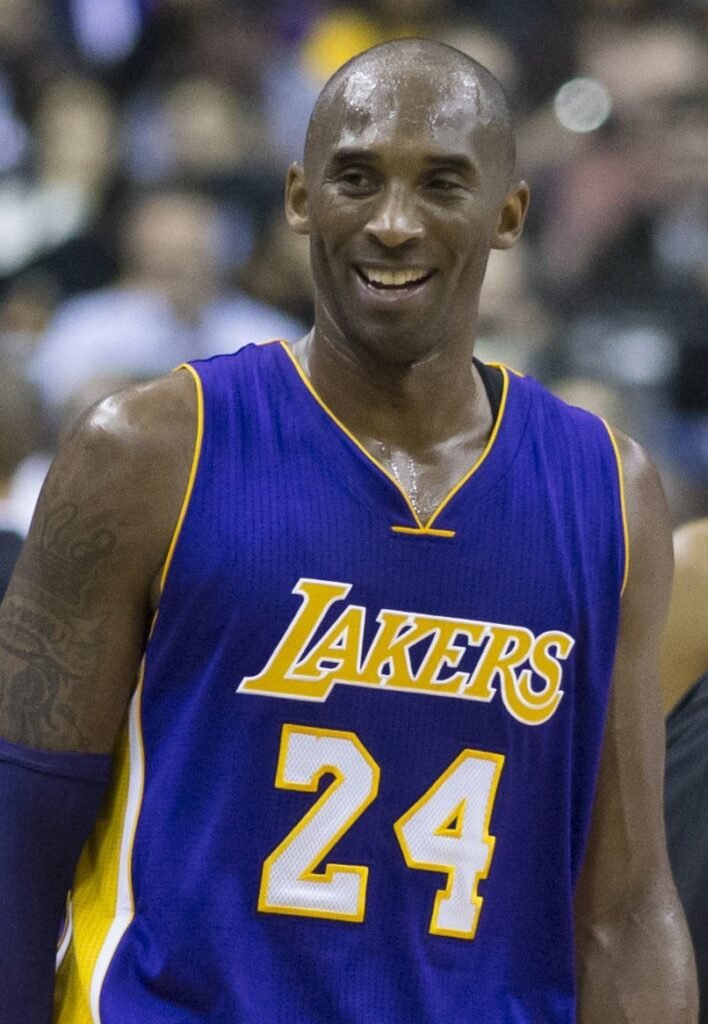
The 2009 and 2010 championships answered the last serious doubt about Bryant’s career. He led the Lakers past Orlando in 2009 and then past Boston in a bruising seven-game Finals in 2010. He was named Finals MVP both times, and the second title in particular felt like personal vindication.
Those Finals runs showcased a different kind of greatness. Bryant was no longer the aerial showman of his youth; he was a craftsman who won with fadeaways, footwork, and fourth-quarter nerve. Teammates described a leader who demanded the same preparation from them that he demanded from himself, even when that demand made him difficult to play alongside.
Injuries began to take their toll after that peak. He tore his Achilles tendon in April 2013, an injury that would have ended many careers outright. He returned, but the explosiveness was diminished, and further injuries to his knee and shoulder limited his final seasons. The Lakers, meanwhile, were rebuilding, and Bryant’s last years were defined more by farewell than by contention.
The Farewell: Sixty Points and an Oscar
Kobe Bryant announced during the 2015–16 season that it would be his last. His farewell tour became a league-wide event, with opposing arenas honoring a player many fans had once loved to hate. Then came the final game itself, on April 13, 2016, against the Utah Jazz.
He scored 60 points in that finale, including the go-ahead basket in the closing seconds. It was a fittingly theatrical ending for a player who had always treated big moments as invitations. He finished his career with 33,643 points, then third on the NBA’s all-time scoring list, and with both of his jersey numbers, 8 and 24, later retired by the Lakers.
Retirement opened a second act that surprised many observers. He founded the production company Granity Studios and wrote and narrated the animated short Dear Basketball, a love letter to the game built around his retirement poem. The film won the Academy Award for Best Animated Short Film in 2018, making Bryant one of the rare athletes to win both a championship ring and an Oscar.
That Oscar connection puts him in rare company among screen legends. The Academy has honored performers such as Paul Newman, whose own second act in philanthropy and food products showed how a famous name could be turned toward lasting work beyond the spotlight. Bryant seemed to be following a similar path, using fame as a platform rather than a finish line.
Family Life
Kobe Bryant married Vanessa Laine in 2001. The couple went on to have four daughters: Natalia, born in 2003; Gianna, born in 2006; Bianka, born in 2016; and Capri, born in 2019. Family became an increasingly visible part of his public life after retirement, especially his coaching of Gianna’s youth basketball team.
Gianna, known as Gigi, shared her father’s love of basketball and was widely seen as a promising young player. Bryant spoke proudly of her game and of coaching her team, and the two were often photographed together at basketball events. His post-retirement life revolved heavily around his daughters’ sports and schooling.
The family also endured public difficulty, including a 2003 sexual assault charge in Colorado. The criminal case was dismissed in 2004 after the accuser declined to testify, and a related civil suit was later settled. Bryant issued a public apology at the time, and the episode remains part of any honest account of his life.
Net Worth: What Was Reported
Kobe Bryant’s net worth at the time of his death is commonly cited at around $600 million, according to Forbes and other financial reporting. Some estimates ran higher, with other outlets citing figures up to roughly $770 million, so the precise total is best treated as an estimate rather than an exact figure.
His playing salary alone was enormous: Forbes reported career earnings of about $680 million from salary and endorsements during his playing days, a record for a team-sport athlete at the time. Nike was his most famous endorsement partner, but his portfolio also included deals with major brands across sportswear, watches, and beverages.
Retirement added business income rather than ending it. He co-founded the venture capital firm Bryant-Stibel in 2016, backing technology, media, and data companies. He also built Granity Studios into a storytelling business spanning books, podcasts, and film. The most famous investment story attached to his name is an early stake in the sports drink BodyArmor, which was later acquired by Coca-Cola in a deal that reportedly multiplied the value of his investment many times over.
The Mamba Mentality
The phrase most associated with Bryant is “Mamba Mentality,” named for his “Black Mamba” nickname. He described it as a philosophy of constant improvement: obsessive preparation, honest self-criticism, and a refusal to be satisfied with yesterday’s performance. It became a slogan well beyond basketball, quoted by athletes, entrepreneurs, and students.
There was a harder edge to that philosophy too. Former teammates have described a competitor who could be relentless and unsparing, both with himself and with others. Bryant himself acknowledged that his drive sometimes cost him friendships in the locker room. The same quality that made him great also made him demanding, and both sides of that coin belong in his story.
His competitive streak also found echoes in other fields. Actors such as Steve McQueen built their legends on a similar blend of cool control and fierce competitiveness, a screen persona that, like Bryant’s on-court image, mixed talent with an unmistakable hunger to win. Bryant admired that kind of discipline, and his own training habits became legendary in their own right.
Death and Legacy
On January 26, 2020, Kobe Bryant died in a helicopter crash in Calabasas, California. His daughter Gianna and seven other people aboard also died. He was 41 years old. The news stopped the sports world mid-season, and tributes poured in from players, fans, and public figures around the globe.
His legacy since then has been honored in many forms. He was inducted into the Naismith Memorial Basketball Hall of Fame in 2020. The Lakers retired both of his numbers, and his influence remains visible in the footwork, preparation habits, and mentality of players who grew up watching him.
Perhaps the most durable part of his legacy is the one he was building when he died: coaching young players, especially girls, and telling stories meant to inspire them. The Mamba & Mambacita Sports Foundation, continued by his family, supports young athletes and underserved communities. It is a fitting continuation for a man whose final chapter was about passing the game on.
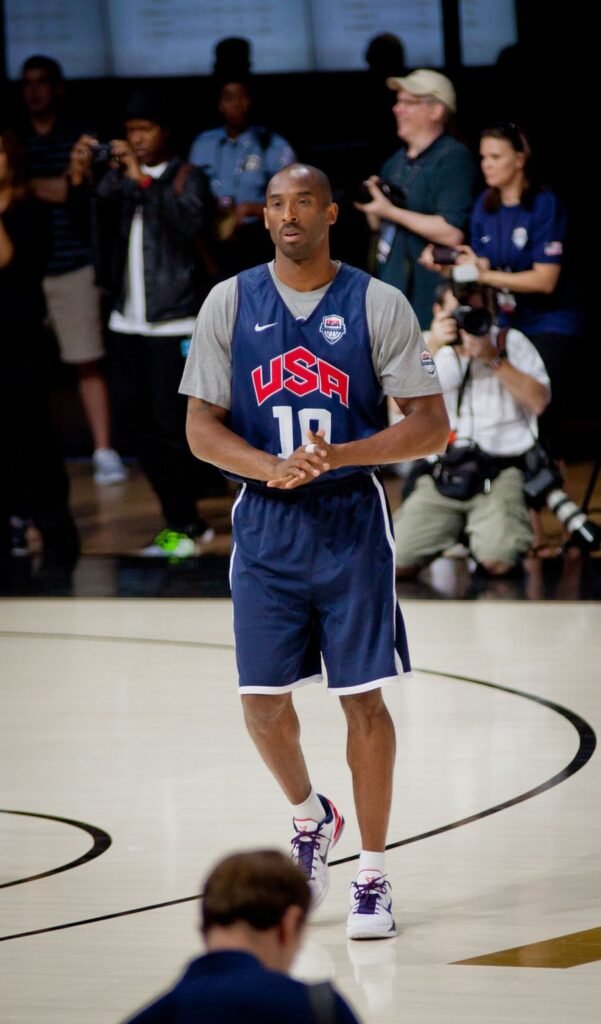
Lesser-Known Facts About Kobe Bryant
- He was named after Kobe beef, a type of Japanese beef his parents saw on a restaurant menu before he was born.
- He spoke fluent Italian and Spanish, a legacy of his childhood years in Italy.
- He won an Oscar before many full-time filmmakers do, for a five-minute animated film he wrote and narrated himself.
- The Lakers retired two numbers for him, 8 and 24, making him one of the rare players honored twice by the same franchise.
- He played his entire 20-year NBA career with one franchise, a loyalty that is increasingly rare in modern professional sports.
- He was an avid soccer fan and once said he would have liked to play the sport professionally had basketball not worked out.
Frequently Asked Questions
How old was Kobe Bryant when he died?
Kobe Bryant was 41 years old when he died on January 26, 2020. He was born on August 23, 1978, in Philadelphia, Pennsylvania.
Who was Kobe Bryant’s wife?
Kobe Bryant’s wife was Vanessa Bryant, whom he married in 2001. They remained married until his death in 2020 and had four daughters together.
How many championships did Kobe Bryant win?
Kobe Bryant won five NBA championships with the Los Angeles Lakers, in 2000, 2001, 2002, 2009, and 2010. The first three came alongside Shaquille O’Neal, and the last two came with Pau Gasol as his co-star.
What was Kobe Bryant’s net worth?
Kobe Bryant’s net worth at the time of his death is commonly cited at around $600 million, according to Forbes and other financial outlets. Some estimates ran higher, so the figure should be understood as an estimate rather than an exact accounting.
What is the Mamba Mentality?
The Mamba Mentality was Bryant’s personal philosophy of relentless improvement, built on hard work, preparation, and resilience. He said it meant trying to be better every day than you were the day before, whatever your field.
Did Kobe Bryant win an Oscar?
Yes. Kobe Bryant won the Academy Award for Best Animated Short Film in 2018 for Dear Basketball, which he wrote and narrated. The film was based on the poem he published when announcing his retirement from basketball.
Conclusion
Kobe Bryant’s career resists simple summary because it contained so many careers at once: teenage prodigy, three-peat champion, solo scoring machine, two-time Finals MVP, Oscar winner, businessman, and youth coach. Few athletes have reinvented themselves so completely, and fewer still have done it while staying with one team for two decades.
His story also carries a reminder that greatness and flaw can live in the same person. The drive that made him legendary could be hard on those around him, and his life included a serious public controversy that he and others had to live with. Remembering him honestly means holding both truths at once.
What endures most is the standard he set. He treated preparation as a daily discipline, not a slogan, and he spent his final years trying to hand that discipline to a new generation. In that sense, his last and perhaps most fitting role was his final film credit: storyteller, still teaching the game he loved.
A final note on longevity: careers that last twenty years at the top are rare in any field. Directors such as Clint Eastwood have shown the same kind of staying power, reinventing themselves across decades rather than fading after an early peak. Bryant’s twenty seasons with the Lakers belong in that same conversation about endurance.