
What Happened Around the World in the Last 24 Hours: Wars, Escalations and Markets. In the last 24 hours, the world has witnessed a mix of geopolitical tension, ongoing war dynamics and dramatic financial market reactions that together reveal how interconnected conflicts and economies really are. From rising safe haven demand and conflict hotspots to evolving investor confidence, these developments matter not just to policymakers and traders but to everyday readers looking to make sense of world events. READ MORE
1. Geopolitical Escalations and Conflict Zones
🇺🇸 Middle East U.S Iran Tensions
Global Threat sentiment has surged as the United States and Iran remain at odds. raising geopolitical strains particularly movements of U.S military means and warnings from Tehran have heightened fears of broader battle in the Gulf region. These developments echo recent shifts in strategy in the Middle East that request actors are watching nearly.
🇪🇺 Russia–Ukraine War Continues
The long running Russia Ukraine conflict persists, with ongoing shelling and disruption to civilian infrastructure. Kyiv continues recovery efforts amidst continued strain on utilities and services in contested areas.
Regional Tensions and Beyond
While ceasefires and peace talks have intermittently curbed escalation in parts of the Middle East, long standing conflicts such as those involving Hezbollah and Israel continue to influence regional stability.
Takeaway: Global conflicts are not static they are evolving, spreading uncertainty that feeds into economic and security calculations around the world.
2. Financial Markets Reaction — Volatility and Safe Havens
Safe Haven Surge — Gold Breaks Record
Amid geopolitical uncertainty, gold soared past $5,000 per ounce its highest level ever as investors rushed into traditional safety assets. Silver and platinum also hit multi year highs.
Equities and Currencies
Major equity futures in Japan, the U.S and Europe showed volatility with downturns this morning reflecting investor caution. Meanwhile, the Japanese yen strengthened as speculators anticipated intervention after sharp movements against the dollar.
Investors’ Sentiment
Big northern European investors are reportedly reassessing exposure to U.S assets amid rising geopolitical risks. A notable strategic shift that signals caution in global portfolios.
Oil Prices — Mixed Signals
While geopolitical tensions often lift oil prices, supply concerns are being tempered by broader output fundamentals keeping prices relatively stable.
Insight: When conflicts intensify or global politics shift unpredictably, markets often react first or hardest in currencies, commodities and safe haven instruments like gold.
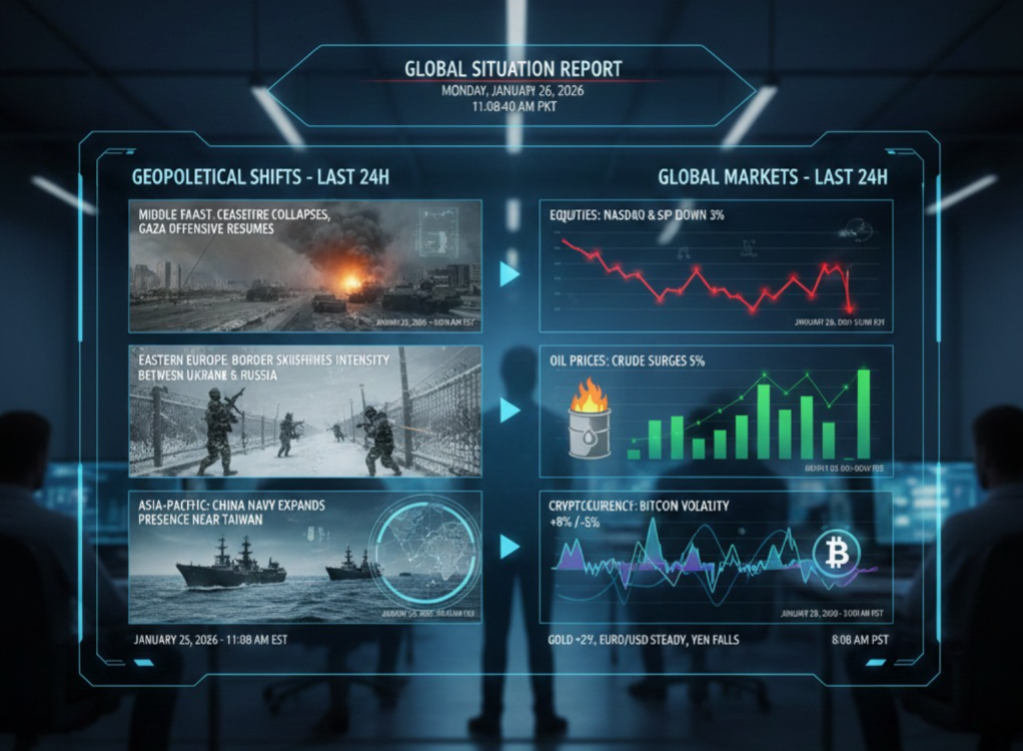
3. Connecting the Dots: Why It Matters
Geopolitics and Economics: Two Sides of the Same Coin
Wars and geopolitical tensions aren’t just headlines they drive investor psychology, fuel shifts in capital flows and can reshape long term economic relationships. In this environment:
- Safe-haven flows protect against uncertainty (e.g gold surging).
- Equity volatility reflects forecast risk.
- Investor strategy changes (like diversification away from U.S assets) signal deeper structural shifts.
Local Impacts, Global Ripples
Even if you’re not directly involved in a conflict zone, global markets influence:
- Savings and retirement accounts (via stock market movements)
- Fuel prices and inflation
- Currency strength
- Investor confidence
This makes staying informed both globally and locally relevant.
Conclusion
The world in the past 24 hours has demonstrated how geopolitical tensions, conflict escalations and financial market reactions are intertwined. From caution in stock markets to historic highs in safe haven assets like gold, today’s events reveal a world balancing risk, uncertainty and strategic calculation.