
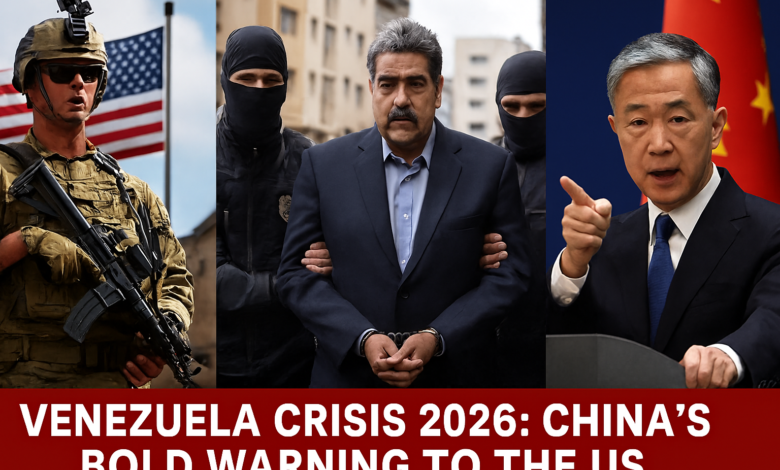
Venezuela Crisis 2026: China’s Bold Warning to the US: China’s response to the Venezuela conflict has sent shockwaves through global politics. From strong diplomatic warnings to calls for sovereignty and international law, here is a complete latest and in-depth analysis of Beijing’s stance and what it means for the future world order.
When Latin America Became the Center of Global Tension
The Venezuela conflict is no longer a regional crisis. What began as political instability and international pressure has now evolved into a global geopolitical flashpoint. As the United States increased its involvement in Venezuela, the world waited for one critical response China’s.
Beijing did not react with weapons or threats. Instead it chose a calculated, powerful and deeply symbolic response that has left diplomats, analysts and global markets on edge. China’s words carried weight and a warning. READ MORE
What Is Happening in Venezuela Right Now?
Venezuela is facing one of the most complex crises in its modern history. Political power struggles economic collapse, sanctions and foreign pressure have pushed the country into uncertainty.
Key factors driving the conflict:
- Rising U.S political and strategic involvement
- Ongoing leadership disputes and legitimacy debates
- Severe economic pressure and sanctions
- Strategic importance due to massive oil reserves
This volatile mix turned Venezuela into a global concern and forced major powers like China to respond.
China’s Official Response: Strong Words, Clear Message
China’s response to the conflict in Venezuela was very vocal.
Beijing has been critical of foreign intervention urging other nations not to use unilateral measures which could compromise the sovereignty of other nations. Chinese officials said the fate of Venezuela has to be determined by Venezuelans themselves.
China clearly stated:
- It opposes military intervention in sovereign states
- It rejects any country acting as a “global judge”
- It supports dialogue over force
- It defends international law and the UN Charter
This response instantly positioned China as a counter-voice to Western intervention.
Why China’s Reaction Is So Important
China’s stance is not emotional — it is strategic.
1. Protection of Sovereignty
China has long promoted a non-interference policy. Supporting Venezuela reinforces Beijing’s global narrative that nations should govern themselves without foreign pressure.
2. Strategic Message to the World
China’s response was not only about Venezuela. It was a signal to other nations facing external pressure that Beijing stands against forced regime change.
3. Energy and Economic Interests
Venezuela holds one of the world’s largest oil reserves. China has invested heavily in energy, infrastructure and trade partnerships with the country. Instability directly threatens long term Chinese interests.
China vs United States: A Clash of Worldviews
The Venezuela conflict highlights a deeper global divide.
- The U.S approach focuses on pressure, sanctions and intervention
- China promotes sovereignty, diplomacy and multipolar balance
Beijing’s criticism reflects growing resistance to a single power world order. Analysts see this as part of China’s long term strategy to reshape global influence.
Russia and China: Quiet Alignment
Although China and Russia act independently their responses to the Venezuela crisis share similarities.
Both countries:
- Condemned foreign intervention
- Emphasized international law
- Supported Venezuela’s sovereignty
This quiet alignment increases diplomatic pressure on the West and strengthens the idea of a multipolar global system. READ MORE
Impact on Global Politics
China’s response has triggered wider consequences:
United Nations Pressure
China may use international forums to challenge unilateral actions and push for diplomatic resolutions.
Latin America’s Reaction
Several regional governments view China’s stance as validation of concerns about external interference.
Global Power Shift
The crisis reinforces the idea that global influence is no longer controlled by one superpower.
Could This Lead to a Bigger Global Conflict?
At present China shows no intention of military involvement. Its strategy is diplomatic, economic and narrative driven.
However, the long term risk lies in:
- Escalating proxy conflicts
- Economic retaliation
- Growing distrust between major powers
The Venezuela conflict could become a template for future geopolitical confrontations.
What Happens Next?
The world is watching closely.
Possible outcomes include:
- Increased diplomatic negotiations
- Stronger Chinese presence in Latin America
- Prolonged instability in Venezuela
- Heightened U.S China tensions
China’s response has already changed the conversation from intervention to sovereignty. Read more
Final Thoughts: A Warning Without Weapons
China’s reaction to the Venezuela conflict proves that modern power is not always shown through force. Sometimes, words, alliances, and timing are stronger than missiles.
In taking a strong stance on sovereignty and international law China has emerged as a threat to the conventional international order. While what exactly will come of this new dynamic is still in question one thing is certain: this is what China wants.
The world has entered a new phase of geopolitical suspense.
Key Questions Surrounding the Venezuela Conflict
Q1: Why did China respond strongly to the Venezuela conflict?
China believes foreign intervention violates national sovereignty and international law. It wants political solutions without external force.
Q2: Is China supporting Venezuela militarily?
No. China’s support is diplomatic and economic not military.
Q3: Does China have economic interests in Venezuela?
Yes. China has long term investments in energy, infrastructure and trade with Venezuela.
Q4: How does this affect U.S China relations?
The conflict adds tension and highlights growing ideological differences between both powers.
Q5: Could this crisis impact global oil markets?
Yes. Any instability in Venezuela can influence oil supply, prices and global energy security.