
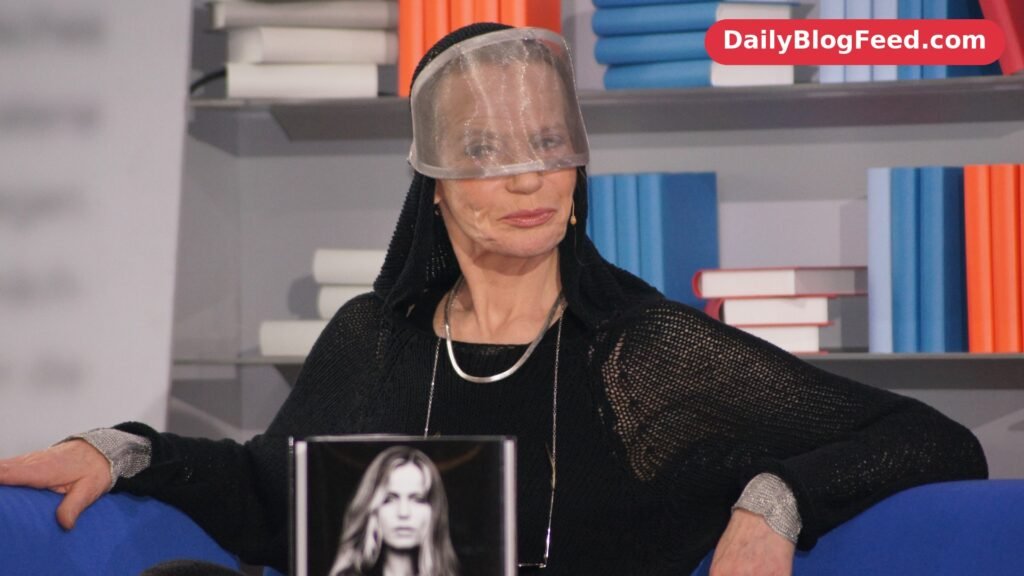

Few names in fashion carry as much mystery as Veruschka. She was six feet tall in an era when models were expected to be decorative and quiet, and she refused to be either. Photographers did not just photograph her; they built entire worlds around her, painted her into animals and statues, and watched her disappear into the image.
Born into German nobility and raised in the shadow of war, Vera von Lehndorff turned herself into Veruschka, the first German supermodel and one of the defining faces of the 1960s. Then, at the height of her fame, she walked away from the fashion machine and remade herself again, this time as an artist.
Now 87, she remains a figure of fascination for fashion lovers, film fans and art historians alike. This is the story of how a countess’s daughter became a camera icon, and why she never let the camera own her.
Quick Facts
| Fact | Detail |
|---|---|
| Full Name | Vera Gottliebe Anna Gräfin von Lehndorff-Steinort |
| Professional Name | Veruschka |
| Born | 14 May 1939, Königsberg, East Prussia (now Kaliningrad, Russia) |
| Age | 87 (as of October 2026) |
| Height | 183 cm (6 ft 0 in) |
| Nationality | German |
| Occupation | Model, actress, artist |
| Known For | First German supermodel; Blow-Up (1966); body-painting art |
| Partner | No publicly confirmed partner |
| Children | None |
| Net Worth | No reliable published total |
A Childhood Shaped by War and Loss
Veruschka was born Vera Gottliebe Anna Gräfin von Lehndorff-Steinort on 14 May 1939 in Königsberg, East Prussia. She was the second of four daughters in the old noble House of Lehndorff, and she grew up at Steinort, the family’s East Prussian estate.
Her childhood ended early and brutally. Her father, Count Henrich von Lehndorff-Steinort, was an army reserve officer who joined the German resistance against Hitler after witnessing atrocities committed against Jewish civilians. He was arrested after the failed 20 July 1944 plot to assassinate Hitler, sentenced to death, and hanged at Plötzensee Prison in Berlin. Veruschka was only five years old.
After his death, her mother and the four daughters were detained in camps until the end of the Second World War. The family emerged homeless, their estate lost with the Soviet annexation of East Prussia. As a young girl, Veruschka attended thirteen different schools, a restless education that left her with little patience for convention.
That early upheaval stayed with her. Much later, she would describe her life as a model as a kind of performance, an artificial character she had invented. It is hard not to hear, behind that remark, a child who learned early that identity could be both a refuge and a disguise.
From Art School to the Camera’s Eye
Veruschka did not set out to be a model. She studied painting and design at the technical school for design in Hamburg from 1958 to 1961, and it was art, not fashion, that first took her to Italy. In 1961 she moved to Florence, where the photographer Ugo Mulas discovered her when she was 20 and persuaded her to model full time.
Paris came next, where she met Eileen Ford, head of the powerful Ford Modeling Agency, and then New York, where she arrived in 1961 and soon returned to Munich. At the Stewart Modeling Agency in New York, she reportedly reigned as the girl with the most covers on the agency wall.
Her look was the opposite of the soft, girl-next-door ideal of the day. She was tall, angular and dramatic, with dark blonde hair and blue-grey eyes, and she could shift from aristocratic cool to something almost feral in a single frame. Photographers loved her precisely because she did not look like anyone else, and she quickly became a favourite of the era’s greatest image-makers, including Richard Avedon, Irving Penn, David Bailey and Helmut Newton.
Blow-Up and the 1960s Peak
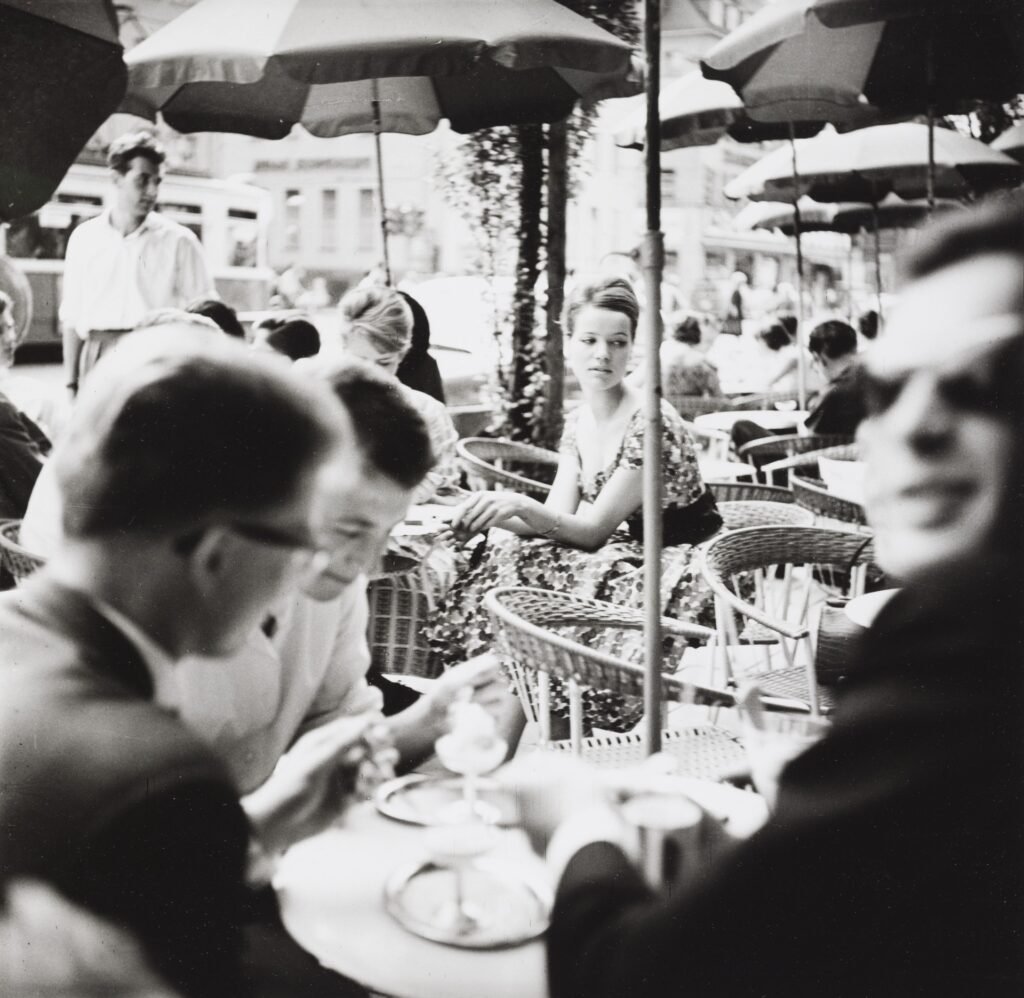
Her international breakthrough arrived on screen. In 1966 she appeared in Michelangelo Antonioni’s Blow-Up, playing essentially herself in a brief but unforgettable sequence, and the film made her into an icon of the age. It was set in Swinging London, the same cultural moment that made Michael Caine a defining screen face of the decade, and Veruschka belonged to that world completely.
The covers followed in a flood. She appeared on the cover of Life magazine in August 1967 and on the covers of all four major editions of Vogue — American, Italian, French and British — through the 1960s. She worked with Franco Rubartelli, who would become a key collaborator, and with Peter Beard, who took her to Kenya for extraordinary shoots in the wild.
At her peak, she earned as much as $10,000 a day, an astonishing figure for a model of the time. She also sat for Salvador Dalí, becoming his model for his shaving cream sculptures. Like Steve McQueen, whose cool became a style reference point for the whole decade, Veruschka was not just fashionable; she set the terms of what fashionable looked like.
An Artist on Her Own Terms
What set Veruschka apart was that she grew bored with being beautiful on other people’s terms. As early as 1965 she began experimenting with what she called transfigurations, painting herself into other creatures and characters. During a 1968 shoot in Rome for Rubartelli’s film Veruschka, poesia di una donna (1971), she pushed the body-painting further, transforming her appearance until the woman underneath seemed to vanish.
In 1969 she met the artist Holger Trülzsch, and their collaboration became the centre of her working life. Together they created full-body paintings in which she melted into her surroundings, posed as statues, animals and painted figures, and used the work as an ironic critique of fashion itself. The project asked a sharp question: if a woman can be painted into anything, what is left of the person underneath the image?
Her break with mainstream fashion came in 1975, after a falling-out with Grace Mirabella, the newly appointed editor-in-chief of American Vogue. In a later interview Veruschka put it plainly: “She wanted me to be bourgeois, and I didn’t want to be that.” She did not model for a long time after that, choosing art collaborations, film and occasional appearances over the magazine treadmill.
She was politically outspoken too. In 1971 she joined the Stern magazine cover protest, initiated by Alice Schwarzer, in which prominent West German women declared they had had abortions, demanding the right to abortion in West Germany. It was a public, risky stand, and it fit the pattern of a woman who used her visibility on her own terms.
Screen Work Beyond the Runway
Although modelling made her famous, Veruschka kept returning to film. After Blow-Up she took the title role in Salomé (1972) and the leading role in Ulrike Ottinger’s Dorian Gray in the Yellow Press (1984). She also appeared in the documentary Vom Zusehen beim Sterben (1983).
Later audiences may know her best from a cameo in Martin Campbell’s Casino Royale (2006), a small appearance in the Bond franchise that Sean Connery had defined as its original screen Bond four decades earlier. In 2005 she was the subject of the television documentary Veruschka: A Life for the Camera, directed by Paul Morrissey and Bernd Böhm, in which she told her own story in her own words.
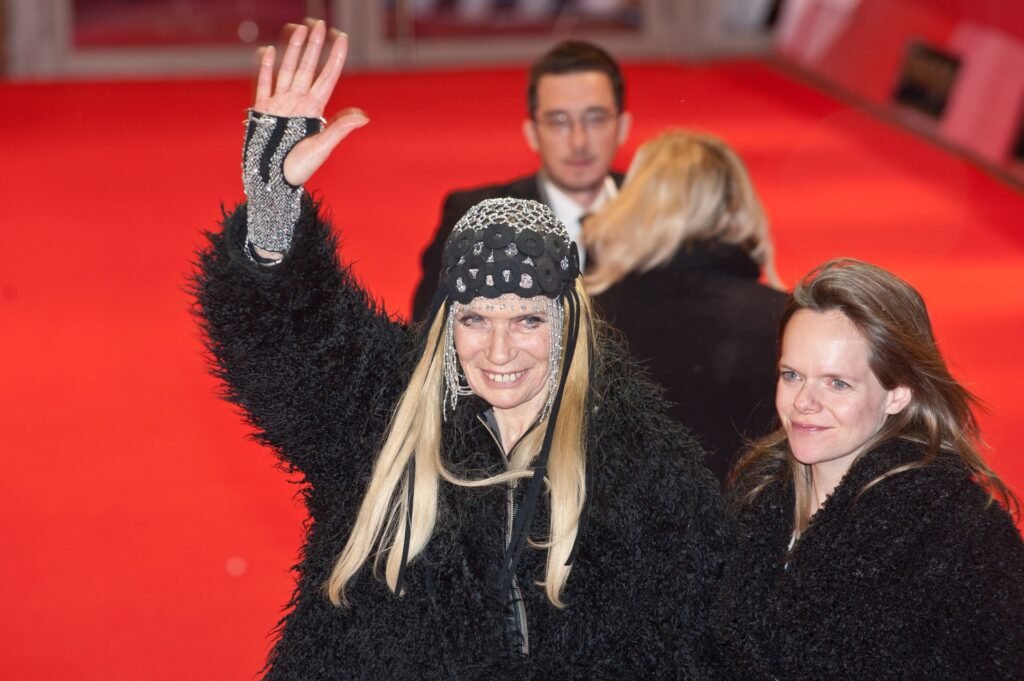
She never fully left the runway either. Well into her seventies she made occasional appearances for designers such as Helmut Lang, Paco Rabanne and Giles Deacon, walking as a living piece of fashion history rather than as a working model chasing the next season.
Private Life: No Husband, No Children, No Confirmed Partner
Veruschka has never married and has no children, according to biographical profiles of her life. She has three sisters — Marie Eleanore, known as Nona, Gabriele and Katharina — and her family background, rather than any romantic relationship, is what the public record actually documents about her private world.
No partner is publicly confirmed for Veruschka, and she has kept her personal relationships largely out of the press. That privacy feels consistent with everything else about her: the woman behind the character of Veruschka has always been guarded, even while the character herself was photographed more than almost anyone alive.
Readers searching for a husband or boyfriend will therefore find no confirmed name. That is not a gap in the reporting. It is, by all available evidence, simply how she has chosen to live, with her art and her family history at the centre of her public story rather than a relationship.
Net Worth: Why There Is No Reliable Figure
Here, honesty matters more than a number. No reputable outlet publishes a verified net worth total for Veruschka, and this article will not invent one. The celebrity wealth websites that attach figures to almost every famous name offer nothing credible for her, and repeating an unsourced estimate would mislead readers.
What is documented is her earning power at her peak: as much as $10,000 a day during the height of her modelling fame in the 1960s. That was an extraordinary daily rate, but a daily rate is not a fortune, and it says nothing about what she kept, spent or invested over the decades that followed.
Her later income came from a different world altogether: art collaborations with Trülzsch, film and documentary work, occasional runway appearances and book projects, including a 2024 volume gathering their body-painting photographs from the 1970s and 1980s. None of that activity comes with public financial disclosures, and her aristocratic background, for all its history, did not leave her a family fortune: the Steinort estate was lost at the end of the war.
The fair summary is this: Veruschka was once among the highest-paid models in the world, she has worked steadily as an artist for decades since, and no reliable source states her current net worth. Any website claiming otherwise is guessing.
Lesser-Known Facts
- Veruschka stood 6 feet tall, unusually tall for a model of her era, and her height became part of her power on camera rather than something to hide.
- She studied art before she modelled, and she has always described the model Veruschka as a character she invented, not simply as herself.
- She was Salvador Dalí’s model for his shaving cream sculptures, one of the strangest commissions of her career.
- Peter Beard photographed her in Kenya, taking her far from studios and into the wild landscapes that suited her dramatic presence.
- She took part in the 1971 Stern abortion-rights protest in West Germany, putting her fame behind a controversial cause.
- She appeared in the Bond film Casino Royale (2006), more than forty years after her screen breakthrough in Blow-Up.
- A 2024 book collected the body-painting photographs she made with Holger Trülzsch in the 1970s and 1980s, tracing how the work treated the female body and identity.
Frequently Asked Questions
How old is Veruschka?
Veruschka was born on 14 May 1939, which makes her 87 years old as of October 2026.
Is Veruschka married, and does she have a partner?
No. Veruschka has never married, according to biographical profiles, and no partner is publicly confirmed. She keeps her private life out of the press.
Does Veruschka have children?
No, Veruschka has no children. She is the second of four daughters herself, and her sisters are the family most often mentioned in accounts of her life.
What is Veruschka’s net worth?
No reliable published net worth total exists for Veruschka. She earned as much as $10,000 a day at her modelling peak in the 1960s, but no reputable source states her current fortune, and this article does not estimate one.
What was Veruschka famous for?
She is considered the first German supermodel, famous for her 1960s Vogue and Life covers, her appearance in Antonioni’s Blow-Up (1966), and her later body-painting art with Holger Trülzsch.
Is Veruschka still alive?
Yes. As of October 2026, Veruschka is alive at 87, and her work continues to be exhibited and published, including a 2024 volume of her body-painting photographs with Trülzsch.
Conclusion
Veruschka’s story refuses the usual shape of a modelling career. She did not rise, fade and disappear. She rose, grew bored, walked away from the most powerful fashion magazine in the world, and spent the next decades painting herself into animals, statues and ideas.
That is why she endures. The covers and the Blow-Up cameo made her an icon, but the body-painting work made her an artist, and the war-shadowed childhood behind it all gave her a seriousness that fashion rarely allows its stars. She invented Veruschka, and then she made sure Veruschka never owned her.