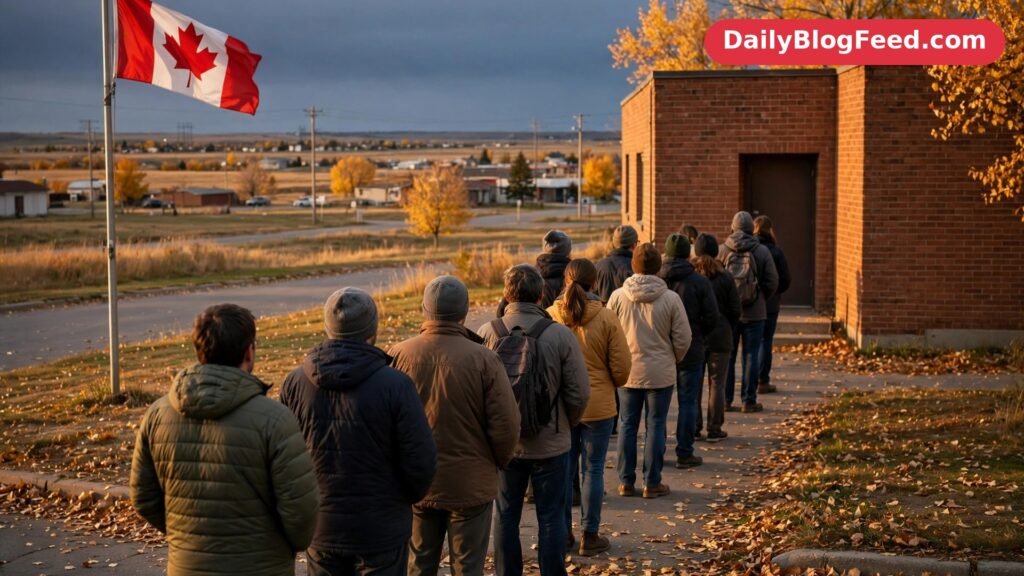

Voters in Alberta have chosen to remain part of Canada in the province’s first-ever referendum on separation, held on Monday, 19 October 2026, with preliminary results showing about 76 percent backing the option to stay and about 24 percent supporting the start of a process that could have led to a binding vote on independence. The non-binding result, reported by Elections Alberta and projected by Canadian broadcasters late on Monday, was welcomed by Prime Minister Mark Carney as a clear choice for unity and accepted by Premier Danielle Smith, who called the vote while opposing independence.
The Result in Detail
The question that drew national attention — the tenth on a ballot containing 10 questions — asked whether Alberta should remain a province of Canada or whether its government should begin the legal process required to hold a binding provincial referendum on separation. Even a vote for the separation path would not have made Alberta independent; it would have opened a process that, if it later succeeded, would still have required complex negotiations with the federal government, the other provinces and Indigenous peoples.
With more than 1.8 million votes counted, about 76 percent supported remaining in Canada, according to preliminary results reported by Al Jazeera and the Associated Press. The Associated Press, citing unofficial Elections Alberta results from 84 percent of voting areas, put the split at 75 percent to 25 percent at that stage. Le Monde reported 76.5 percent for remaining and 23.4 percent for opening the separation process.
Counting took longer than expected. Results were delayed after late openings forced more than 100 polling stations to extend voting hours on Monday, the Associated Press reported. Early interest was high: Canadian media reported more than 1.35 million ballots cast in advance polls and by special or mail-in ballot, well above the comparable figure in the 2023 provincial election. A final official turnout percentage had not been published in the main wire reports available at the time of writing.
Voters also answered nine other questions, on immigration, provincial services and constitutional issues. According to Al Jazeera, preliminary results showed voters backing eight of those nine measures, which the provincial government had encouraged them to support.
Reactions From Ottawa and Edmonton
On his way into a cabinet meeting in Ottawa on Tuesday, Prime Minister Mark Carney called it a great day, according to Al Jazeera. In a statement, Carney said Albertans had made a clear choice, that they had chosen unity, to build together and to take care of each other, and that Canada is greater than the sum of its parts. The Associated Press reported Carney also spoke with Premier Smith on Tuesday about the result and about greater federal-provincial cooperation, including on immigration.
Carney, who grew up in Alberta, campaigned actively for a remain vote. At a rally in Edmonton on Friday, he warned voters not to treat the referendum as a protest message, saying, according to Le Monde, that a vote against Canada would be a dangerous bluff leading to years of deep uncertainty. His government has pointed to support for a new pipeline to the Pacific coast as a measure to improve relations with the province.
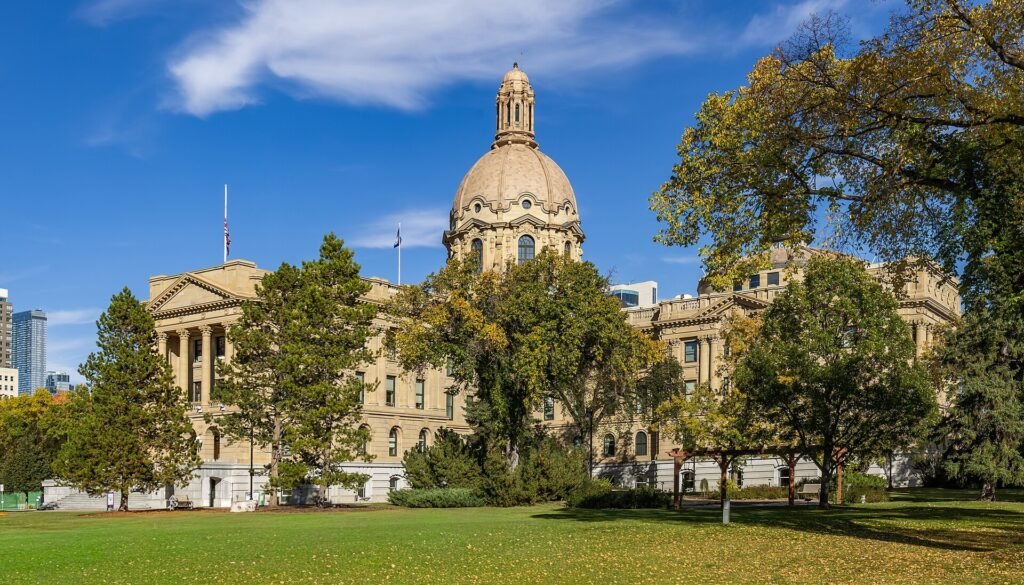
In Edmonton, Premier Danielle Smith said she was very pleased with the early results and posted that Albertans have voted for a stronger Alberta in a united Canada, according to the Associated Press and Al Jazeera. Smith announced the referendum in May, saying it was time to understand the will of Albertans and move on. She has said she voted against independence, but argued the vote was necessary to respect the roughly 300,000 Albertans who had petitioned for it.
Thomas Lukaszuk, who led the Forever Canadian campaign, told supporters Canada is a solid country united from coast to coast to coast, the Associated Press reported. Separatists pointed to the size of their minority. Keith Wilson, a separatist leader, said at least a quarter of Albertans feel the province needs to be treated better. Jeffrey Rath of the Alberta Prosperity Project told reporters the push for independence would absolutely continue, according to AFP and Al Jazeera.
Background: Western Alienation and a Long-Running Debate
Alberta is a province of about 5.1 million people and holds some of the world’s largest oil reserves — the fourth-largest proven reserves globally, according to the Associated Press. Its economy is closely tied to energy, and its politics are strongly conservative. Grievances grouped under the term western alienation have a long history: many Albertans argue the province contributes more to the federal government than it receives, and that federal rules have restricted oil and gas development.
Supporters of independence argued separation would give Albertans greater control over natural resources, energy, immigration and taxes. Opponents argued those grievances could be addressed within Canada, and that separation would bring years of uncertainty, including questions about borders, currency, trade and Indigenous rights and treaties. First Nations voters were reported by local media, cited by Al Jazeera, to have turned out in strong numbers for the remain side.
The vote also took place against a wider backdrop. Canada is in a trade dispute with the United States involving higher tariffs, and US President Donald Trump has repeatedly suggested annexing Canada. Analysts cited by Le Monde said pressure from Washington contributed to a rise in Canadian patriotism that reached Alberta, alongside Carney’s gestures toward the oil industry. Pre-vote polling suggested separation was a minority position, with roughly one-third or fewer inclined to support leaving.
Not every vote for the separation path was a vote for independence itself. The Associated Press reported some voters backed beginning the process to express frustration with Ottawa, and Carney made a similar point on Tuesday, saying only a smaller hard core within that quarter may actually want independence.
What Happens Next
Because the referendum was non-binding and the remain side won, no legal process toward separation will begin. Elections Alberta is expected to certify the official results, including final turnout and the other nine questions, after which both governments have said their focus will shift back to federal-provincial cooperation.
For Premier Smith, the result removes separation from the immediate agenda while leaving her government free to press other demands on Ottawa, including on immigration and provincial autonomy. Al Jazeera reported Smith has said she would not hold another separation referendum while in office, and an Angus Reid poll on 16 October found 69 percent of Albertans opposed holding another one if this vote failed.
For separatists, leaders such as Jeffrey Rath and Cory Morgan of Pathway to Independence have said the campaign will continue, and some have raised the possibility of a new pro-independence party. Whether support can grow beyond the roughly one-quarter recorded on Monday is the open question. The same Angus Reid polling found 62 percent believed there would never be a complete end to the separatist movement in Alberta, suggesting the debate will remain part of provincial politics.