
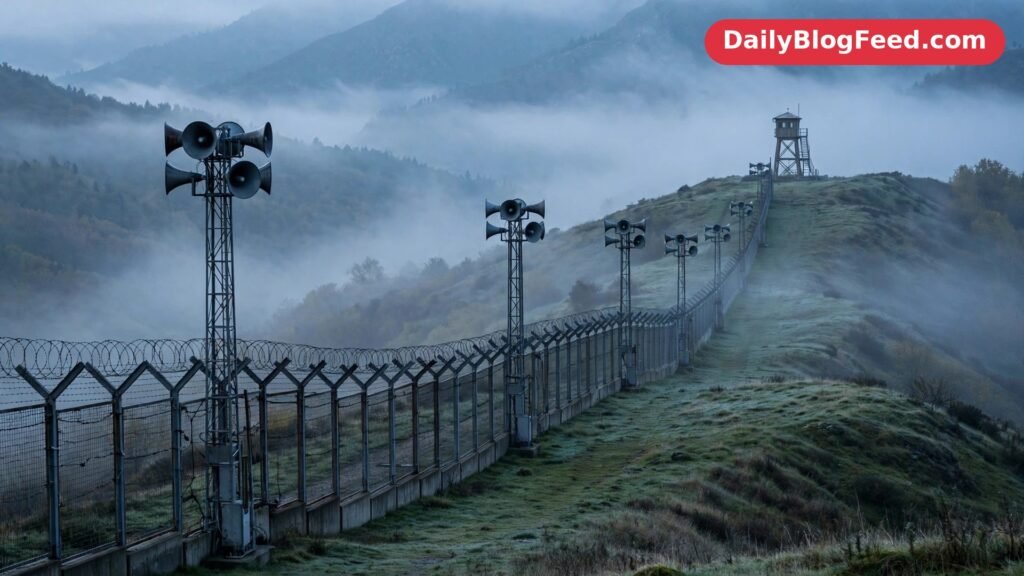

North Korean state media said North Korea will resume propaganda loudspeaker broadcasts along the border with South Korea within October, while South Korea’s Defence Ministry said Seoul would respond sternly if Pyongyang acted on the threat, according to Reuters and the Associated Press. Kim Yo Jong, sister of North Korean leader Kim Jong Un and a senior Workers’ Party official, made the announcement on Wednesday in statements carried by the state news agency KCNA, both outlets reported. In a follow-up statement on Thursday, she said the speakers would be on standby within days, according to Reuters. The broadcasts have not been confirmed to have started, and the situation is still developing.
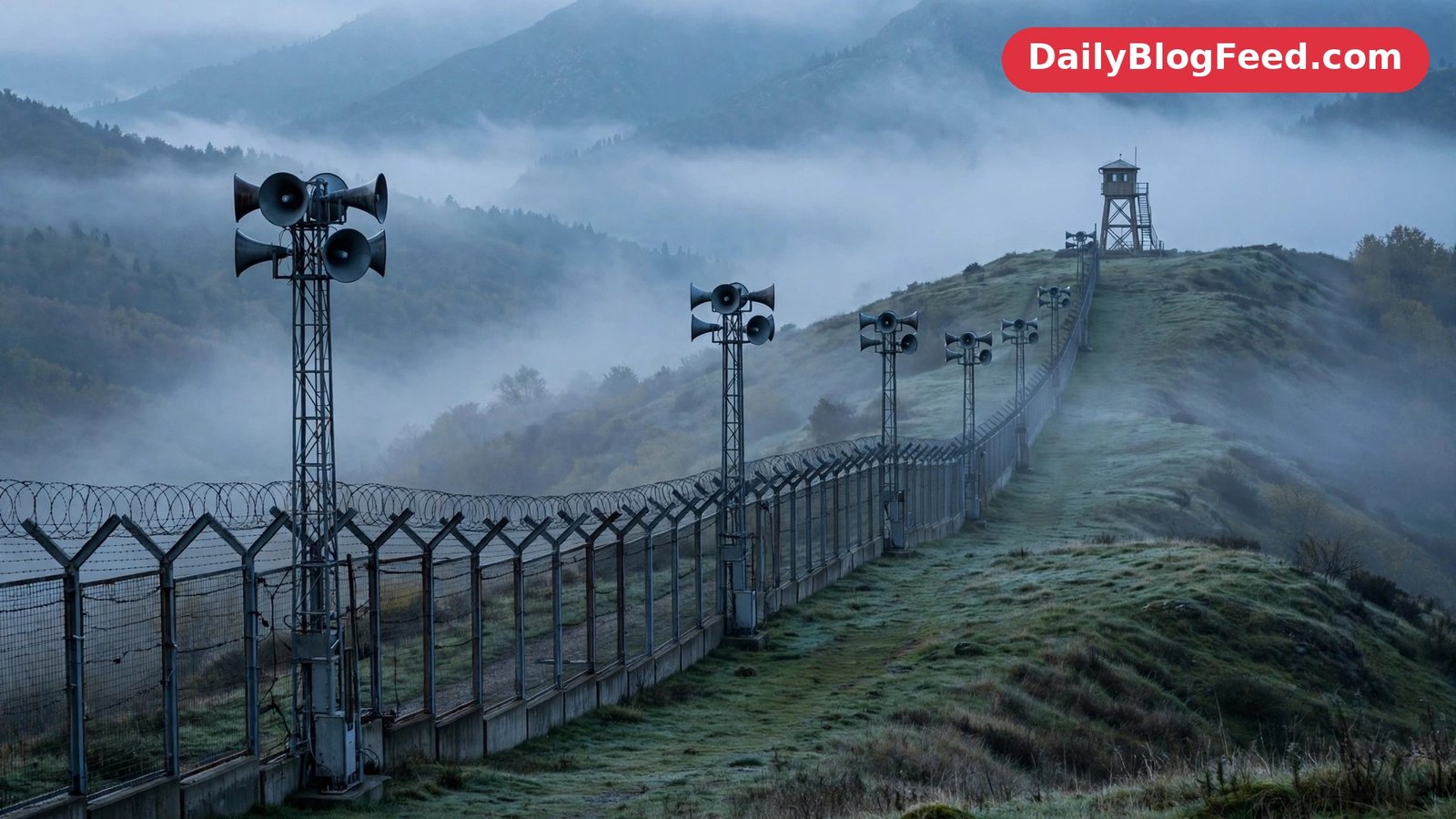
According to KCNA, Kim made the announcement after visiting frontline areas with Marshal Pak Jong Chon, a senior military official. North Korean state media said troops there are reinforcing the border, and Kim described that work as supporting her brother’s policy of severing ties with South Korea.
“Our tactical hunting teams are taking new positions, and within October, the loudspeakers for psychological warfare against the ROK will be in operation along the whole border,” Kim Yo Jong said, according to KCNA, using the initials of South Korea’s formal name, the Republic of Korea.
North Korean state media presented the deployment as a response to South Korean actions near the border. Kim also warned Seoul of what she called “the most horrible and distressing situation” if it continued what Pyongyang calls interference, according to Reuters. Those warnings are North Korea’s stated position and have not been independently verified.
Seoul’s Reaction and the Order for a Stern Response
South Korea’s Defence Ministry set out its position on Tuesday, before Kim’s latest statements. The ministry said it would respond sternly if North Korea acted on earlier threats to strengthen its military posture and restart broadcasts, according to Reuters.
South Korea’s Defence Ministry said its own warning broadcasts and warning shots near the Military Demarcation Line were a legitimate defensive measure, intended to prevent incursions and require North Korean troops who crossed the line to withdraw, according to Reuters.
“If North Korea uses our legitimate measures as a pretext to carry out further provocations, we will punish it resolutely,” the Defence Ministry said, according to Reuters. The ministry urged Pyongyang to stop what Seoul called groundless claims and to halt incursions across the line.
South Korea’s Joint Chiefs of Staff chairman, Jin Young-seung, visited a frontline command, reviewed readiness and ordered a stern response to potential provocations, South Korea’s military said in a statement reported by Reuters. Jin said, according to that statement, that North Korea was responsible for mines that South Korea says seriously injured its soldiers last month. North Korea has denied that claim, so responsibility for the blasts remains contested.
Seoul has also kept a diplomatic track open. South Korea’s Ministry of Unification urged Pyongyang to return to talks to resolve differences, according to Al Jazeera and Reuters. South Korea’s Foreign Ministry said on Thursday it would send a letter to the president of the United Nations Security Council setting out Seoul’s claim that the blast was caused by North Korean mines and violated the armistice, according to both outlets. The ministry said the letter would demand an apology and urge dialogue.
South Korea’s Defence Ministry also said on Thursday that Seoul would take a proportionate measure if North Korea acted, although no decision had been made, according to Reuters. It did not say whether that would include restoring South Korea’s own broadcasts.
The Mine Blasts Behind the Latest Dispute
The immediate dispute centres on mine blasts in the Demilitarized Zone last month, on which the two sides give different accounts. The Associated Press reported that blasts injured three South Korean soldiers. Reuters reported that South Korea says a blast last month seriously wounded two soldiers. Neither account is treated here as settled.
North Korea has denied responsibility for the blasts. Kim Yo Jong called the South Korean account a fabrication, in statements reported by Reuters and the Associated Press.
South Korea’s military said North Korean soldiers crossed the demarcation line around 50 times this year during fortification work, according to the Associated Press, and said it responded with warning broadcasts and warning shots. North Korea, for its part, has accused South Korean forces of issuing warnings and firing shots at its troops, in statements carried by KCNA and reported by both outlets. Each side’s description of the other’s actions is contested.
Lim Eul-chul, a professor at Kyungnam University, said Kim’s warnings did not necessarily mean the loudspeakers would be activated, according to Reuters.
Background: A Cold War Tool Returns to the Border
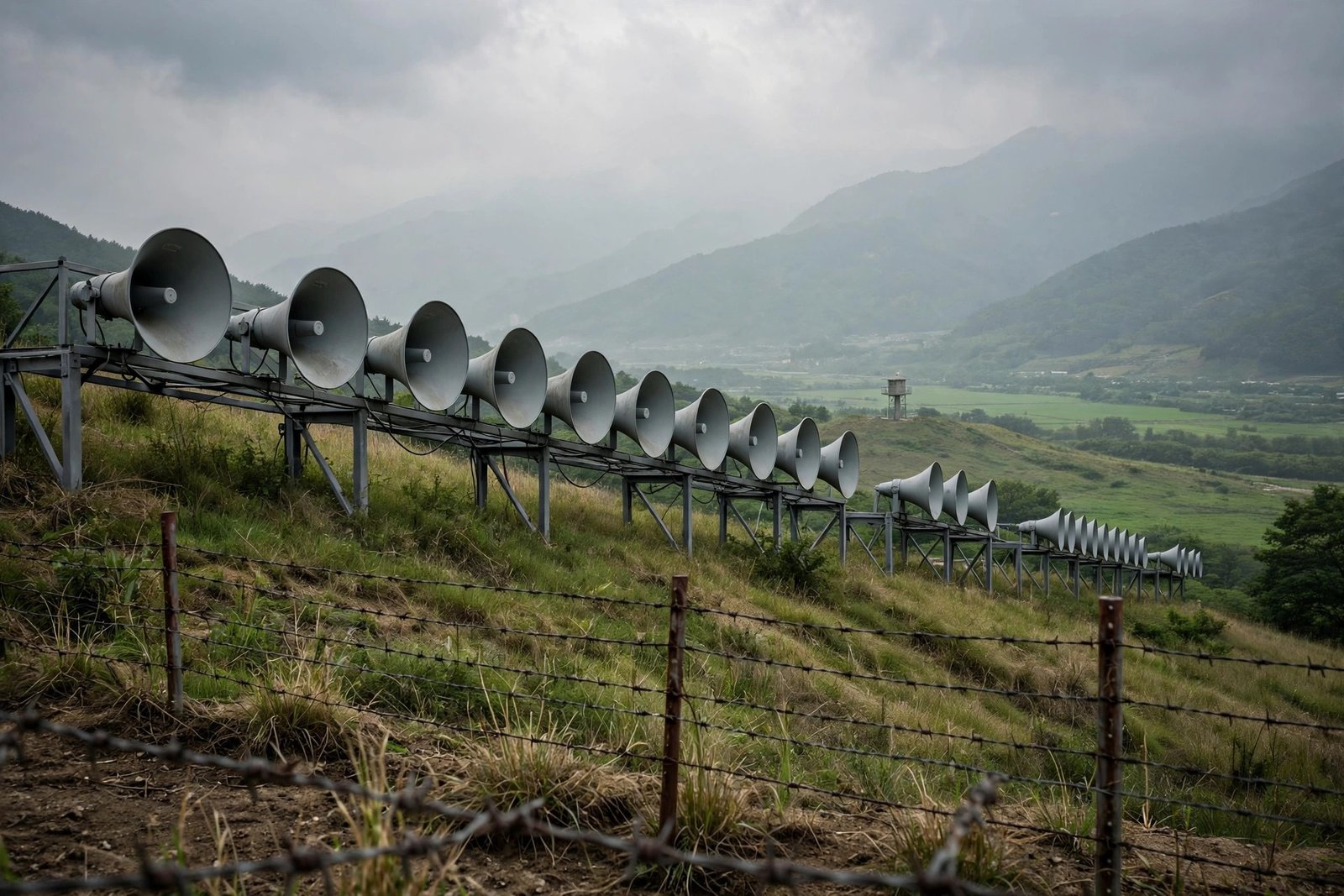
Loudspeaker broadcasts have been used by both Koreas for decades as a form of psychological warfare, according to Reuters and the Associated Press. Systems along the frontier carry sound across the Demilitarized Zone, which has separated the countries since the 1950-53 Korean War ended in an armistice rather than a peace treaty.
South Korean broadcasts have in the past included news and popular music, according to Reuters, while North Korean broadcasts have delivered propaganda and criticism of Seoul. Both outlets have reported that such broadcasts have repeatedly been started and stopped as relations have changed.
In 2015, after mine blasts that South Korea blamed on North Korea and that injured two South Korean soldiers, South Korea resumed frontline broadcasts for the first time in 11 years, according to the Associated Press. North Korea denied responsibility in that episode as well.
More recently, President Lee Jae Myung, who took office in June 2025, pursued engagement despite Pyongyang’s refusal to resume dialogue, according to Reuters and Al Jazeera. His administration halted South Korean broadcasts in June 2025 and later dismantled its fixed loudspeakers, after which North Korea suspended its own broadcasts, both outlets reported.
Since 2024, North Korea has also been reinforcing its side of the zone with mines, barriers and fencing, according to the Associated Press and Reuters.

What Happens Next
The situation is still developing, and the next test will be whether North Korea moves from standby to operation. Kim first said the speakers would operate along the whole border within October, then said they would be on standby within days, according to KCNA statements reported by Reuters. No independent confirmation that broadcasts have resumed was reported by Reuters or the Associated Press as of Thursday.
South Korea’s stated position combines deterrence with an offer of talks. If North Korea carries out the broadcasts, South Korea’s Defence Ministry said it would take a proportionate measure, but officials said no decision had been made on what that would be, according to Reuters.
Whether North Korea proceeds will determine whether this remains an exchange of statements or becomes a sustained return to loudspeaker broadcasts along the frontier.