
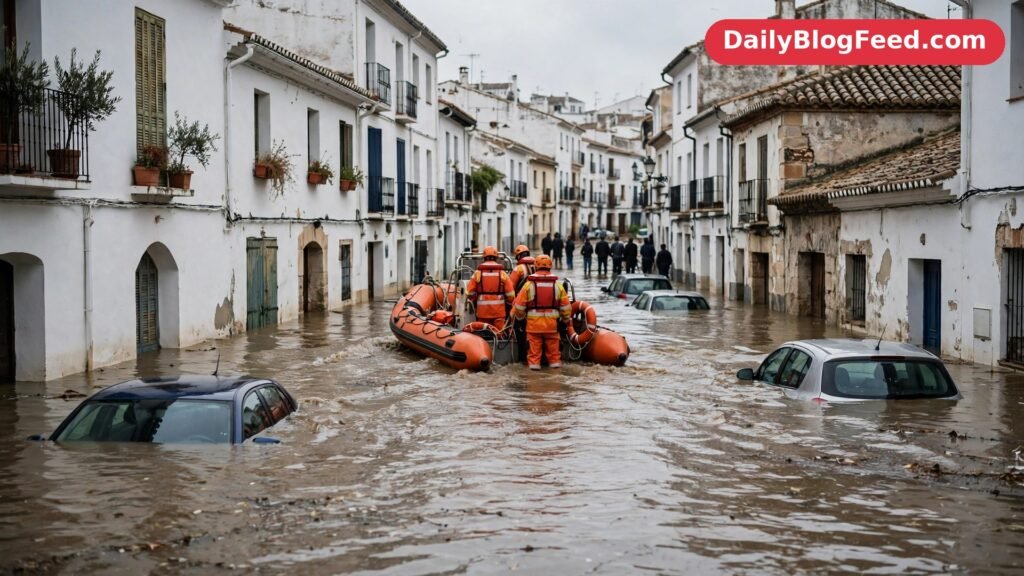

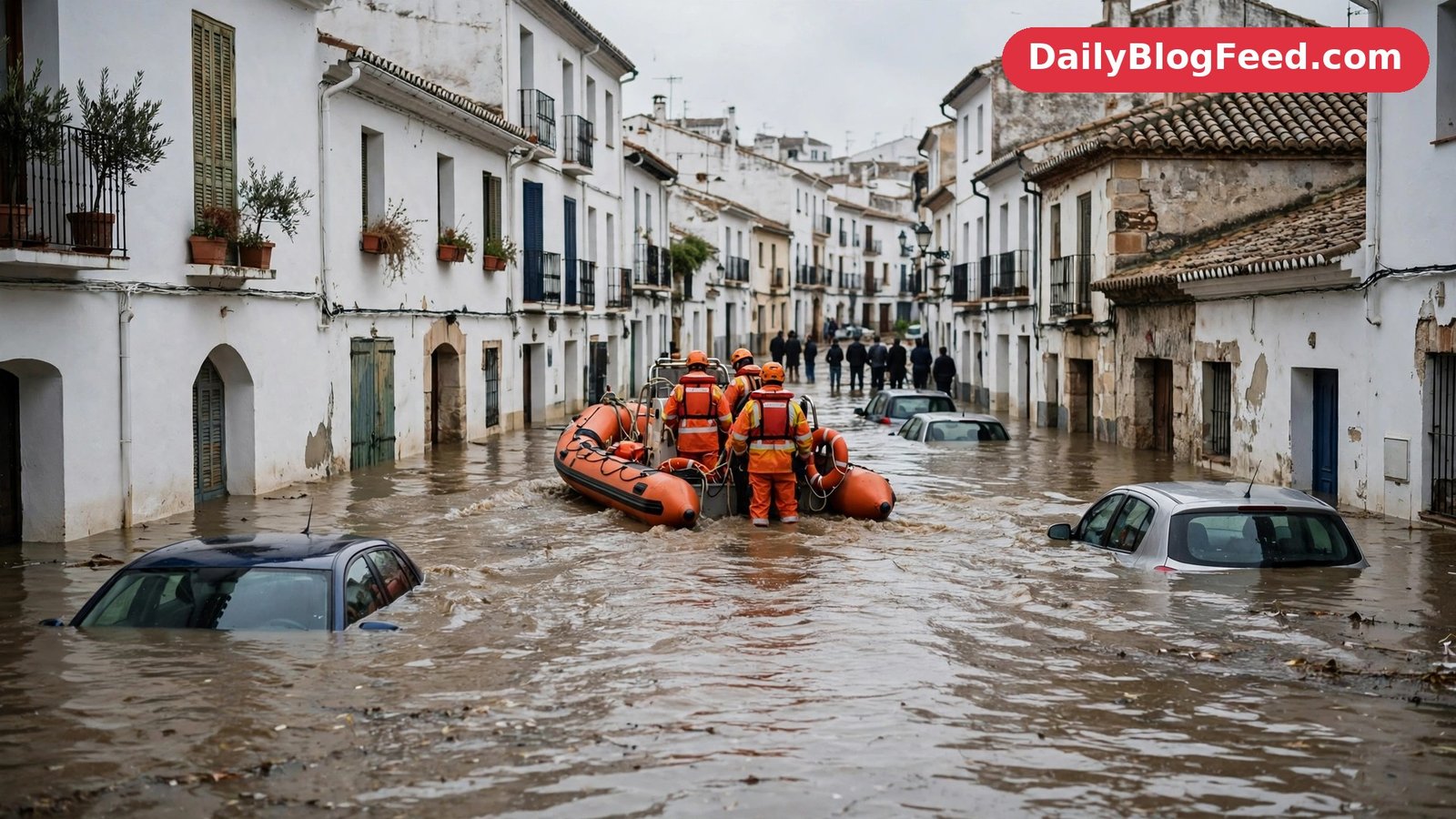
At least four people were killed, according to Spanish authorities cited by AFP and Al Jazeera, after torrential rain from Storm Adam triggered flooding across eastern Spain, inundating towns along the Mediterranean coast and forcing evacuations. The downpour began on Saturday and brought exceptional rainfall to Valencia and Alicante provinces, where authorities said rivers burst their banks, roads were submerged and rescue teams reached people trapped in homes and vehicles, according to both outlets. The situation is still developing, and official figures may be updated.
Spanish authorities said two of the people who died were in the coastal town of Oliva, according to AFP and Al Jazeera. Both outlets reported that one was a 79-year-old woman in Oliva and that the other was a man who died at a campsite there. A third person died at a beach in Sagunto, according to both outlets, and a fourth person, a woman in Catalonia, died after falling into a swollen stream, firefighters there said, according to AFP and Al Jazeera. Valencia’s regional president, Juan Francisco Perez Llorca, said there were three deaths in the Valencia region and urged caution as authorities assessed the situation, according to AFP. No further detail about the deaths is given here.
Where the Flooding Hit Hardest
The heaviest rain fell in the Valencian Community, in Valencia and Alicante provinces, according to AFP, Al Jazeera and Reuters. Spain’s national weather agency, AEMET, recorded 632 millimetres of rain in 36 hours at Pego, in Alicante province, according to Reuters. Some areas of the Valencia region received as much as 700 litres of rain per square metre in 24 hours, according to AFP and Al Jazeera.
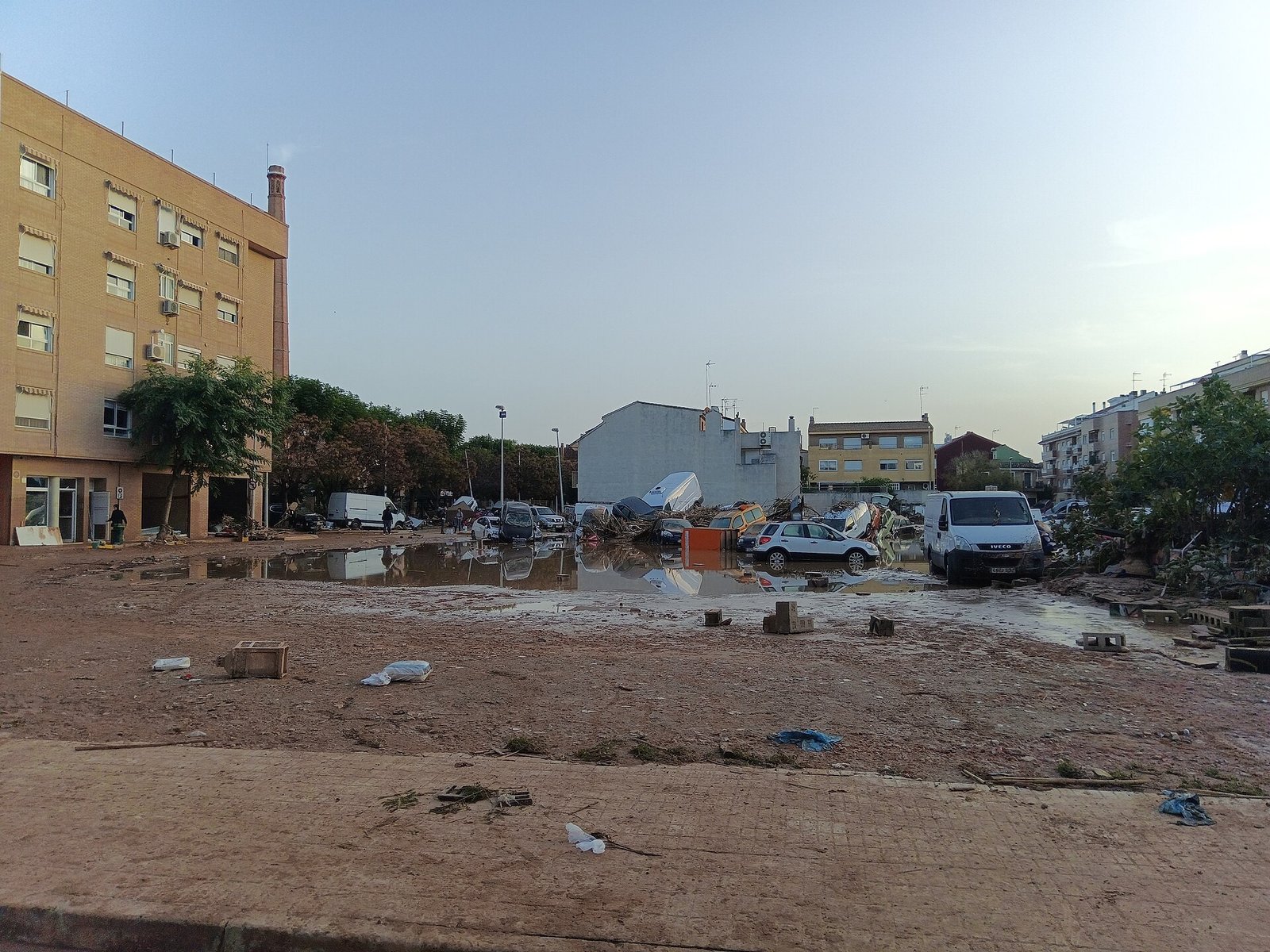
Authorities said floodwaters isolated several towns and cut access routes. In Els Poblets, northeast of Alicante, cars and vans were left piled on top of one another, according to Al Jazeera. In Pego, Mayor Enrique Moll told regional broadcaster A Punt that several people were waiting on Monday to be evacuated by helicopter from rooftops and that access routes to the town were blocked, according to Reuters.
In Oliva, Deputy Mayor Salvador Llopis told state broadcaster TVE that emergency services were rescuing trapped residents, in particular older people in flooded homes, according to Reuters. The storm also affected Catalonia and the Balearic Islands, according to AFP and Reuters.
Rescues, Evacuations and Shelter-in-Place Orders
Security forces carried out more than 400 rescues in the Valencia region, according to government representative Pilar Bernabe, in figures reported by AFP and Al Jazeera. That attributed figure is used here because other totals in wider reporting differed and could not be confirmed to the same standard. People stranded on rooftops were winched to safety, according to both outlets.
More than 2,000 people were evacuated, mainly in Oliva, according to Reuters and Al Jazeera. The Civil Guard also carried out rescues across Valencia and Alicante on Monday, according to Reuters.
On Monday morning, around 800,000 residents were under shelter-in-place orders, but by late afternoon that had fallen to 87,000 people in eight municipalities, according to Reuters and Al Jazeera. Both outlets reported that most restrictions were lifted by early afternoon as conditions improved.
More than 100,000 students in the Valencia region had classes suspended because of the alerts, according to Reuters. Authorities urged residents in affected municipalities to stay indoors and avoid travel while waters were at their highest, according to AFP and Reuters.
Weather Warnings and the Official Response
AEMET issued red alerts, its highest warning level, for parts of southern Valencia and northern Alicante, warning people to avoid travel and seek higher ground, according to Reuters. The weather system was a DANA, an isolated upper-level low that can bring intense, localised rain over the Mediterranean coast, according to reporting by Reuters and Al Jazeera.
Warnings were later downgraded from red to orange and yellow in the areas where the heaviest rain had eased, according to Reuters, but officials warned that saturated ground and swollen rivers would keep flood risk high. The storm’s focus was expected to shift north toward Catalonia, according to Reuters.
Prime Minister Pedro Sanchez said members of Spain’s military emergency unit were helping with rescue and evacuation efforts and pledged the government’s full support, according to AFP and Reuters. He urged residents to follow emergency services’ instructions, according to both outlets. The central government deployed military and national police units alongside regional firefighters and the Civil Guard, according to Reuters.
Background: A Region Marked by the 2024 Floods
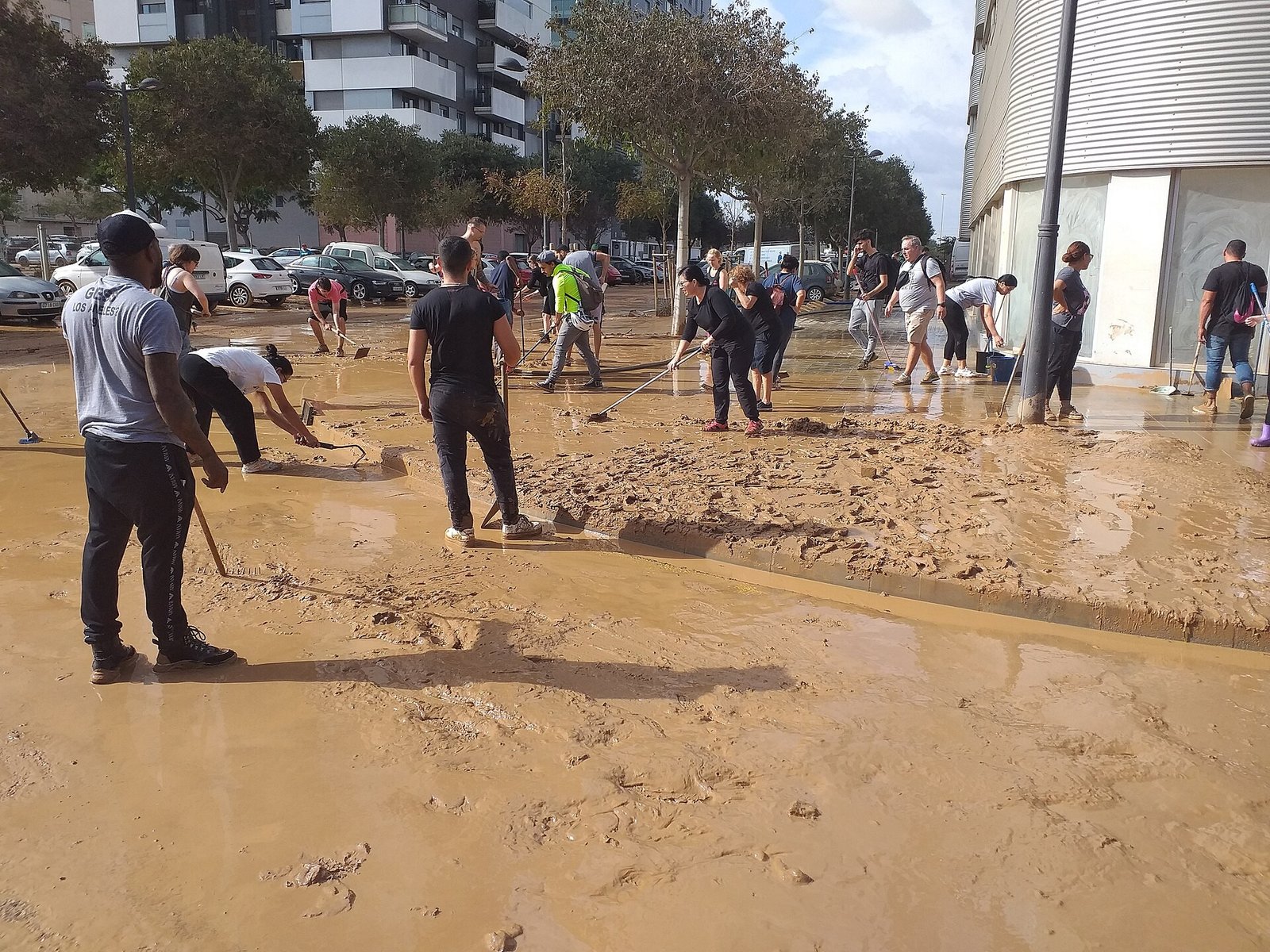
This flooding came almost two years after floods in October 2024 that killed more than 230 people in the Valencia region, according to Al Jazeera. That earlier disaster is the context in which authorities in the region have since reviewed warning and response arrangements, according to the same reporting.
Parts of the coast have flooded before. In Els Poblets, resident Javier Fornez told Al Jazeera that some people had lost belongings again, in a way he compared to flooding in 2007. That is one resident’s account, reported by Al Jazeera, and is included here as an attributed local reaction, not as an official assessment.
The verified rainfall totals alone show the scale of this episode: 632 millimetres at Pego in 36 hours, according to AEMET figures reported by Reuters, and up to 700 litres per square metre in 24 hours in some areas, according to AFP and Al Jazeera.
What Happens Next
The situation is still developing. The focus is expected to shift from rescues to recovery, as authorities confirm whether anyone remains unaccounted for, restore road access to towns such as Pego and Oliva, and assess damage to homes and infrastructure, according to Reuters and AFP reporting. No full damage or cost estimate had been given by authorities in the reporting cited here.
Residents will remain under lower-level weather warnings while rivers stay swollen and ground remains saturated, according to Reuters. A downgrade from red warnings does not mean conditions have returned to normal, and people in Valencia, Alicante, Catalonia and the Balearic Islands have been advised by authorities to follow local alerts and avoid unnecessary travel in flooded areas.
Casualty, rescue and evacuation figures in this article are those attributed above to Spanish authorities via AFP, Al Jazeera and Reuters, and they may change as officials update them. Further official statements are expected in the coming days.