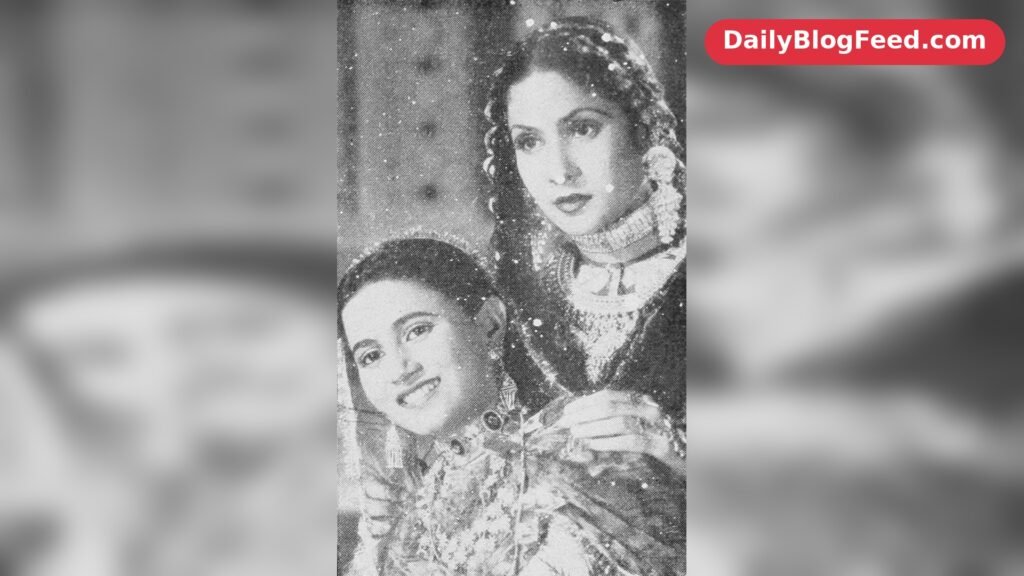

Few stars from Hindi cinema are remembered as warmly as Madhubala, and few careers carry quite the same mixture of triumph and sadness. She was born Mumtaz Jehan Begum Dehlavi in Delhi on February 14, 1933, and she died in Bombay on February 23, 1969, just nine days after her thirty-sixth birthday. In the years between, she became one of the most admired actresses of Indian cinema’s golden age.
People still search for her today because her films have not faded. Her face, her comic timing, and her tragic grace in Mughal-e-Azam keep finding new audiences through re-releases, television screenings, and streaming. She is often called the Venus of Indian cinema, a nickname that captures her beauty but only hints at her talent.
This profile gathers the facts readers most often ask about, from her age and marriage to her children, her earnings, and her best films. It also separates what is well documented from what is merely repeated online, because a star of her stature deserves accuracy rather than legend alone.
Quick Facts
| Detail | Information |
|---|---|
| Full name | Mumtaz Jehan Begum Dehlavi |
| Known as | Madhubala |
| Born | February 14, 1933, Delhi, British India |
| Died | February 23, 1969, Bombay (now Mumbai), India, aged 36 |
| Cause of death | Ventricular septal defect, a congenital heart condition |
| Nationality | Indian |
| Occupation | Actress and film producer |
| Years active | 1942–1964; last film released posthumously in 1971 |
| Spouse | Kishore Kumar (married 1960) |
| Children | None |
| Best known for | Mahal (1949), Mr. & Mrs. ’55 (1955), Chalti Ka Naam Gaadi (1958), Mughal-e-Azam (1960) |
| Nickname | The Venus of Indian cinema |
A Delhi Childhood Shaped by Hardship
Madhubala grew up in a large, poor family, and her childhood was marked by loss long before fame arrived. Her father, Ataullah Khan, had worked for the Imperial Tobacco Company in Peshawar before losing his job, and the family moved first to Delhi and then to Bombay. Several of her siblings died young, and the family lived with very little money.
She did not receive a formal school education in the usual way. Instead, she was tutored at home, and she learned to sing for the children’s programme on All India Radio while still very young.
The move to Bombay brought the family close to the film studios, and work in films soon became a way to support the household. A 1944 explosion at the Bombay docks destroyed the family’s small home, but they survived because they had gone out to see a film that day.
From Baby Mumtaz to a Leading Lady
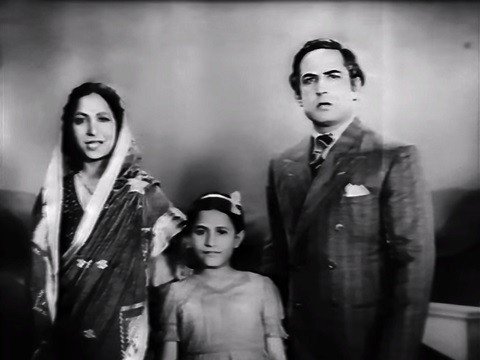
Madhubala entered films as a child artist, credited as Baby Mumtaz, in Basant in 1942. She was only nine years old, and the film gave her a foothold in an industry that was always looking for fresh faces. Small roles followed, and she learned her craft the hard way, on sets rather than in classrooms.
Her move to leading roles came with Neel Kamal in 1947, when she was fourteen. Directed by Kidar Sharma, it paired her with Raj Kapoor and showed producers that she could carry a heroine’s role.
The screen name Madhubala is widely reported to have been suggested by actress Devika Rani of Bombay Talkies. The name means, roughly, a woman of honey, and it suited the warmth audiences saw on screen. From that point on, Mumtaz the child artist became Madhubala the leading lady.
Mahal and the Breakthrough That Changed Everything
If one film turned Madhubala from a promising young actress into a star, it was Mahal in 1949. Directed by Kamal Amrohi and produced by Bombay Talkies, the film cast her opposite Ashok Kumar as Kamini, a mysterious woman at the centre of a haunting story. Audiences were captivated, and the film became a major success.
Mahal mattered for more than its box office returns. It showed that Madhubala could hold a film built on mood and mystery, not only on romance or song, and it made producers take her seriously as a leading actress.
Success followed quickly in the early 1950s with films such as Tarana in 1951 and Badal in the same year. She became one of the most bankable heroines of her time, and she was soon among the highest-paid actresses in Hindi cinema.
Comedy, Crime, and Music: The Range Behind the Beauty
One of the most unfair ideas about Madhubala is that she was only admired for her looks. Her filmography tells a different story, because she moved easily between comedy, crime drama, romance, and historical epic. In Mr. & Mrs. ’55, directed by Guru Dutt in 1955, she played a spirited young woman with comic timing that still feels fresh, and the film remains one of her most loved performances.
Her gift for light comedy also shines in Chalti Ka Naam Gaadi in 1958, opposite Kishore Kumar, a film full of songs, misunderstandings, and joyful energy. The same period brought a different kind of sparkle in Howrah Bridge in 1958, where her song Aaiye Meherbaan became famous, and in Kala Pani in the same year, a crime drama that showed her in a darker, tenser register. Like Cary Grant, the Hollywood master of screwball comedy, she could make elegance look effortless and then puncture it with a perfectly timed joke.
Musical romance gave her another triumph in Barsaat Ki Raat in 1960, opposite Bharat Bhushan. She was equally at home in Amar in 1954, a serious drama that earned critical respect even though it was not a commercial success.
Anarkali and the Long Road to Mughal-e-Azam
Madhubala’s most famous role was Anarkali in Mughal-e-Azam, the historical epic directed by K. Asif and released in 1960. She played a courtesan who loves Prince Salim, played by Dilip Kumar, in defiance of the emperor Akbar, played by Prithviraj Kapoor. The story of forbidden love, told on a grand scale, became one of the defining films of Indian cinema.
The production stretched over many years, and Madhubala worked on it through long and physically demanding schedules. When the film finally reached audiences on August 5, 1960, it became the highest-grossing Indian film of its time, a record it held for fifteen years.
Her performance earned her a nomination for the Filmfare Award for Best Actress, the only Filmfare nomination of her career, though she did not win. The film’s colourised re-release in 2004 introduced her to a new generation, and for many viewers Anarkali remains the role that defines her.
Marriage, Family, and a Private Heart
Madhubala’s personal life was closely followed by the press, and it is worth telling it plainly and with care. She had a long and much-publicised relationship with actor Dilip Kumar in the early 1950s, and the two were co-stars in Mughal-e-Azam even after their relationship had ended. Their split followed a court case over the film Naya Daur, in which Dilip Kumar testified in a way that ended their relationship.
In 1960, Madhubala married singer and actor Kishore Kumar, with whom she had worked in films such as Chalti Ka Naam Gaadi. Their marriage lasted until her death in 1969, though reports describe the later years as strained, in part because her health kept her largely at home. She had no children, a fact confirmed by reputable biographical sources and by her family history.
Her family remained important to her throughout her life, and she had supported her household since childhood. Her younger sister Madhur Bhushan later became a playback singer, and her sister Chanchal also acted. Those family ties help explain why Madhubala worked so hard for so long, even when her health made work difficult.
Living With a Heart Condition
Madhubala lived with a congenital heart condition called a ventricular septal defect, a hole in the heart, which was diagnosed in the 1950s. The condition gradually limited her strength and breath, and it shaped the final decade of her life in ways audiences at the time did not fully understand. She sought treatment in London, but surgery was not considered a safe option for her then.
She continued to work when she could, appearing in Jhumroo in 1961 and Half Ticket in 1962, both opposite Kishore Kumar. Her final film appearance was in Sharabi in 1964, after which her health kept her largely confined to her home. She died at home in Bombay on February 23, 1969, and she was buried at the Juhu Muslim Cemetery in Santa Cruz, Mumbai.
What matters is simpler and more respectful: she worked with great discipline while living with a serious condition, and she faced a short life with a dignity that those who knew her remembered. Her story is often told as a tragedy, but it is also a story of endurance.
What Was Madhubala’s Net Worth?
For a star who died in 1969, there is no reliable, audited net worth figure in the modern sense, and this profile will not invent one. Some entertainment websites publish round numbers such as five million dollars for Madhubala, but those figures carry no credible source, no date, and no explanation of how they were calculated. They should not be treated as facts.
What is reliably documented is her standing in her own time. She was among the highest-paid actresses of the 1950s, earning far more per film than most of her contemporaries, and she also founded her own production company, Madhubala Private Limited, in 1953. Through that company she produced films including Naata in 1955 and Mehlon Ke Khwab in 1960.
In other words, Madhubala was wealthy by the standards of her era, but a precise present-day net worth cannot honestly be stated. Her real financial legacy was the independence her success gave her family, not a number on a list.
A Golden Age on Two Continents
Madhubala belonged to a golden age of cinema that was not confined to India. While she was becoming a star in Bombay, Hollywood was in its own classic studio era, and audiences on both continents loved larger-than-life screen presences. Like Clark Gable, Hollywood’s celebrated King of the 1930s, she rose through the studio system and became a symbol of her industry’s glamour.
The comparison is about era and stature, not about style, because Madhubala’s performances were distinctly her own. She combined a classical Indian screen presence with a modern, independent heroine’s spirit, and that combination is part of why her characters still feel alive.
That cross-continental golden age also shaped how stars were made and remembered. Like James Stewart, the beloved everyman of classic Hollywood, Madhubala earned loyalty that outlasted her career, because audiences felt they knew her. Decades after her death, her films are still watched, quoted, and celebrated, which is the truest measure of stardom.
Legacy and Recognition
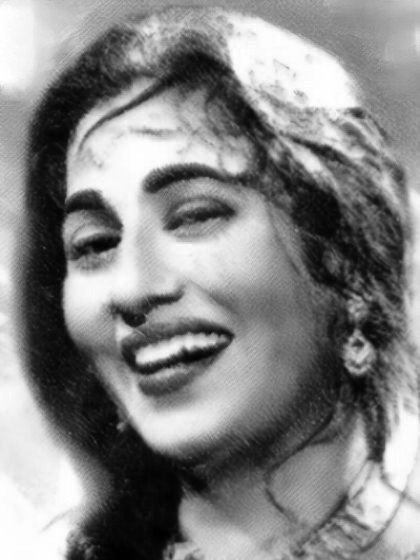
Madhubala never won a Filmfare Award, but her recognition has grown steadily since her death. In 2008, India Post issued a commemorative postage stamp honouring her contribution to Indian cinema, a rare honour that placed her among the country’s most celebrated film artists. Her wax figure has also been displayed at Madame Tussauds in Delhi, a sign of how firmly she remains in popular memory.
Her legacy is also carried by her films themselves. Mughal-e-Azam remains a landmark of Indian cinema, and Mahal, Mr. & Mrs. ’55, and Chalti Ka Naam Gaadi are still counted among the classics of their genres.
Perhaps the most fitting tribute came in 2019, when Google marked her eighty-sixth birthday with a doodle celebrating her as an actor of understated style, suited to comedy, drama, and romance alike.
Lesser-Known Facts About Madhubala
- She began her career at nine as Baby Mumtaz in Basant in 1942, and she was already helping to support her family.
- Her screen name is widely reported to have been suggested by actress Devika Rani of Bombay Talkies.
- She sang for All India Radio’s children’s programme before she became a film star.
- She founded her own production company, Madhubala Private Limited, in 1953, and produced three films under it.
- She was offered work in Hollywood, according to biographical accounts, but the opportunity did not lead to a Hollywood career.
- Her last film, Jwala, was shot in the 1950s but was only released in 1971, two years after her death.
- She learned to drive at a young age and enjoyed long drives, a small freedom in a life that was often closely managed.
- A 2008 commemorative postage stamp honoured her contribution to Indian cinema.
Frequently Asked Questions
How old was Madhubala when she died?
She was thirty-six years old. She was born on February 14, 1933, and she died on February 23, 1969, just nine days after her birthday.
Who was Madhubala’s husband?
Her husband was singer and actor Kishore Kumar, whom she married in 1960. They had worked together in popular films including Chalti Ka Naam Gaadi before their marriage, and they remained married until her death in 1969.
Did Madhubala have children?
No, Madhubala had no children. This is confirmed by reputable biographical sources, and it is an important correction to some online profiles that list children without evidence.
What was Madhubala’s real name?
Her real name was Mumtaz Jehan Begum Dehlavi. She was born in Delhi, and she took the screen name Madhubala after entering films, with the name widely reported to have been suggested by Devika Rani.
What are Madhubala’s best movies?
Her most celebrated films include Mahal in 1949, Mr. & Mrs. ’55 in 1955, Chalti Ka Naam Gaadi in 1958, Barsaat Ki Raat in 1960, and Mughal-e-Azam in 1960. Together they show her range across mystery, comedy, musical romance, and historical epic.
What was Madhubala’s net worth?
No reliable, audited net worth figure exists for Madhubala, and this profile does not invent one. She was among the highest-paid actresses of the 1950s and ran her own production company, but unsourced dollar figures published online should not be treated as verified facts.
Conclusion
Madhubala’s life was short, but her work has proved remarkably long-lived. She rose from a poor Delhi childhood to the top of Hindi cinema, carried hit after hit across genres, and gave Indian film one of its immortal performances as Anarkali. She did all of this while living with a serious heart condition that would eventually take her life at thirty-six.
Remembering her well means remembering both halves of that story. There was the beauty and the fame, which nobody denies, and there was the discipline, the range, and the quiet endurance behind them. That is why new viewers still discover her, and why old viewers still return to her films with affection.
If you watch only one Madhubala film, make it Mughal-e-Azam, and then follow it with Chalti Ka Naam Gaadi. The first shows her at her most tragic and majestic, and the second shows her at her most joyful. Between those two performances lies the full measure of a star who left far too soon.