
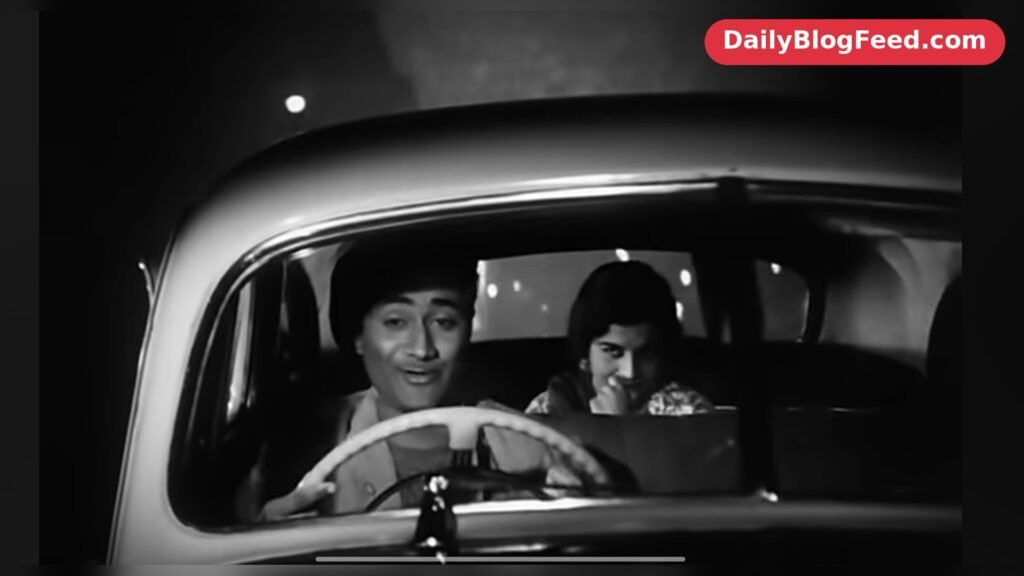

How does an actor stay a romantic hero for six decades, outlasting the stars he debuted alongside and still directing films in his late eighties? Dev Anand did it by never really slowing down. He arrived in Bombay with almost nothing, became one of Hindi cinema’s defining leading men, built his own production house, and kept working until weeks before his death in London in 2011.
Readers searching for him usually want the same set of answers. How old was he when he died, who was his wife, did he have children, and what was he worth? The answers are mostly plain, with one honest caveat on the money: the fortune figures floating around online disagree sharply, and no audited total exists. This is a legacy profile, written with respect for a man who is no longer here to correct the record.
Quick Facts
| Fact | Detail |
| Full Name | Dharamdev Pishorimal Anand |
| Born | September 26, 1923, Shakargarh, Gurdaspur district, Punjab, British India |
| Died | December 3, 2011, London, United Kingdom (cardiac arrest, age 88) |
| Age at Death | 88 years old |
| Occupation | Actor, director, producer, writer |
| Education | B.A. in English Literature, Government College, Lahore |
| Years Active | 1946–2011 |
| Best Known For | Guide; Jewel Thief; Johny Mera Naam; Hare Rama Hare Krishna; Baazi; C.I.D. |
| Production Company | Navketan Films (founded 1949) |
| Spouse | Kalpana Kartik (married 1954, until his death in 2011) |
| Children | Suneil Anand and Devina Anand |
| Major Honors | Padma Bhushan (2001); Dadasaheb Phalke Award (2002); Filmfare Best Actor for Kala Pani and Guide |
| Net Worth | Estimates conflict widely, roughly $15–50 million at death (see Net Worth section) |
A Punjab Childhood, Then Bombay With Almost Nothing
Dev Anand was born Dharamdev Pishorimal Anand on September 26, 1923, in Shakargarh, in the Gurdaspur district of Punjab, then part of British India. His father, Pishori Lal Anand, was a prominent advocate, and the household valued books and argument in equal measure. He was the third of four sons, and talent ran through the family: his elder brother Chetan became a pioneering director, and his younger brother Vijay became one of Hindi cinema’s great directors.
Schooling took him to Dalhousie and then to Government College, Lahore, where he earned a degree in English literature. The degree mattered more than it sounds. Anand’s screen style — the rapid, urbane dialogue delivery, the educated charm — owed something to a young man who had read widely and liked the sound of good English.
In the early 1940s he left for Bombay with very little money, a story he told often and with relish. He worked briefly in a military censor’s office and as a clerk while chasing acting work. He joined his brother Chetan’s circle at the Indian People’s Theatre Association, and he has said he was inspired to act after watching Ashok Kumar in films like Achhut Kanya and Kismet. He talked his way into the office of Babu Rao Pai at Prabhat Film Studios, and Pai gave him his break.
Hum Ek Hain, Then Ziddi Made Him a Star
Anand’s debut came in 1946 with Hum Ek Hain, a film about Hindu-Muslim unity, in which he played a Hindu boy opposite Kamala Kotnis. It was a respectable start, not a sensation. The sensation came two years later with Ziddi in 1948, which established him as a leading man with a style all his own: the tilted head, the quick smile, the dialogue delivered at a gallop.
The early 1950s turned him into a fixture. Baazi in 1951, directed by his friend Guru Dutt, is often described as the forerunner of the Bombay noir films of the decade, and it set a template Anand would return to again and again: the urbane hero in a world of crime, music, and moral ambiguity. Films like Taxi Driver, C.I.D., Paying Guest, and Kala Pani followed, and by the end of the decade he was one of the highest-paid actors in Indian cinema.
Kala Pani in 1958 won him his first Filmfare Award for Best Actor. It was the first of two such wins, and it confirmed what audiences already knew. Anand was not a passing fashion. He was one of the three names that defined Hindi film stardom in the fifties and sixties, alongside Raj Kapoor and Dilip Kumar, a trio often called the Golden Trio of that era.
That kind of polished, urbane romantic stardom has a classic Hollywood parallel. Like Cary Grant, whose screen charm worked because it looked effortless rather than performed, Anand’s appeal rested on timing, wit, and an ease in front of the camera that never looked like effort.
Navketan Films: The Producer in the Star
In 1949, Anand founded Navketan Films with his brother Chetan, and the company became one of the most respected banners in Hindi cinema. That decision shaped his whole career. Instead of waiting for producers to cast him, he could green-light the films he believed in, work with the directors he trusted, and take risks that a hired star could not.
Navketan produced more than 35 films over the decades. It gave Guru Dutt his start as a director, and it became a home for Anand’s own restless taste: crime thrillers, romances, social dramas, and later the counterculture films of the seventies. The company outlived the fashions of every decade it passed through, which is rarer than it sounds.
That move from performer to maker has a well-known precedent in Hollywood too. Like Robert Redford, who used acting success as a base for producing and directing work he believed in, Anand treated stardom as leverage for a company and a slate, not as the whole career. The difference is that Anand started building his company at the very beginning, before he was even a star.
Guide: The Masterpiece
If one film defines Dev Anand, it is Guide, released in 1965 and directed by his brother Vijay. Based on R. K. Narayan’s novel The Guide, it cast Anand as Raju, a tour guide who becomes a swindler, a lover, and finally, in the film’s extraordinary last movement, a reluctant holy man fasting for rain. Waheeda Rehman played Rosy, the dancer trapped in a loveless marriage, and their performances remain among the finest in Hindi cinema.
The film won Filmfare Awards in several categories, including Best Film and Best Director, and Anand won his second Filmfare Best Actor award for it. It was also sent as India’s entry for the foreign-language film Oscar that year. An English-language version was co-produced with the Nobel laureate Pearl S. Buck, a sign of how seriously the film was taken abroad.
Guide matters because it asked more of its hero than Hindi films usually did. Raju is not a straightforward good man. He is selfish, charming, and compromised, and the film follows him to a kind of redemption that it never quite explains away. Anand played all of it without losing the audience, and the performance is still cited as his finest.
Jewel Thief, Johny Mera Naam, and the Seventies
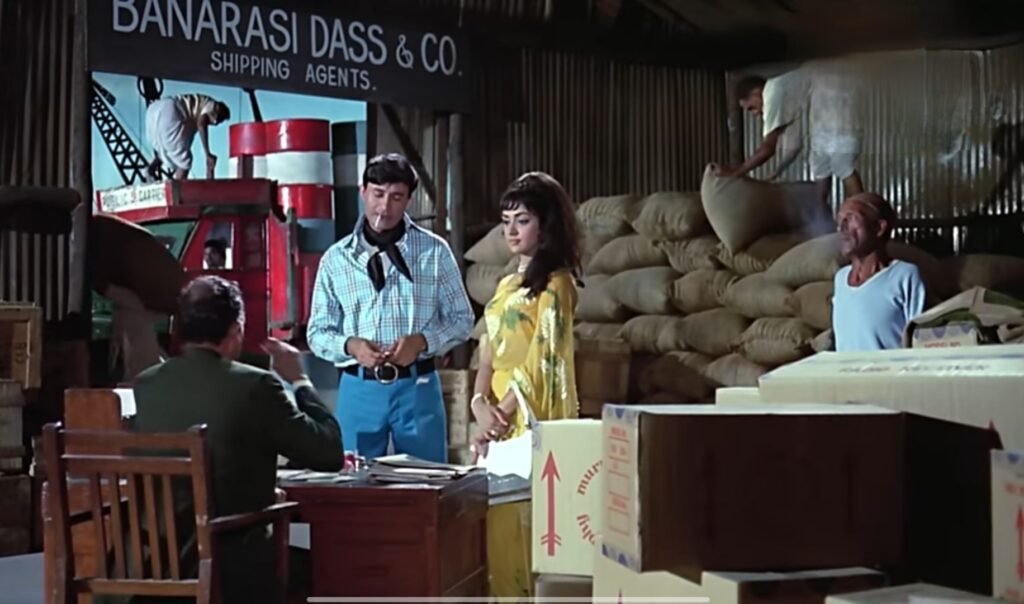
The years after Guide kept up a remarkable pace. Jewel Thief in 1967, a stylish crime thriller with Vyjayanthimala, became one of his most beloved films and one of the great caper movies of Hindi cinema. Johny Mera Naam in 1970 was another huge hit, and Prem Pujari and Amir Garib followed.
In 1971 he directed and starred in Hare Rama Hare Krishna, a film about the hippie trail and a brother searching for his estranged sister in Kathmandu. It introduced Zeenat Aman to Hindi cinema and captured a cultural moment — young Indians and Westerners meeting in the Himalayas — that no other mainstream film of the time attempted. The film’s music, including “Dum Maro Dum,” became an anthem of the era.
Later films like Des Pardes in 1978 kept the Navketan banner going, though the box office grew less forgiving as the seventies wore on. Anand’s screen manner, so modern in the fifties, began to look like a period style to younger audiences. He did not seem to mind. He kept directing, kept producing, and kept appearing in his own films, because making films was the point, not just starring in them.
That refusal to be filed under one era has its own precedent. Like Michael Caine, who built a six-decade career by moving between genres and refusing to rest on one breakthrough, Anand kept working by saying yes to new kinds of films long after his first stardom had passed.
The Wife Question, Stated Plainly
The title of this article asks about a wife, so here is the position stated plainly. In 1954, during the shooting of Taxi Driver, Anand married the actress Kalpana Kartik, whose birth name was Mona Singha, in a private ceremony. The marriage lasted until his death in 2011, more than five decades later, and Kartik largely stepped away from acting after the wedding.
They had two children: a son, Suneil Anand, born in 1956, who became an actor and filmmaker, and a daughter, Devina Anand, who has stayed away from the public eye. The spelling of the son’s name varies across sources — some write Suniel — and this article uses Suneil, the spelling given by Wikipedia.
One earlier chapter of his personal life is widely reported and belongs in any honest profile. Before his marriage, Anand was in a celebrated romance with the actress and singer Suraiya, his co-star in several films. The relationship ended, reportedly because of opposition from Suraiya’s family on religious grounds, and Anand later wrote about it with restraint in his autobiography. It is reported history, not gossip, and it is stated here without embellishment.
Sadly, the family story has a recent coda. According to Wikipedia, Suneil Anand died of a heart attack in July 2026. That detail is included here because readers searching for the family today will find it, and it is attributed to that source rather than presented as independently confirmed by this article.
The Final Years, and a Death in London
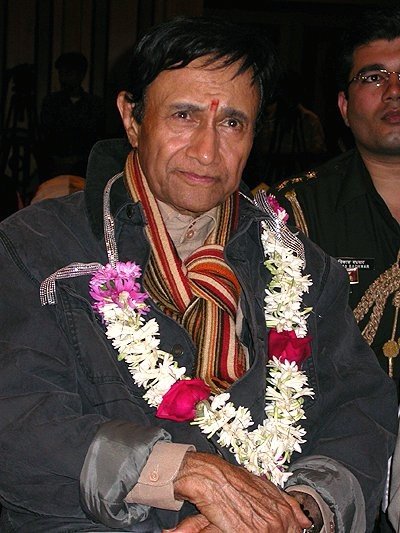
Anand never retired in any meaningful sense. His autobiography, Romancing with Life, appeared in 2007, and he continued to direct and act into his late eighties. His last film, Chargesheet, which he directed, produced, and appeared in, was released in 2011, just two months before his death.
On December 3, 2011, Anand died of a cardiac arrest in his room at the Washington Mayfair Hotel in London, at the age of 88. He had travelled there for a medical checkup and had not been well in his final days. His son Suneil was with him when he died. His funeral service was held at a small chapel in London on December 10, his coffin was taken to the Putney Vale Crematorium, and his ashes were later returned to India for immersion in the Godavari River.
The tributes that followed crossed generations. The prime minister of the day called him a great artiste who had entertained generations of cinema lovers, and actors who had grown up watching him described a man who seemed incapable of slowing down. His nephew, the director Shekhar Kapur, wrote that Anand had been working one minute and was gone the next, on his own terms.
What Was Dev Anand’s Net Worth?
Dev Anand’s net worth at the time of his death is estimated very differently depending on the source, and the honest answer is a range, not a number. Several biography sites put it at around $50 million, with one giving a range of $50–55 million, roughly ₹400 crore, built from six decades of acting fees, Navketan production income, and property in India and abroad.
At least one other biography outlet gives a far lower figure, around $15 million. No audited total exists, because his finances were private and no outlet had access to his accounts or estate. The honest summary is therefore a wide range, roughly $15–50 million, with $50 million as the most widely repeated estimate and the lower figure noted as a genuine outlier.
The shape of the fortune is clearer than the total. It rested on one of the longest acting careers in Indian cinema, more than 100 films, plus a production company that he owned and ran for over sixty years. Unlike stars who earned one fortune and spent it, Anand kept earning, kept producing, and kept working, which is why even the lower estimates still describe a very wealthy man.
Lesser-Known Facts About Dev Anand
- He was born Dharamdev Pishorimal Anand, and his father was a prominent advocate in Gurdaspur.
- He arrived in Bombay in the early 1940s with very little money and worked briefly as a clerk before his film break.
- He founded Navketan Films in 1949, before he was fully established as a star.
- He was part of the celebrated “Golden Trio” of Hindi cinema alongside Raj Kapoor and Dilip Kumar.
- Guide was co-produced in English with the Nobel laureate Pearl S. Buck.
- He won Filmfare Best Actor awards for Kala Pani in 1958 and Guide in 1966.
- He received the Padma Bhushan in 2001 and the Dadasaheb Phalke Award in 2002.
- His autobiography, Romancing with Life, was published in 2007, when he was 83.
- His last film, Chargesheet, was released in 2011, two months before his death.
Frequently Asked Questions
How old was Dev Anand when he died?
Dev Anand was 88 years old when he died on December 3, 2011, in London, of a cardiac arrest. He had been born on September 26, 1923, in Shakargarh, Punjab.
Who was Dev Anand’s wife?
Dev Anand married the actress Kalpana Kartik in 1954, during the shooting of Taxi Driver. The marriage lasted until his death in 2011.
Did Dev Anand have children?
Yes. He had two children with Kalpana Kartik: a son, Suneil Anand, and a daughter, Devina Anand. Suneil became an actor and filmmaker.
What is Dev Anand’s net worth?
Estimates conflict widely: several biography sites put it at around $50 million at the time of his death, while another outlet gives around $15 million. No audited figure exists, so the number should be treated as an estimate.
What are Dev Anand’s best movies?
His defining films include Ziddi, Baazi, C.I.D., Kala Pani, Guide, Jewel Thief, Johny Mera Naam, and Hare Rama Hare Krishna, plus his later directorial work under Navketan Films.
What awards did Dev Anand win?
He won two Filmfare Best Actor awards (Kala Pani and Guide), the Padma Bhushan in 2001, and the Dadasaheb Phalke Award in 2002, India’s highest cinema honour.
Final Thoughts
Dev Anand’s career is unusual because it never really had an ending, only a last chapter that looked like all the others. He started with nothing in Bombay, became a star, built a company, made a masterpiece in Guide, survived the changing fashions of five decades, and was still directing at 88. The evergreen tag that followed him was not just about his looks. It was about an appetite for work that never dimmed.
He is remembered now as one of the great romantic heroes of Indian cinema, but that description sells him short. He was also a producer who backed new talent, a director who chased the culture of his time, and a star who understood that a career is something you build, not something that happens to you. Guide made him immortal. Everything around it explains why.
Sources
Dev Anand, legendary Bollywood actor, dies in London – Times of India
Dev Anand Biography: Life, Family, Net Worth & Legacy – The Urdu Club