
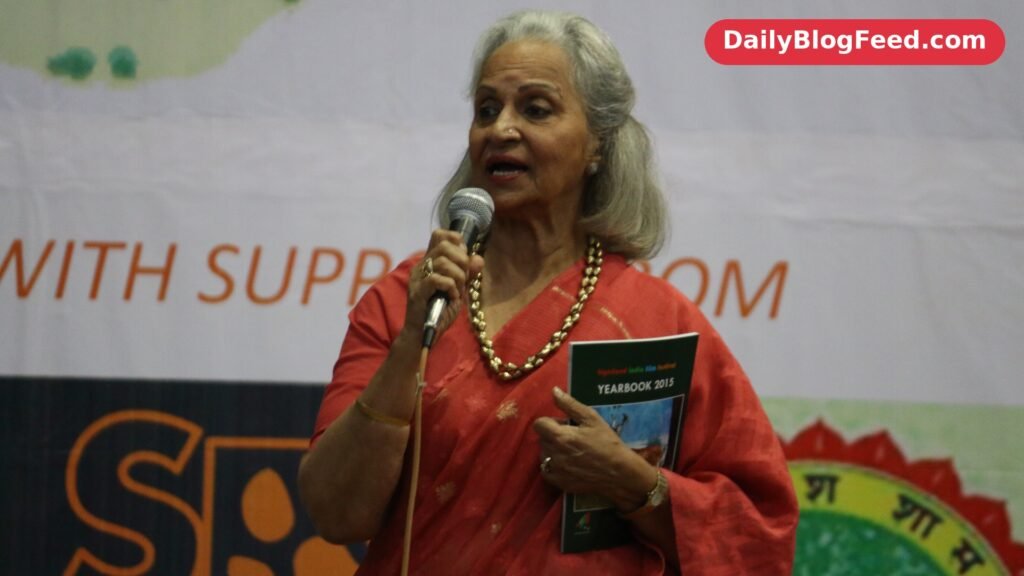

Some stars dazzle you. Waheeda Rehman holds you still. For more than six decades, she has acted with a quietness that feels almost radical, letting a glance or a pause do what other performers needed a speech to say.
Born in 1938, she came to the screen as a trained dancer and became one of Hindi cinema’s most respected leading ladies. Her films with Guru Dutt remain touchstones, and her turn as Rosie in Guide is still talked about as one of the great performances in Indian film history.
This is the full story behind the searches: her age, her family, her marriage to Kamaljeet, her children, her net worth, and the movies that made her a legend.
Quick Facts
| Detail | Information |
|---|---|
| Full Name | Waheeda Rehman |
| Born | 3 February 1938, Chengalpet, Madras Presidency, British India (present-day Tamil Nadu, India) |
| Age | 88 (as of November 2026) |
| Occupation | Actress |
| Years Active | 1955 to present |
| Debut Film | Rojulu Marayi (1955, Telugu); Hindi debut CID (1956) |
| Spouse | Shashi Rekhi, known by his screen name Kamaljeet (married 1974; died 2000) |
| Children | Sohail Rekhi and Kashvi Rekhi |
| Notable Films | Pyaasa, Kaagaz Ke Phool, Sahib Bibi Aur Ghulam, Guide, Khamoshi, Reshma Aur Shera |
| Major Honours | Padma Shri (1972), Padma Bhushan (2011), Dadasaheb Phalke Award (2023) |
| Net Worth | No confirmed figure; published estimates conflict (see Net Worth section) |
A Dancer First: Childhood in Chengalpet and Visakhapatnam
Waheeda Rehman was born on 3 February 1938 in Chengalpet, in what was then the Madras Presidency. She was the youngest of four daughters in a Dakhini Muslim family. Her father, Mohammed Abdul Rehman, worked as a district commissioner, and her mother was Mumtaz Begum.
The family lived for a time in Visakhapatnam, where Waheeda studied at St. Joseph’s Convent. As a girl she dreamed of becoming a doctor, a plan that did not survive the upheavals of her teenage years. Her father died in 1951, when she was still in her early teens, and the family faced difficult times after his death.
What stayed with her was dance. She trained in Bharatanatyam in Chennai, and that training shaped everything that followed. It gave her posture, grace and control, but more importantly it taught her discipline. You can see it in her screen work: nothing wasted, nothing overdone, every movement placed with intention.
How Guru Dutt Brought Her to Bombay
Waheeda’s screen career began far from Bombay, in Telugu cinema. She made her acting debut in Rojulu Marayi in 1955, and the film’s success brought her to the attention of filmmaker Guru Dutt. He invited her to Bombay and cast her in his production CID in 1956, directed by Raj Khosla and starring Dev Anand.
It was a bold move for a newcomer, and she met it with a stubbornness that would define her career. According to accounts of the time, she was pressed to change her name into something the industry considered more glamorous. She refused and kept her birth name. That decision now reads like a statement of intent: she would succeed as herself, not as someone else’s invention.
CID was a hit, and Guru Dutt gave her the leading role in his next major film. That film would change Indian cinema, and it would change her life.
The Breakthrough That Changed Everything
Pyaasa arrived in 1957, with Waheeda playing Gulabo, a woman who stands by a struggling poet when the world has turned away from him. The film was a commercial success and is now counted among the greatest Indian films ever made. For Waheeda, it was proof that she could carry emotional weight, not just beauty, on screen.
She followed it with Kaagaz Ke Phool in 1959, playing Shanti, the muse and love of a film director sliding into despair. The film failed at the box office on release, yet it has grown in reputation ever since and is now regarded as a classic. Then came Chaudhvin Ka Chand in 1960 and Sahib Bibi Aur Ghulam in 1962, in which she played Jaba, a woman of strength and self-respect in a decaying feudal household.
What connects these performances is restraint. Waheeda rarely raised her voice to make a point, and she never begged the audience to feel something. That same school of understatement defined the great Hollywood leading man Gregory Peck, whose quiet dignity in films like To Kill a Mockingbird made stillness itself a form of power. Waheeda worked in a different industry and a different language, but the principle was the same: trust the audience, and the audience will come to you.
Rosie in Guide, and the Roles That Defined a Decade
If one role explains Waheeda Rehman’s greatness, it is Rosie in Guide in 1965. Based on a novel by RK Narayan, the film follows a tourist guide whose life becomes entangled with Rosie, a woman trapped in an unhappy marriage who dreams of dancing. Waheeda played her with a mix of longing, defiance and tenderness that was ahead of its time.
The performance won her the Filmfare Award for Best Actress, and it remains her most celebrated role. Audiences still return to Guide for the way it treats a woman’s ambition as something serious, not scandalous. Waheeda made Rosie’s desire to dance feel like a matter of dignity, and that is why the film still feels modern.
The rest of the decade confirmed her range. She won a second Filmfare Best Actress award for Neel Kamal in 1968, and she earned nominations for the comedy Ram Aur Shyam in 1967 and for Khamoshi in 1969. In Khamoshi she played a nurse in a mental asylum, a role many critics now call her finest performance. Like the golden-age Hollywood star Cary Grant, who moved easily between comedy, romance and drama without ever losing his screen identity, Waheeda refused to be boxed into a single kind of role.
Then, in 1971, came Reshma Aur Shera. She played a clanswoman in love with a man from a rival clan, and the performance won her the National Film Award for Best Actress. It was the highest acting honour in Indian cinema, and it arrived at a turning point in her career.
Marriage, Family and a Second Act
In April 1974, Waheeda married actor Shashi Rekhi, who worked under the screen name Kamaljeet. The two had appeared together in Shagoon in 1964, a decade before their wedding. After marrying, she lived for a time at a farmhouse in Bangalore, stepping back from the pace of leading-lady stardom.
The couple had two children, Sohail Rekhi and Kashvi Rekhi, both of whom became writers. Her husband died on 21 November 2000 after a prolonged illness, and Waheeda later returned to Mumbai, where she has lived in a sea-facing home in Bandra. She has kept her private life private, and this article sticks to what is publicly documented about her family.
Her screen career did not end with marriage, it changed shape. From the mid-1970s she moved into supporting roles that were central to their stories, including Kabhi Kabhie in 1976 and Trishul in 1978. Later highlights included Namkeen in 1982, Chandni in 1989 and Lamhe in 1991, in which she played a dignified older woman with the same quiet authority she had brought to her leading roles.
After Lamhe she stepped away from films for more than a decade. She returned in Om Jai Jagadish in 2002, and a new generation discovered her in Water in 2005, Rang De Basanti in 2006 and Delhi 6 in 2009. Her later work included Skater Girl in 2021, proof that her screen presence had lost none of its warmth.
What Is Waheeda Rehman’s Net Worth?
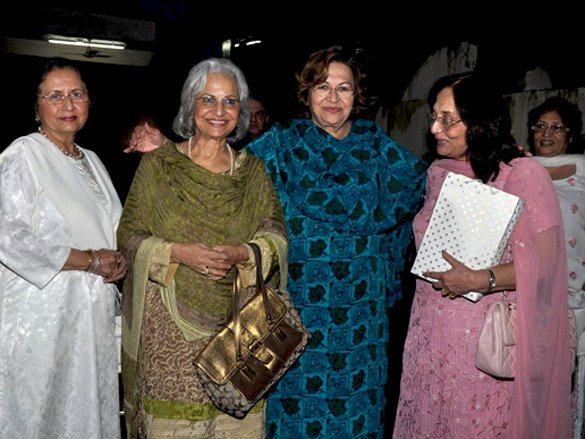
There is no reliable, confirmed figure for Waheeda Rehman’s net worth, and readers should treat any single number with caution. She has not publicly disclosed her finances, and no authoritative financial publication has published a verified valuation of her wealth.
Published celebrity-estimate sites disagree with each other. Some put the figure at around 5 million dollars, while Celebworth, cited by Republic World in 2021, put it at 10 million dollars. Other sites publish different numbers again, which is exactly why this article does not present one of them as fact. The honest answer is that her wealth is not publicly confirmed.
What is clear is where her income came from: a long acting career spanning more than 90 films, later brand associations, public appearances and property. She built her standing over decades rather than through a single windfall, and that long career is the real financial story here.
Honours That Tell the Story of Indian Cinema
Waheeda Rehman’s honours read like a map of Indian cinema’s own history. She received the Filmfare Lifetime Achievement Award in 1994, recognising a career that had already spanned four decades. The Government of India honoured her with the Padma Shri in 1972 and the Padma Bhushan in 2011, two of the country’s highest civilian awards.
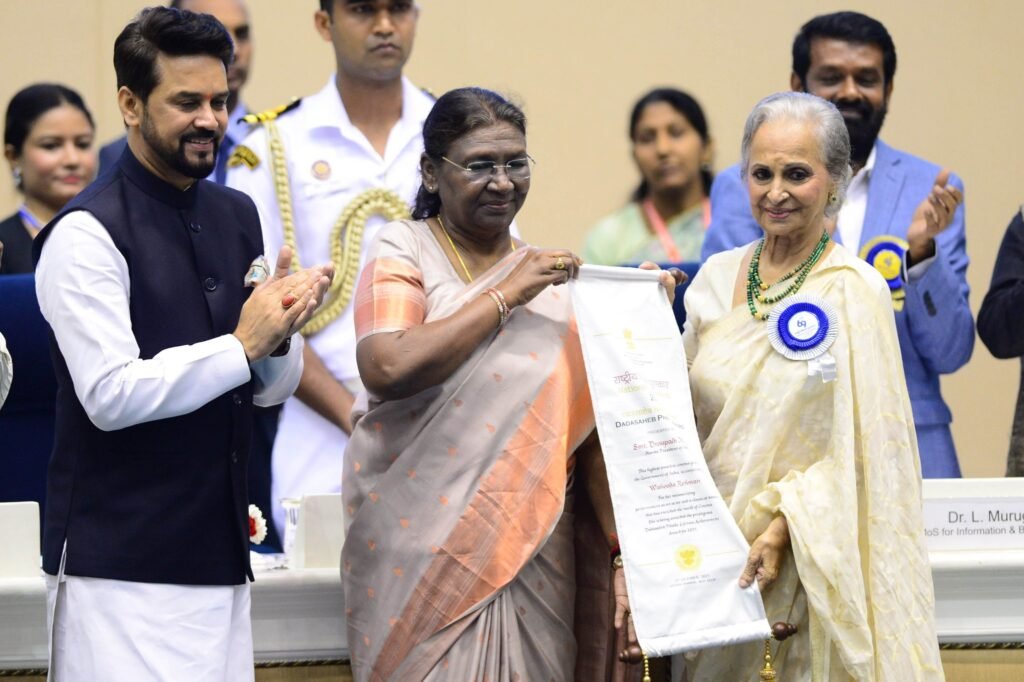
The crowning honour came in 2023. In September of that year she was announced as the recipient of the Dadasaheb Phalke Award, India’s highest award in cinema, and she was presented with it at the 69th National Film Awards ceremony in October 2023. The award recognised a lifetime of work, from Pyaasa to Rang De Basanti, and it placed her among the most honoured performers in the country’s film history.
Her legacy is not only about awards, though. Like Sidney Poitier, the Hollywood star who carried dignity and restraint into roles that changed what audiences expected from a leading performer, Waheeda showed that a screen star could be both graceful and serious. Younger actresses still cite her as a model of how to age on screen without losing authority, and her films are still taught, screened and argued over.
Lesser-Known Facts About Waheeda Rehman
- She began her career in Telugu cinema, not Hindi cinema, with Rojulu Marayi in 1955.
- She trained in Bharatanatyam before she became an actress, and dance remained central to her screen identity, most famously in Guide.
- She refused to change her birth name when industry figures pressed her to adopt a more glamorous one.
- Kaagaz Ke Phool, now considered a classic, was a box-office failure when it first released in 1959.
- She took a break of more than a decade after Lamhe in 1991 before returning in Om Jai Jagadish in 2002.
- She has worked as an ambassador for Rang De, an organisation working against poverty in India.
- She is a keen wildlife photographer and traveller, interests she has spoken about in interviews in her later years.
- In October 2004, a retrospective of her films was held at the Seattle Art Museum and the University of Washington, with Waheeda taking part in panel discussions.
Frequently Asked Questions
How old is Waheeda Rehman?
She was born on 3 February 1938, which makes her 88 years old as of November 2026. Her birthday falls in early February each year.
Who was Waheeda Rehman’s husband?
She married actor Shashi Rekhi, known by his screen name Kamaljeet, in April 1974. He died on 21 November 2000. The couple had worked together in Shagoon in 1964.
How many children does Waheeda Rehman have?
She has two children: a son, Sohail Rekhi, and a daughter, Kashvi Rekhi. Both are writers.
What is Waheeda Rehman’s net worth?
No confirmed figure exists. Published estimate sites disagree, with figures of around 5 million dollars and 10 million dollars both in circulation, so any single number should be treated as an unverified estimate rather than a fact.
What are Waheeda Rehman’s best movies?
Her most celebrated films include Pyaasa, Kaagaz Ke Phool, Sahib Bibi Aur Ghulam, Guide, Khamoshi and Reshma Aur Shera. Her later highlights include Kabhi Kabhie, Chandni, Lamhe and Rang De Basanti.
Did Waheeda Rehman win the Dadasaheb Phalke Award?
Yes. She was announced as the recipient in September 2023 and presented with the Dadasaheb Phalke Award at the 69th National Film Awards ceremony in October 2023. She had earlier received the Padma Shri in 1972 and the Padma Bhushan in 2011.
Conclusion
Waheeda Rehman’s career is a reminder that screen greatness does not need noise. From a Telugu debut in 1955 to the Dadasaheb Phalke Award in 2023, she built her reputation on restraint, grace and an instinct for the emotional truth of a scene.
Her films endure because her performances do. Rosie still dances, Gulabo still waits, and the nurse in Khamoshi still breaks your heart. That is a legacy few performers achieve, and it is why new audiences keep discovering her.