
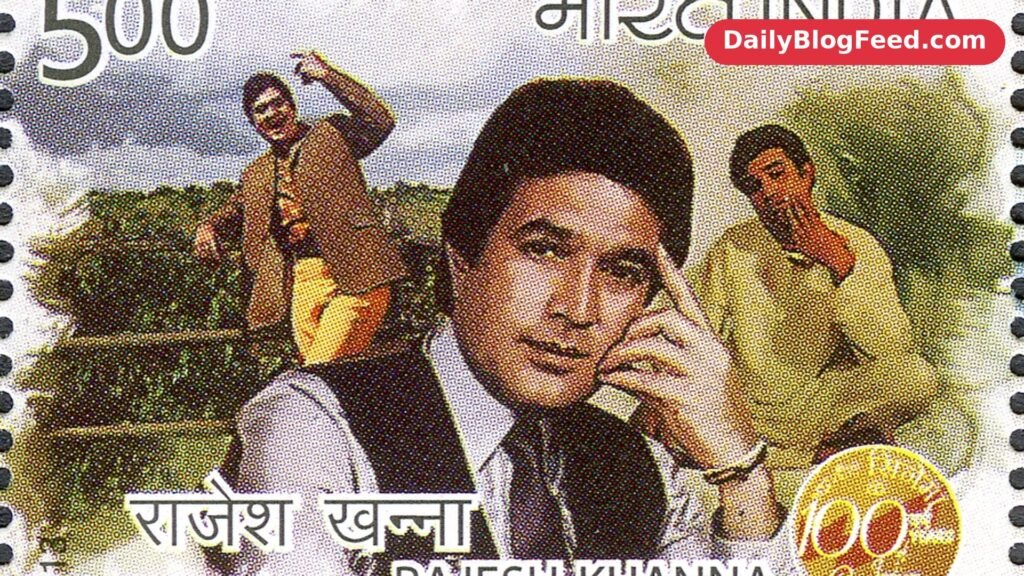

What does it mean to be called the first superstar of an entire film industry? Before Rajesh Khanna, Hindi cinema had huge stars, but it had never seen anything like the frenzy he inspired between 1969 and 1971. Fans crowded outside his bungalow, wrote him letters in blood, and turned his films into events. Then, almost as suddenly, the wave receded, and he spent decades living with a legend he had built in just a few extraordinary years.
People searching for him usually want the same set of answers. How old was he when he died, who was his wife, who are his children, and what was he worth?
The answers are mostly plain, with a few honest complications. His marriage to Dimple Kapadia ended in separation but, by most accounts, never in divorce. His fortune is reported in wildly different figures. This article keeps confirmed facts apart from reports throughout, and treats a man who died in 2012 as a legacy, not a headline.
Quick Facts
| Fact | Detail |
| Full Name | Rajesh Khanna (born Jatin Khanna) |
| Born | December 29, 1942, Amritsar, Punjab, British India |
| Died | July 18, 2012, Mumbai, Maharashtra, India (aged 69) |
| Occupation | Actor, film producer, politician |
| Years Active | 1966–2012 |
| Best Known For | Aradhana; Anand; Kati Patang; Haathi Mere Saathi; Amar Prem; Bawarchi; Namak Haraam |
| Nickname | Kaka (fondly, by fans and colleagues) |
| Spouse | Dimple Kapadia (married March 1973; separated in the 1980s, see Wife section) |
| Children | Twinkle Khanna and Rinke Khanna |
| Major Honors | Three Filmfare Best Actor Awards; Filmfare Lifetime Achievement Award (2005); Padma Bhushan (posthumous, 2013) |
| Politics | Member of Parliament, Lok Sabha, New Delhi (1992–1996), Indian National Congress |
| Net Worth | Estate estimates conflict widely (see Net Worth section) |
An Amritsar Boy Raised in Mumbai
Rajesh Khanna was born Jatin Khanna on December 29, 1942, in Amritsar, in what was then British India. He was adopted and raised by his foster parents, Chunnilal and Leelavati Khanna, in Mumbai, and he grew up in the city’s Girgaon neighbourhood. His uncle is credited with changing his name from Jatin to Rajesh when he decided to pursue films.
Acting found him early. He took part in school and college plays, and the stage gave him something his later screen career would always carry: a sense of timing and a voice that could do a great deal without raising itself. He was not a dancer or an action hero in the mould of later stars. His strength was quieter, and it would turn out to be exactly what audiences wanted.
The Talent Hunt That Opened the Door
Khanna’s entry into films came through a contest, not a family connection. In 1965 he won the All India Talent Contest organised by United Producers and Filmfare, beating thousands of other hopefuls. The prize was a start in Hindi cinema, and he made his debut in 1966 with Aakhri Khat, directed by Chetan Anand. The film did not make him a star, but it was India’s official entry to the Academy Awards in 1967, a respectable beginning for an unknown.
The next few years were a slow climb. He appeared in films such as Raaz, Baharon Ke Sapne, and Ittefaq, and worked with directors who noticed his restraint. Nothing in those early roles predicted what was coming. Then, in 1969, everything changed at once.
Aradhana and the Fifteen-Hit Run
Aradhana, released in 1969 and directed by Shakti Samanta, was the turning point. Khanna played an air force pilot opposite Sharmila Tagore, and the film became a blockbuster. Its songs, sung by Kishore Kumar and composed by S. D. Burman, including “Mere Sapno Ki Rani” and “Roop Tera Mastana,” became evergreen hits. Audiences had found their new romantic hero, and the industry had found its first superstar.
What followed has never been matched in Indian cinema. Between 1969 and 1971, Khanna delivered 15 consecutive solo-lead hit films, a record that still stands. The run included Do Raaste, Bandhan, Ittefaq, Khamoshi, Safar, Kati Patang, Sachaa Jhutha, Anand, and Haathi Mere Saathi. In 1971 alone, his films dominated the box office, with Haathi Mere Saathi finishing as the year’s biggest earner.
The frenzy around him became part of the story. Fans mobbed his premieres, his car was famously covered in lipstick marks from admirers, and he was reported to receive more fan mail than any actor in the world at the time. He was, for those three years, not just a star but a phenomenon, and the word “superstar” entered Indian film journalism largely because of him.
Anand: The Role That Outlived the Frenzy
If one performance explains why Khanna mattered beyond the box office, it is Anand. In Hrishikesh Mukherjee’s 1971 film, he played a terminally ill man who refuses to stop laughing, loving, and living in the months he has left. The film’s most famous line, about life being long or short depending on how it is lived, is still quoted across India.
Anand showed the quality that separated him from other romantic heroes. He played dying men, lonely husbands, and quiet idealists with a vulnerability that never turned sentimental. The same year he headlined the adventure Haathi Mere Saathi, he was also the gentle Anand, and audiences accepted both without blinking.
His other defining films of the period are worth naming because they show his range. In Kati Patang he played a man who shelters a woman pretending to be a widow. In Amar Prem he played a lonely husband drawn to a courtesan, played by Sharmila Tagore, in a relationship treated with unusual tenderness.
In Bawarchi he played a cheerful cook who repairs a broken family. In Namak Haraam, opposite Amitabh Bachchan, he played a man caught between friendship and class loyalty.
That kind of screen charm, which works because it looks effortless rather than performed, has a classic parallel. Like Cary Grant, whose best performances succeeded on timing and naturalness rather than force, Khanna’s appeal lay in how little he seemed to be trying. The audience came to him; he rarely chased it.
The Later Years, and a Second Career in Politics
No streak lasts forever, and Khanna’s did not. From the mid-1970s, audience taste shifted toward action-oriented multi-starrer films, and his solo romantic leads began to underperform. He still had successes, including Daag in 1973, Prem Nagar in 1974, and later critically noted films such as Avtaar and Agar Tum Na Hote, but the box-office command of 1969 to 1971 never returned.
He adapted by working steadily rather than disappearing. Across his career he appeared in more than 160 feature films, won three Filmfare Best Actor Awards, and received the Filmfare Lifetime Achievement Award in 2005. In 1991 he was given a Filmfare Special Award marking 25 years in the industry, and in 2013 he was posthumously awarded the Padma Bhushan, India’s third-highest civilian honour. In the same year, the Dadasaheb Phalke Academy Awards officially bestowed on him the title of the first superstar of Indian cinema.
Politics gave him a second public life. He joined the Indian National Congress and served as a Member of Parliament in the Lok Sabha from the New Delhi constituency from 1992 to 1996, winning a by-election in 1992. He campaigned for the party again in later years, including in Punjab in 2012, the year he died.
That pattern, a performer who keeps reinventing himself across decades rather than resting on one breakthrough, has its own precedent. Like James Stewart, whose career lasted because audiences believed him from role to role over a very long run, Khanna’s standing survived the end of his peak because the work itself had been genuine, not just fashionable.
Wife Dimple Kapadia: Married in 1973, Separated, Never Quite Divorced
Khanna married actress Dimple Kapadia in March 1973, eight months before her debut film Bobby was released. He was 30 at the time and she was 16, an age gap that has been widely noted in coverage of the marriage. The wedding was one of the biggest celebrity events of its year, joining India’s reigning superstar to a newcomer on the verge of stardom.
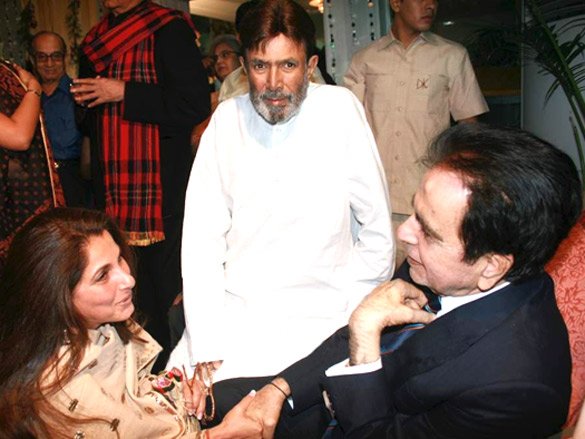
The marriage did not last as a shared life. The couple separated in the 1980s, most outlets dating the separation to 1984, though at least one report gives 1982. By most accounts they never formally divorced, although one outlet has reported a legal divorce in 2012, the year of his death. This article does not settle that detail, because the public record is inconsistent, and the safer summary is the one most sources agree on: separated, and never publicly confirmed as divorced during his lifetime.
What is not in dispute is that the bond endured in its own way. Dimple returned to acting after the separation and built a long, respected career of her own. She was with the family during his final illness, and she has spoken of him since with warmth, telling an interviewer in 2017 that he was “consistently misunderstood” and that she still had tremendous regard for him. The marriage ended; the respect, by her own account, did not.
Their daughters are both part of the film world. Twinkle Khanna, born in 1974, acted in films before becoming a bestselling author and columnist, and she is married to actor Akshay Kumar. Rinke Khanna, born in 1977, also acted in films. Khanna shared his birthday, December 29, with his elder daughter Twinkle.
His Death, and What He Left Behind
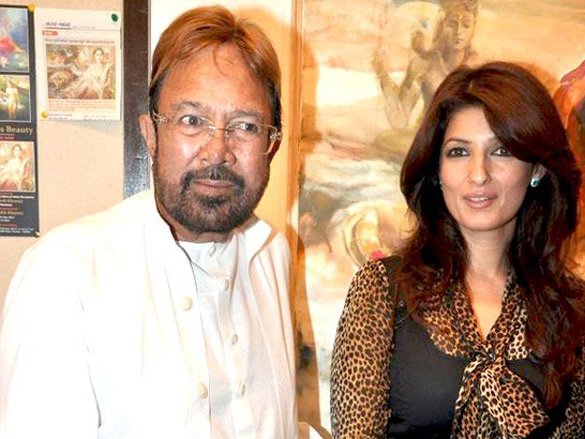
Rajesh Khanna died on July 18, 2012, at his Mumbai home, the bungalow Aashirwad in Bandra, at the age of 69. Contemporary obituaries reported that he had been critically ill and had been admitted to hospital several times in his final months. His wife Dimple, his daughters Twinkle and Rinke, and his son-in-law Akshay Kumar were reported to be with the family at the time.
This article does not name a single medical cause of death, because contemporary reporting differed on the details, with some outlets reporting cancer and others describing a prolonged illness without a confirmed diagnosis. What the record does confirm is the date, the place, and the scale of the public grief: his funeral drew huge crowds, and tributes poured in from across Indian cinema and politics.
His legacy is easier to state than his fortune. He was the actor who showed Hindi cinema what a superstar looked like, and the template he created — the romantic hero as a national obsession — shaped every star who followed. His films are still watched, his songs are still sung, and his title, the first superstar, was formally recognised only after his death, which tells its own story about how long it took the industry to catch up with what audiences already knew.
That use of fame as a base for a wider life, rather than as the whole career, has a familiar shape. Like Paul Newman, who treated screen success as a platform for work beyond acting, Khanna carried his stardom into politics and public life, and his influence outlasted the years when he topped the box office.
What Was Rajesh Khanna’s Net Worth?
Rajesh Khanna’s net worth at the time of his death is reported in sharply conflicting figures, and no audited total exists. Reports in the Times of India and other outlets estimated his estate at around ₹600 crore, roughly $72 million at the exchange rates of the time, including the Aashirwad bungalow, flats and offices in Mumbai’s Versova area, land in Thane district, and other properties and investments. Other estimates published since have put the figure far lower, around ₹100 crore.
The honest summary is that range, with ₹600 crore as the most widely repeated estate estimate and lower figures reflecting different ways of valuing property bought decades earlier. His will, signed about a month before his death according to reports, left his assets to his daughters Twinkle and Rinke. The estate later drew a legal challenge from Anita Advani, who claimed to have been his live-in partner in his final years and sought a share; no court ruling invalidated the will or awarded her assets, and his daughters retained control of the estate.
The shape of the fortune is clearer than the total. It rested on more than four decades of film earnings at the top of the industry, plus property bought in Mumbai and its suburbs when prices were a fraction of what they later became. Aashirwad itself, bought for a reported ₹3.5 lakh, was later reported sold for around ₹90 crore, which gives some sense of how property appreciation, not just film salaries, built the estate.
Lesser-Known Facts About Rajesh Khanna
- He was born Jatin Khanna and renamed Rajesh by his uncle when he entered films.
- He won the 1965 All India Talent Contest run by United Producers and Filmfare, beating thousands of hopefuls.
- His debut film Aakhri Khat (1966) was India’s official entry to the Academy Awards in 1967.
- He shared his birthday, December 29, with his elder daughter Twinkle.
- He was fondly called “Kaka” by fans, friends, and colleagues.
- He appeared in more than 160 feature films across a career spanning 1966 to 2012.
- He served as a Congress Member of Parliament from New Delhi between 1992 and 1996.
- He was posthumously awarded the Padma Bhushan in 2013.
Frequently Asked Questions
How old was Rajesh Khanna when he died?
Rajesh Khanna was born on December 29, 1942, and died on July 18, 2012, at the age of 69. He was a few months short of his 70th birthday.
Who was Rajesh Khanna’s wife?
He married actress Dimple Kapadia in March 1973. The couple separated in the 1980s, most outlets dating the separation to 1984, and by most accounts they never formally divorced during his lifetime.
Did Rajesh Khanna have children?
Yes, two daughters: Twinkle Khanna, born in 1974, and Rinke Khanna, born in 1977. Twinkle is married to actor Akshay Kumar and later became a bestselling author.
What was Rajesh Khanna’s net worth?
Estimates conflict sharply. Reports at the time of his death put his estate at around ₹600 crore, while other estimates put it closer to ₹100 crore. No audited figure exists, so the number should be treated as an estimate.
What are Rajesh Khanna’s best movies?
His defining films include Aradhana, Anand, Kati Patang, Haathi Mere Saathi, Amar Prem, Bawarchi, Namak Haraam, and Daag. Anand, in which he plays a terminally ill man who refuses to stop enjoying life, is widely considered his finest performance.
Why is Rajesh Khanna called the first superstar?
Because between 1969 and 1971 he delivered 15 consecutive solo-lead hit films, a record unmatched in Indian cinema, and inspired a level of fan frenzy Hindi cinema had never seen before. The title was formally bestowed on him posthumously in 2013.
Final Thoughts
Rajesh Khanna’s career is unusual because its peak was both brief and permanent. Three years of hits made him a phenomenon, and the decades that followed never erased what those three years meant. He was not the most versatile actor of his generation, nor the longest-reigning box-office king, but he was the first to show India what superstardom felt like, and that is a different kind of achievement.
At his death at 69, he left behind two daughters, a bungalow full of memories, a parliamentary record, and a filmography that still plays on Sunday afternoons across India. The frenzy faded. The films did not.
Sources
Rajesh Khanna, the man who brought superstardom to Hindi films – The Economic Times
Rajesh Khanna’s Aashirwad: The real story behind Bollywood’s most famous bungalow – ET Now News