
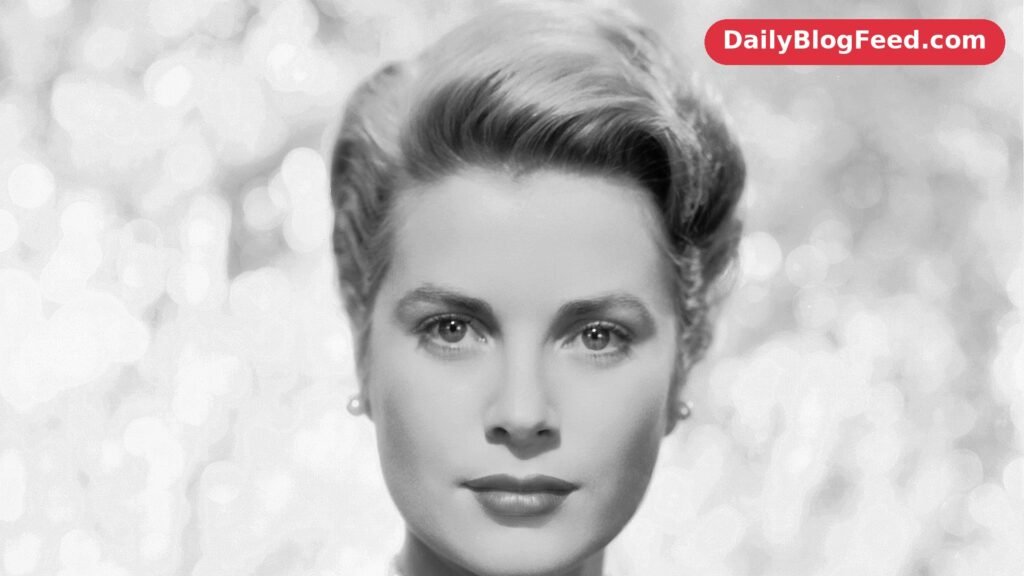

Grace Kelly lived two lives that most people only dream about one of. First she was Hollywood’s coolest blonde, an Oscar winner who made eleven films in five years and walked away at the very top. Then she became a real princess, marrying into Monaco’s royal family in a wedding the whole world watched.
That double life is why people still search for her more than forty years after her death. They want the facts behind the fairy tale: her age, her husband, her three children, her fortune, and the films that made her famous in the first place. This article tells that story straight, including the parts where the record is less tidy than the legend.
Quick Facts
| Fact | Detail |
|---|---|
| Full Name | Grace Patricia Kelly |
| Born | November 12, 1929, Philadelphia, Pennsylvania, USA |
| Died | September 14, 1982, Monaco, aged 52 |
| Nationality | American (later also Monégasque) |
| Occupation | Actress, later Princess of Monaco |
| Years Active | 1949–1956 (acting); 1956–1982 (royal duties) |
| Husband | Prince Rainier III of Monaco (married April 1956) |
| Children | 3 — Caroline, Albert, and Stéphanie |
| Best Known For | High Noon, Mogambo, Rear Window, The Country Girl, High Society |
| Major Awards | Academy Award for Best Actress (The Country Girl); three Golden Globe Awards |
| Net Worth | Estimates conflict widely ($10 million–$50 million); see Net Worth section |
A Philadelphia Girl Who Wanted the Stage
Grace Patricia Kelly was born on November 12, 1929, in Philadelphia, Pennsylvania, into a family that was already prominent. Her father, John B. Kelly Sr., was a self-made millionaire who owned a successful brickwork contracting company and had won three Olympic gold medals in rowing. Her mother, Margaret Majer Kelly, had been a physical education teacher at the University of Pennsylvania.
Grace was the third of four children, raised in a devout Catholic household in the East Falls neighborhood. She attended Ravenhill Academy, a Catholic girls’ school, and then Stevens School, where she took part in dance and drama programs. The acting bug bit early, and by her teens she was appearing in school plays and modeling with her mother and sister.
She wanted to attend Bennington College, but she was rejected, reportedly because of low mathematics scores. Instead of giving up on her dream, she doubled down on it. In 1947 she moved to New York City and enrolled at the American Academy of Dramatic Arts, graduating in 1949.
New York was not easy at first. She worked as a model, appeared in print advertisements, and took small stage and television roles. She appeared in more than 40 episodes of live television drama during the early 1950s, the golden age of TV anthologies, learning to perform under the pressure of a live broadcast. That training gave her the calm, precise screen presence that directors would soon prize.
Eleven Films in Five Years
Kelly’s film debut was a small part in Fourteen Hours (1951). Her breakthrough came a year later, and it came opposite one of the biggest stars in Hollywood. In High Noon (1952), she played Amy Fowler Kane, the Quaker bride of a marshal facing a killer alone. Her co-star was Gary Cooper, and the film’s real-time tension made it an instant classic.
Mogambo (1953) followed, directed by John Ford and co-starring Clark Gable and Ava Gardner. Kelly played Linda Nordley, a married woman drawn into a love triangle on an African safari. The role earned her an Academy Award nomination for Best Supporting Actress and a Golden Globe win, and it announced her as a major star rather than a promising newcomer.
What happened next is one of the great runs in film history. Between 1954 and 1956, Kelly made seven more films, and nearly all of them are still watched today.
The Bridges at Toko-Ri (1954) cast her in a war drama. Dial M for Murder (1954) began her partnership with Alfred Hitchcock. Rear Window (1954) paired her with James Stewart. The Country Girl (1954) won her the Oscar.
To Catch a Thief (1955) sent her to the French Riviera. The Swan (1956) and High Society (1956) closed out the run.
Eleven films in five years, and then she stopped. No actress of her stature has ever retired so completely, or so young.
Hitchcock’s Cool Blonde
Alfred Hitchcock understood Kelly better than any other director did. He cast her three times in a row, and each film used a different facet of her screen image. In Dial M for Murder (1954), she played Margot Wendice, a wife whose husband plots her murder. The film was shot in 3D, and Hitchcock used Kelly’s elegance as a weapon, making the audience fear for a woman who looked untouchable.
Rear Window (1954) is the masterpiece of the three. Kelly played Lisa Fremont, a fashion-conscious socialite who helps her neighbor, a wheelchair-bound photographer played by James Stewart, investigate a possible murder across the courtyard. Lisa is glamorous, funny, and brave, and the film works because Kelly makes you believe a woman in a designer dress would crawl through a killer’s apartment.
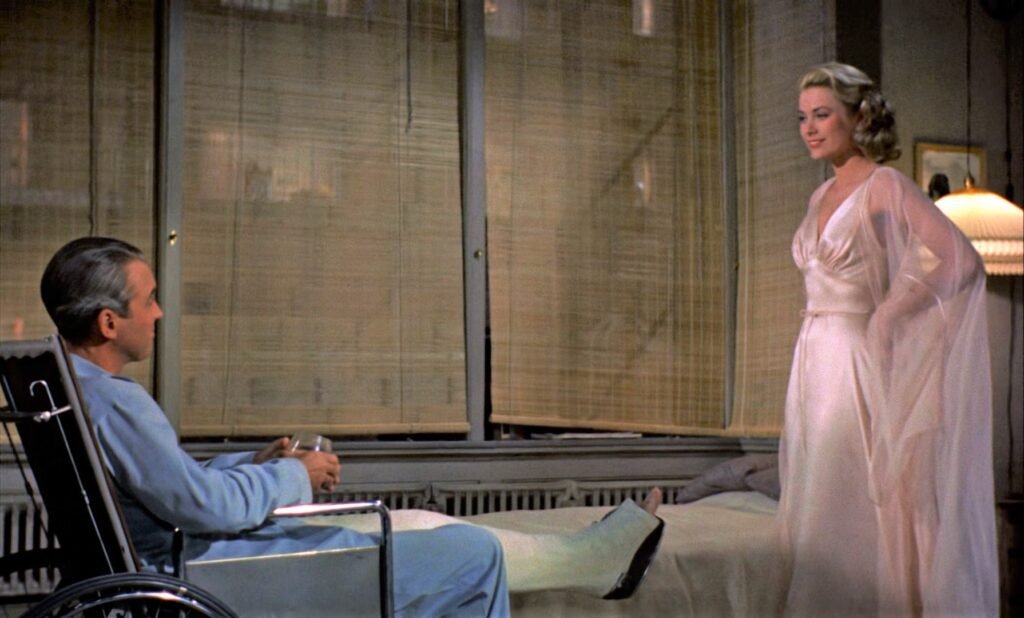
To Catch a Thief (1955) gave her the lightest of the three roles, as Frances Stevens, a wealthy young woman holidaying on the Riviera who falls for a retired jewel thief played by Cary Grant. The film is sunlit and witty, and the chemistry between Kelly and Grant is one of the great screen pairings of the decade.
Hitchcock reportedly wanted to work with her again, and later offered her a role in Marnie (1964). By then she was Princess of Monaco, and the people of Monaco objected to their princess returning to the screen. She declined, and the part went to Tippi Hedren.
The Country Girl and the Oscar
Kelly’s most important performance was also her least glamorous. In The Country Girl (1954), she played Georgie Elgin, the long-suffering wife of an alcoholic actor played by Bing Crosby. She wore no makeup, dressed plainly, and let the character’s exhaustion show on her face.
The performance won her the Academy Award for Best Actress at the 1955 ceremony, beating Judy Garland, who had been widely expected to win for A Star Is Born. The upset is still debated by film historians, but the award itself is not in doubt, and it remains the centerpiece of Kelly’s short film career.
High Society (1956), her final film, was a musical remake of The Philadelphia Story, co-starring Bing Crosby and Frank Sinatra. Kelly sang “True Love” with Crosby, and the song became a hit. It was a fitting farewell: light, polished, and performed with the two biggest male stars of the era.
The Wedding of the Century
Kelly met Prince Rainier III of Monaco in April 1955, during a photo session at the Cannes Film Festival. They corresponded, he visited her family in Philadelphia, and within a year they were engaged.
The wedding in April 1956 was one of the most watched events of the decade. The civil ceremony took place on April 18, and the religious ceremony, at Monaco’s Saint Nicholas Cathedral, on April 19. An estimated 30 million people watched on television, and the guest list mixed Hollywood stars with European royalty.
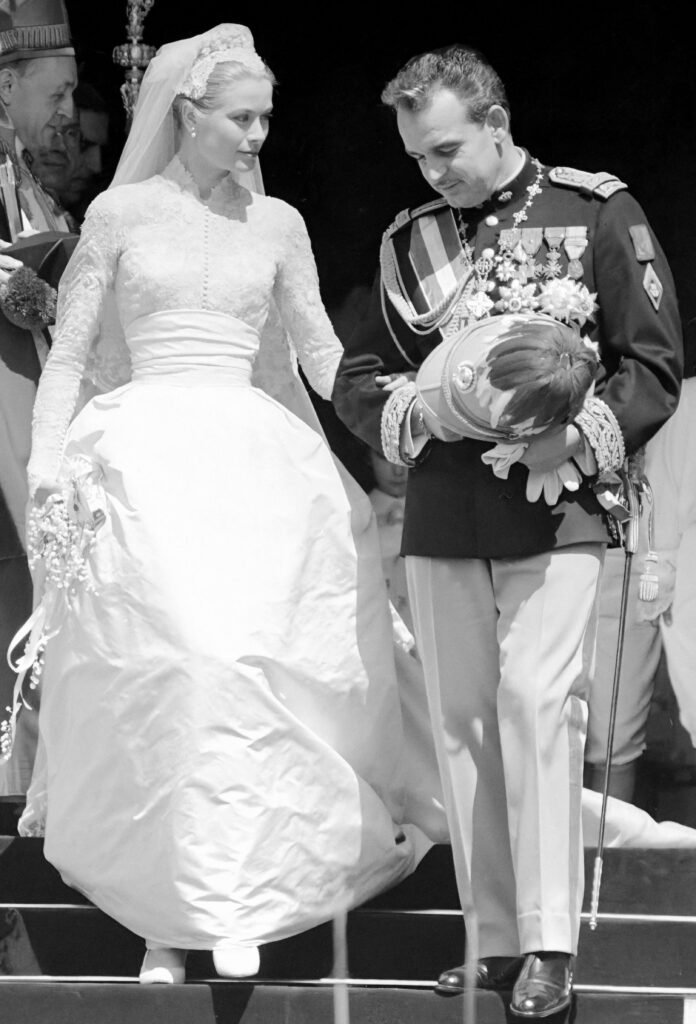
The marriage changed everything. She retired from acting at 26 and took on the duties of a working princess: state visits, charity galas, and the daily business of a small principality. She retained dual United States and Monégasque citizenship and remained close to her Philadelphia family.
The couple had three children. Princess Caroline was born on January 23, 1957. Prince Albert, the heir, was born on March 14, 1958.
Princess Stéphanie was born on February 1, 1965. Albert succeeded his father as Monaco’s sovereign in 2005, after Rainier’s death that April.
Princess Grace: The Work Behind the Title
Kelly’s royal life was busier and more serious than the gala image suggests. Her charity work focused on children and the arts, and she threw herself into it with the same discipline she had brought to acting.
In 1964 she established the Princess Grace Foundation, originally to support local artisans in Monaco. It later grew into a foundation supporting emerging talent in theatre, dance, and film in the United States. She also founded AMADE Mondiale, an organization for children’s rights that gained consultative status with UNICEF and UNESCO.
She served for many years as president of the Monaco chapter of the Red Cross. She also kept a hand in the arts in a personal way: her final film contribution was narrating the documentary The Children of Theatre Street (1977), which was nominated for an Academy Award for Best Documentary Feature.
Her marriage lasted until her death, and by all reputable accounts it was a stable partnership. Reports of early difficulties in the marriage exist, but no divorce or confirmed scandal ever attached to it. She is remembered in Monaco not as a celebrity who married in, but as a working princess who stayed.
What Was Grace Kelly’s Net Worth?
This is the one question about Kelly where honest sources disagree sharply, and readers deserve to see why. Celebrity Net Worth puts her net worth at $50 million at the time of her death in 1982, equal to about $150 million in today’s dollars after inflation. Other outlets publish lower figures, around $40 million, and some around $10 million.
A 2020 documentary, Grace Kelly: The Missing Millions, reported something stranger still: that at her death Kelly personally held only about $10,000 in cash, plus a cottage in County Mayo, Ireland, that had belonged to her grandfather. The documentary’s argument is that her fortune had been spent or given away over the years, including a substantial dowry paid at her marriage, reported at $2 million.
These figures are not necessarily contradictory, since they measure different things: an estate’s total value, a person’s liquid cash, and the wealth of a royal household she lived in but did not personally own. What can be said with confidence is that Kelly earned a great deal from her acting career, came from a wealthy family, and lived as royalty for 26 years. No single official valuation of her personal estate has ever been published.
The honest answer, then, is a range rather than a number: published estimates run from about $10 million to about $50 million, and the documentary’s cash figure shows how misleading any single number can be. Readers should treat every figure in this section as an attributed estimate, not a settled fact.
Her Death, and What Came After
On September 13, 1982, Kelly was driving with her daughter Stéphanie from their country home at Roc Agel back toward Monaco when she suffered a stroke at the wheel. The car left the road and went down a hillside. Stéphanie survived with injuries. Kelly died the following day, September 14, 1982, at the age of 52.
Her funeral in Monaco drew royalty and Hollywood stars alike, and she was buried in the Grimaldi family crypt at Saint Nicholas Cathedral. Prince Rainier never remarried, and he is buried beside her. The loss is still felt in Monaco, where she is remembered as Princess Grace rather than as a former film star.
Her legacy has only grown since. The American Film Institute ranked her 13th on its list of the 25 greatest female stars of classic Hollywood. Her films are restored, re-released, and taught in film courses. Her style remains a reference point for fashion designers decades later.
Things You Might Not Know About Grace Kelly
- She was rejected by Bennington College before she ever reached Hollywood, reportedly over her mathematics scores.
- She appeared in more than 40 live television dramas before her film career took off.
- Her father won three Olympic gold medals in rowing and built one of the East Coast’s most successful brick companies.
- She won her Oscar for playing against type, without makeup, in The Country Girl, rather than for one of her glamorous Hitchcock roles.
- Hitchcock wanted her back for Marnie in 1964, but public feeling in Monaco kept her from returning to the screen.
- Her final film work was narrating a documentary, The Children of Theatre Street, in 1977.
- The famous Hermès Kelly bag was named after her after she used one to shield her pregnancy from photographers.
Frequently Asked Questions
How old was Grace Kelly when she died?
Grace Kelly was 52 when she died on September 14, 1982. She was born on November 12, 1929, in Philadelphia, Pennsylvania, so she had not yet reached her 53rd birthday.
Who was Grace Kelly’s husband?
Grace Kelly’s husband was Prince Rainier III of Monaco. They married in April 1956, in civil and religious ceremonies on April 18 and 19, and remained married until her death in 1982. Rainier died in 2005 and never remarried.
How many children did Grace Kelly have?
Grace Kelly had three children with Prince Rainier III: Princess Caroline (born 1957), Prince Albert II (born 1958), and Princess Stéphanie (born 1965). Albert became Monaco’s reigning prince in 2005.
What was Grace Kelly’s net worth?
Published estimates conflict, ranging from about $10 million to about $50 million at her death, with Celebrity Net Worth publishing the $50 million figure. A documentary reported she held very little personal cash at her death. No official valuation exists, so the range itself is the honest answer.
What are Grace Kelly’s best movies?
Start with High Noon (1952) for her breakthrough, Rear Window (1954) for her finest Hitchcock performance, The Country Girl (1954) for her Oscar-winning dramatic turn, To Catch a Thief (1955) for Riviera glamour, and High Society (1956) for her musical farewell.
Why did Grace Kelly stop acting?
She retired from acting at 26 when she married Prince Rainier III in 1956. As Princess of Monaco she took on royal and charitable duties instead, and she never returned to film acting, though she narrated a documentary in 1977.
Conclusion
Grace Kelly’s story endures because it refuses to fit a single shape. She was a Philadelphia girl who conquered Hollywood in five years, an Oscar winner who walked away at the peak, and a princess who spent 26 years working for children and the arts in a country smaller than Central Park. She died young, at 52, and the fairy tale ended far too soon.
What remains is the work: eleven films, most of them classics, and a royal legacy her children still carry. Few lives have contained so much glamour and so much discipline at once. That combination is why, more than forty years on, people still ask about Grace Kelly, and why the answers still matter.