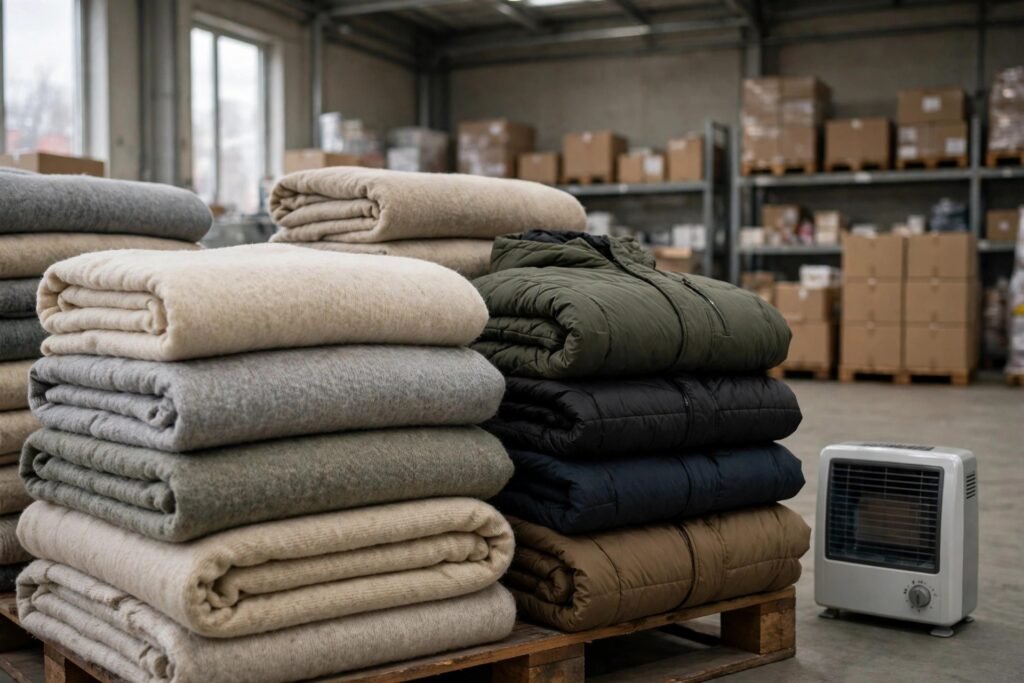


The United Nations refugee agency has launched a $50 million appeal to help nine million people survive the coming winter across four war-affected countries — Ukraine, Syria, Lebanon and Afghanistan — warning that funding shortages and surging energy prices are leaving vulnerable families exposed to the cold.
UNHCR, the UN Refugee Agency, launched its annual winter fundraising appeal on Friday, October 30, 2026, aiming to raise at least $50 million from individuals and the private sector for winter support in 2026-27. The target is $3 million more than the agency raised last year, according to UNHCR.
“Resources are scarce and costs are spiralling just as winter looms in the northern hemisphere,” said Dominique Hyde, UNHCR’s director of external relations, in announcing the appeal. The agency said millions of people across the four countries are contending with surging energy and food prices, shortages of fuel for heating and cooking, makeshift shelters and insufficient clothing and blankets.
The figure of nine million people in need of additional winter assistance aggregates UNHCR’s winter-needs estimates for Lebanon (280,000) and Syria (2.4 million), a 2026 inter-agency shelter-needs estimate for Afghanistan (4.2 million), and the inter-agency 2026-27 Winter Response Plan target population for Ukraine (2.1 million), according to UNHCR Canada. Any money raised will buy, among other things, heaters in Afghanistan, thermal blankets in Syria and Lebanon, and kits to repair damaged houses in Ukraine.
Ukraine: a fifth winter of war
In Ukraine, which is entering its fifth winter since Russia’s full-scale invasion began in February 2022, the agency warned that temperatures could plunge to minus 20 degrees Celsius amid accelerating strikes on civilian infrastructure. Russian attacks on energy facilities have threatened further electricity outages and interruptions to heating, UNHCR said, a warning underlined by overnight strikes on October 30-31 that left about 280,000 households without power in the Kyiv and Dnipropetrovsk regions.
UNHCR’s winter plan for Ukraine includes cash assistance for around 310,000 people and better-insulated homes for 80,000 people. A separate, wider Ukraine winter response plan launched in July is seeking $358.4 million to assist 2.1 million vulnerable people across the country, while the UN also announced a $50 million allocation through the Ukraine Humanitarian Fund to address urgent funding gaps.
The agency highlighted the case of Svetlana, a resident of Dnipro in Ukraine whose apartment was heavily damaged in a drone strike last winter, as an example of the families its winter assistance is designed to reach. UNHCR said its winter assistance includes emergency cash payments, shelter repairs, insulation materials and support for heating needs.
Afghanistan, Syria and Lebanon
In Afghanistan, the agency said winter needs are severe following the return of close to four million people from Pakistan and Iran between January 2025 and July 2026, many of them arriving with limited resources to rebuild their lives. UNHCR estimated that 6.5 million people have returned to Afghanistan in recent years, most of them involuntarily, and said heaters and other winter supplies are among the most urgent needs.
In Syria, around 3.6 million refugees and internally displaced people have returned to what remains of their homes since December 2024, while 15.6 million people inside the country need humanitarian assistance, according to the UN. UNHCR said 2.4 million people in Syria will need winter assistance in priority areas, but it hopes to assist only around 230,000 people — less than half the number it assisted last winter — because of funding constraints. The agency warned that without more funding for basics such as a roof, clothes and heating oil, the fate of returnees may become increasingly precarious.
In Lebanon, almost 300,000 people are expected to need winter assistance, but UNHCR said funding constraints mean it can reach only about half of them. More than 300,000 people displaced since early March remain internally displaced in Lebanon, where the humanitarian crisis is “far from over,” according to the UN’s aid coordination office, OCHA. Continued military activity in the south, demolitions, fires and strikes have made it very difficult for civilians to return home, UN spokesperson Stéphane Dujarric told journalists on Friday. OCHA’s Lebanon Humanitarian Fund has allocated $91 million to support displaced people, returnees, refugees and other affected communities.
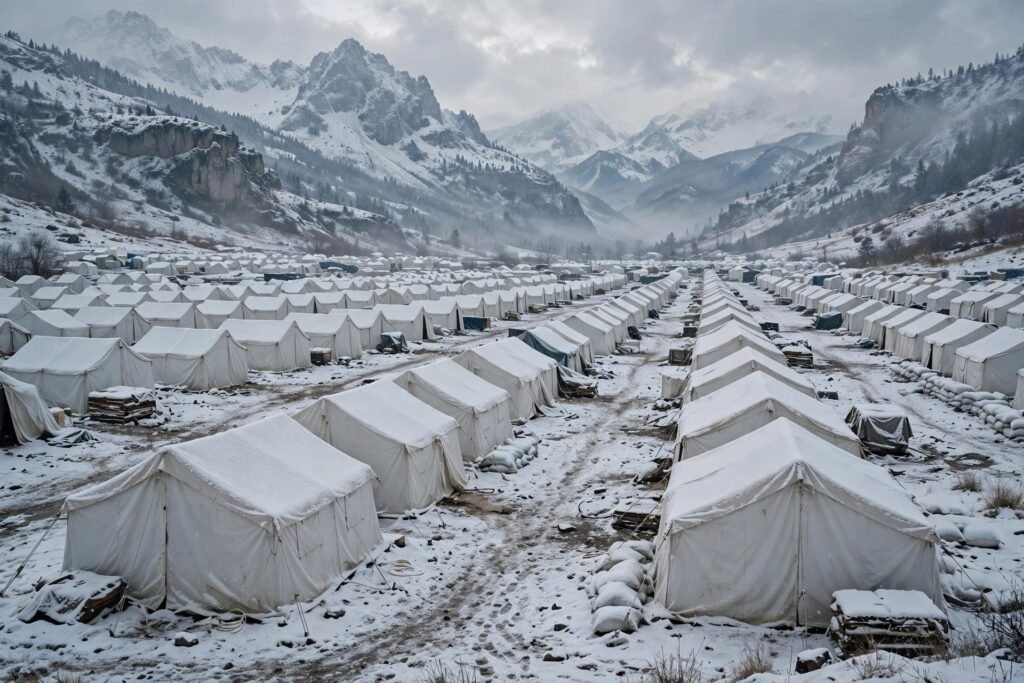
A funding gap across the system
The winter appeal comes against a wider funding squeeze for humanitarian agencies. UNHCR said it sought $8.5 billion for its programmes in 2026, but as of October 9 had only $3 billion in available funds. The gap has forced difficult choices about which families receive support and how much help they get, the agency said, and winter assistance is among the areas where the shortfall bites hardest because the needs are both urgent and time-bound: a family without heating fuel in December cannot wait until spring.
The appeal is aimed at individuals and the private sector rather than governments, and UNHCR said a donation of $35 can provide a thermal blanket set or contribute to heating support for a family. The agency’s winter campaign runs alongside its regular programmes, which continue to support refugees and displaced people throughout the year.
The UN’s wider winter picture is sobering. A separate UN News briefing on Friday also noted that UN human rights chief Volker Türk was deeply concerned by the forced closure of Novaya Gazeta, a respected independent Russian newspaper, and that world leaders gathered in Fuzhou, China, to discuss the global housing crisis as World Cities Day was marked — a reminder that the winter needs in Ukraine, Syria, Lebanon and Afghanistan sit within a broader landscape of displacement and housing insecurity.
What happens next
UNHCR said the money raised through the appeal will be spent across the four countries during the 2026-27 winter season, on cash payments, shelter repairs, insulation, heaters, blankets and heating fuel. The agency will report on how many people it reaches, but it has already warned that without the full $50 million, it will not be able to reach everyone in need — in Lebanon and Syria in particular, where it can currently help only about half of those requiring winter assistance.
For the nine million people the agency counts as needing extra help, the coming weeks will determine whether winter is survivable or dangerous. In Ukraine, the question is whether the power grid can withstand further strikes. In Afghanistan, whether returnee families have shelter and fuel before the coldest months. In Syria and Lebanon, whether funding arrives in time to close the gap between need and reach.
The appeal is, in that sense, a race against the season. Winter in the northern hemisphere is already arriving, and UNHCR’s message is that the time to act is now, before temperatures fall further and the cost of inaction is measured in lives disrupted by cold.
Sources: UN News; UNHCR; Associated Press via Arab News.