
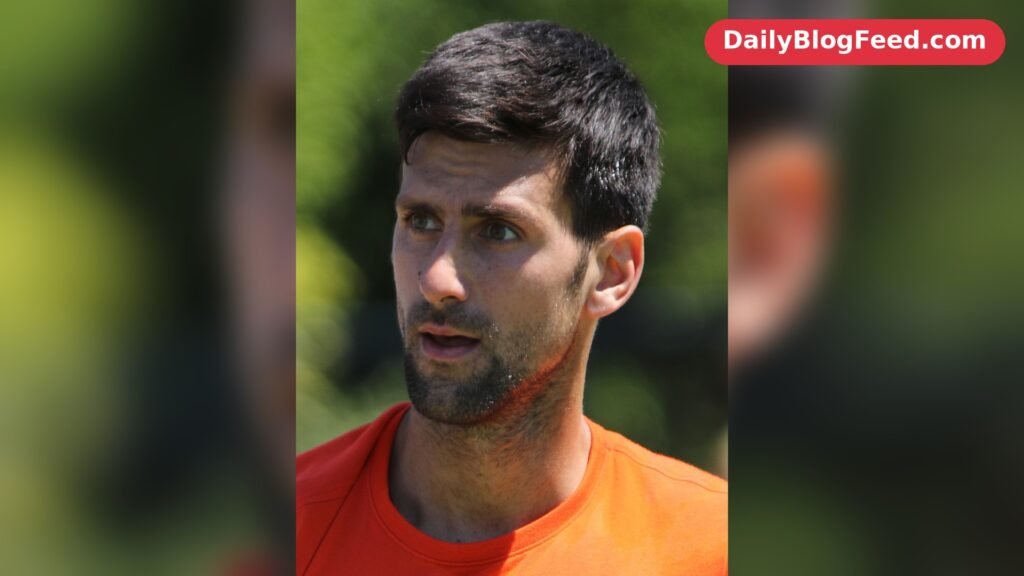

Novak Djokovic did not arrive at the top of tennis by accident. He grew up in a country going through war and hardship, learned the game in difficult conditions, and turned himself into one of the most complete players the sport has ever seen. His story is less about natural ease and more about discipline, adaptation, and an almost stubborn belief that he could outlast anyone.
By the time he completed his collection of major titles, Djokovic had already changed how people talked about greatness in men’s tennis. He was no longer the third man in a golden era. He was, on the numbers alone, the man with the most Grand Slam singles titles and the most weeks at world No. 1. Those records did not settle every debate about style or popularity, but they settled the argument about longevity.
What follows is a look at how he got there, who he is away from the court, and what his career means now that he is competing deep into his late thirties.
Quick Facts
| Fact | Detail |
|---|---|
| Full name | Novak Djokovic |
| Born | 22 May 1987, Belgrade, Serbia |
| Age | 39 in 2026 |
| Wife | Jelena Djokovic (née Ristic), married 2014 |
| Children | Stefan and Tara |
| Sport | Tennis |
| Grand Slam singles titles | 24, a men’s record |
| Olympic gold | Paris 2024, singles |
| Career highlight | Record weeks ranked world No. 1 |
From Belgrade to the Big Stage
Djokovic was born on 22 May 1987 in Belgrade, then part of Yugoslavia. His parents ran a pizza restaurant and a sports equipment business, and tennis was not an obvious path to wealth or fame in Serbia at the time. He first picked up a racket at the age of four, after watching older children play at a tennis camp near his family’s restaurant.
His early coach, Jelena Gencic, saw something unusual in him very quickly. She worked with him for years and helped shape not just his strokes but his mental approach to the game. In interviews later in life, Djokovic has often credited her with teaching him to think clearly under pressure. That early training mattered, because the world around him was anything but stable.
During the NATO bombing of Belgrade in 1999, Djokovic was twelve years old. He has spoken about practising when he could and spending nights in shelters with his family. It is a part of his biography that helps explain his toughness. He did not learn tennis in comfort, and he never seemed to expect comfort from it afterwards.
As a teenager, he left Serbia to train in Germany, where facilities and competition were stronger. The move was a gamble for a family without great wealth. It paid off when he began rising through the junior ranks and then the professional tour, winning his first ATP title in 2006 and reaching the top ten soon after.
Breaking Through in the Federer-Nadal Era
When Djokovic first reached the top, men’s tennis already had two towering figures. Roger Federer and Rafael Nadal were winning almost everything, and many young players were content to wait for their turn. Djokovic was not. He won his first Grand Slam title at the Australian Open in 2008, beating Jo-Wilfried Tsonga in the final after defeating Federer in the semi-finals.
That victory announced him, but it did not immediately make him dominant. For the next two seasons, he struggled with fitness, breathing problems on court, and the feeling that he was close but not quite there. He retired from matches, lost tight contests, and heard doubts about whether he could sustain the physical demands of the modern game.
The turning point came in 2011, one of the great single seasons in tennis history. Djokovic won three Grand Slam titles, went on a long winning streak to start the year, and finished as world No. 1. He beat Nadal in six finals that season, including memorable matches on hard courts and grass. Suddenly, the rivalry was a three-way contest, and Djokovic was its most relentless competitor.
His success came from a complete game rather than one overwhelming weapon. His return of serve became the best in the sport, and his movement allowed him to turn defence into attack.
The Grand Slam Record, Title by Title
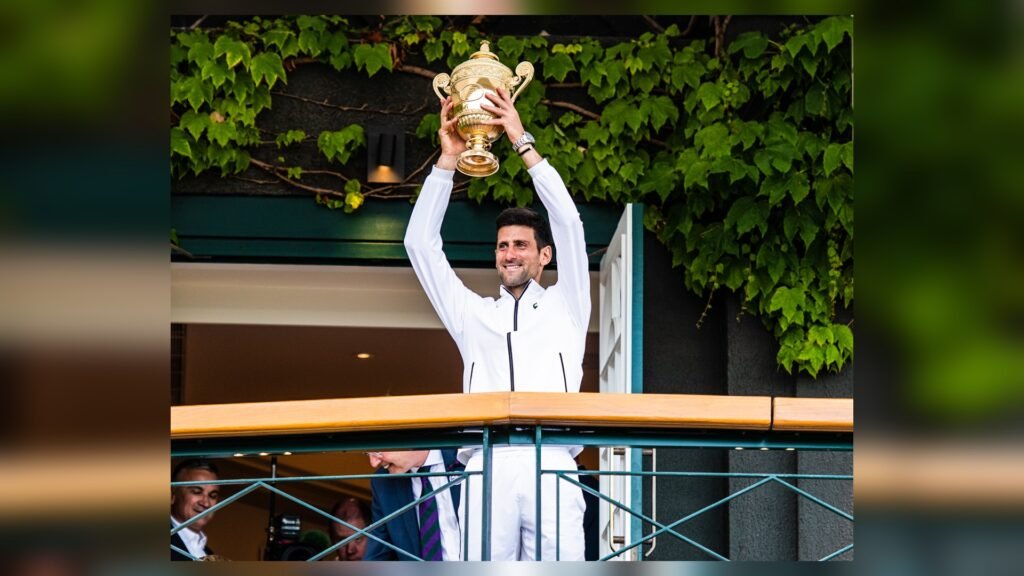
Djokovic’s 24 Grand Slam singles titles are a men’s record, and the spread of those titles tells its own story. He won the Australian Open ten times, a record at a single major. He won Wimbledon seven times, the US Open four times, and the French Open three times. No other man has won each major at least three times.
That balance matters because it shows he was not a specialist. He could win on fast hard courts in Melbourne, on grass at Wimbledon, on the slow clay of Paris, and in the noisy, late-night atmosphere of New York. His ability to adjust his game to different surfaces separated him from players who dominated in only one setting.
Several of his major finals became instant classics. His 2012 Australian Open final against Nadal lasted nearly six hours and is still remembered as one of the most physically demanding matches ever played. His 2019 Wimbledon final against Federer went to a fifth-set tiebreak under new rules, with Djokovic saving championship points before winning. Those matches built his reputation as a player who was hardest to beat when the moment was biggest.
He also completed the non-calendar-year Grand Slam in 2015 and 2016, holding all four major titles at once. That run, often called the Novak Slam, was a peak of fitness, focus, and tactical intelligence.
Rivalries That Defined an Era
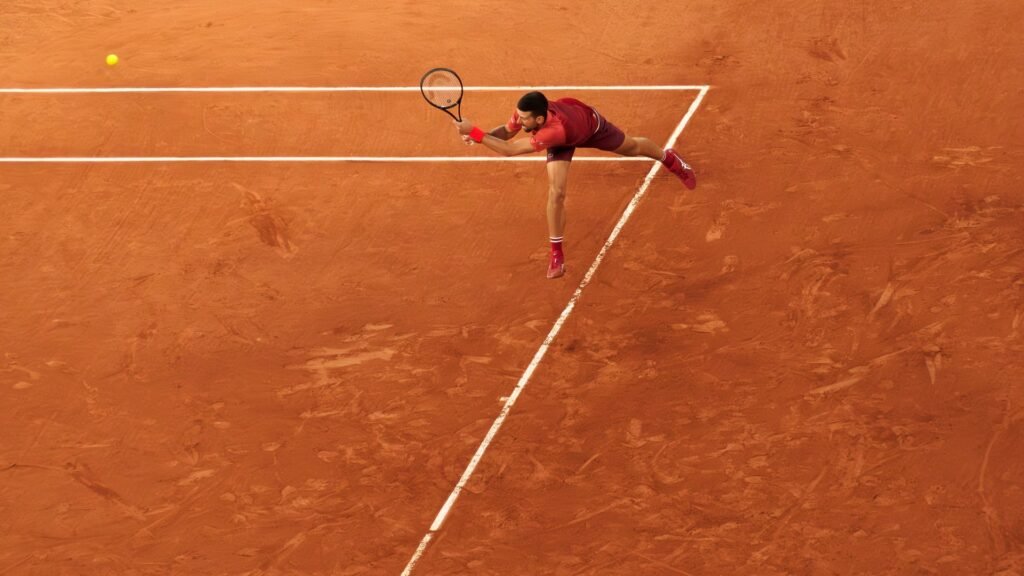
It is impossible to understand Djokovic without Federer and Nadal. The three men pushed each other for nearly two decades, and their head-to-head records remain among the most discussed statistics in tennis. Djokovic finished with winning records against both rivals, a fact his supporters point to often and his critics rarely dispute on the numbers.
Against Nadal, the rivalry was defined by contrast. Nadal’s heavy topspin and fighting spirit met Djokovic’s precision and court coverage, especially on hard courts. Their matches on clay usually favoured Nadal, while Djokovic often had the edge elsewhere. Together, they produced finals that felt less like tennis matches and more like tests of will.
Against Federer, the contrast was stylistic. Federer played with fluency and attacking grace, while Djokovic absorbed pace and redirected it with remarkable consistency. Their Wimbledon meetings, in particular, showed how two very different approaches could both succeed at the highest level. Federer won many admirers for his style, but Djokovic won many of their closest matches.
The era also included Andy Murray, Stan Wawrinka, and later Carlos Alcaraz and Jannik Sinner. Djokovic’s ability to keep beating younger challengers well into his thirties became one of the defining features of his later career. He did not fade quietly as new stars arrived. He adapted, shortened points when needed, and used experience to win matches his legs alone might not have won.
Olympic Gold and Late-Career Excellence
For years, Olympic gold was the one major prize missing from Djokovic’s collection. He had won a bronze medal at Beijing in 2008, but gold had eluded him across several attempts. That changed at Paris 2024, when he defeated Carlos Alcaraz in the final to win the singles gold medal for Serbia. The victory completed the career Golden Slam, meaning he had won all four majors plus Olympic gold.
The emotion of that win was obvious. Djokovic had spoken for years about what representing Serbia meant to him, and Paris felt like a closing chapter he had chased for a long time. At 37, against a much younger opponent, he played with remarkable composure in two tiebreak sets. It was a reminder that age had not removed his ability to rise for the biggest occasions.
That kind of late-career excellence invites comparisons beyond tennis. Like Harrison Ford, who has remained a leading screen presence well into later life, Djokovic has shown that experience and professionalism can extend a career at the top far beyond what once seemed normal. The parallel is not about the work itself, but about the discipline required to stay excellent when younger rivals are arriving every season.
His longevity also echoes the careers of performers who stayed relevant across decades. In the same way that Michael Caine sustained a decades-long career at the top of his profession through reinvention and consistency, Djokovic has sustained his place by changing his training, his schedule, and his tactics as his body changed. Longevity, in both cases, was not luck. It was management.
Similarly, Clint Eastwood is known for longevity at the top of his field, remaining influential across generations rather than belonging to a single era. Djokovic belongs in that kind of conversation now, not because tennis and film are alike, but because both careers show what happens when talent is paired with an unusually long commitment to the craft.
Life Off the Court
Djokovic married Jelena Ristic in 2014. The couple had known each other since their school days in Serbia, and Jelena has run the Novak Djokovic Foundation, which focuses on early childhood education in Serbia. Their son Stefan was born in 2014, and their daughter Tara was born in 2017. Family life has become increasingly central to how Djokovic talks about his career and his schedule.
He is known for a strict approach to diet, fitness, and recovery. He has spoken publicly about going gluten-free after discovering a sensitivity, and about the role of flexibility, meditation, and sleep in his preparation. Some of his views on health have attracted debate, but his physical durability over such a long career is difficult to argue with.
Djokovic has also been involved in tennis politics, including the formation of a players’ association aimed at giving players a stronger voice. That work has sometimes brought him into conflict with established tennis bodies. Supporters see it as an attempt to improve conditions for lower-ranked players, while critics have questioned the approach. Either way, it showed a willingness to take positions beyond his own results.
Away from tennis, he has supported charitable projects in Serbia, particularly schools and early learning programmes. The foundation’s work is often mentioned in profiles of him because it connects his success to the country where he grew up. For many Serbian fans, that connection matters as much as any trophy.
Playing Style in Plain Terms
For readers who do not follow tennis closely, Djokovic’s style is best understood as control. He does not rely on one huge shot to finish points quickly. Instead, he returns serve better than almost anyone, moves exceptionally well, and rarely gives away easy points. Opponents must beat him several times in the same rally, and most cannot.
His two-handed backhand is one of the most reliable shots in the sport, and his serve became a genuine weapon in later years. Mentally, he is famous for saving match points and winning deciding sets, reflecting a player who stays calm under the highest pressure.
Net Worth
Djokovic’s net worth is most commonly reported by Celebrity Net Worth at around $240 million, though estimates vary by outlet and by year. That figure includes career prize money, endorsements, and business interests, rather than prize money alone. Forbes has also tracked his earnings over the years, particularly his on-court prize money, which is the highest in men’s tennis history.
It is important to treat any net worth figure as an estimate, not an official bank balance. Different sources count endorsements, investments, and tax situations differently, so totals can differ by tens of millions. What is not in dispute is that Djokovic has earned well over $180 million in official prize money alone, a record that reflects both his success and his longevity.
His endorsement deals have included major brands in watches, cars, clothing, and equipment. He has also invested in business and charitable projects. Compared with some athletes, he has kept a relatively low profile about luxury spending, and public attention has focused more on his training and foundation work than on his lifestyle.
Lesser-Known Facts
- Djokovic speaks several languages, including Serbian, English, French, German, and Italian, and he often conducts interviews in the language of the country where he is playing.
- He first gained wider attention as a teenager by imitating other players on court, a sense of humour that surprised fans who later knew him mainly for his intensity.
- His younger brothers, Marko and Djordje, also played tennis professionally, though neither reached his level.
- He won his first Grand Slam title in 2008 before Federer and Nadal had finished dominating the sport, making his breakthrough unusually early in a crowded era.
- Djokovic has won the season-ending ATP Finals multiple times, adding to a record that goes beyond Grand Slam titles alone.
- He is a keen football fan and has often spoken about his support for Serbian sport more broadly, not just tennis.
Frequently Asked Questions
How old is Novak Djokovic?
Novak Djokovic was born on 22 May 1987, which makes him 39 years old in 2026. He has continued competing at a high level well beyond the age at which many tennis players retire.
Who is Novak Djokovic’s wife?
Novak Djokovic is married to Jelena Djokovic, née Ristic. The couple married in 2014 and have two children together, Stefan and Tara.
How many Grand Slam titles has Novak Djokovic won?
Novak Djokovic has won 24 Grand Slam singles titles, a record in men’s tennis. His titles include ten Australian Opens, seven Wimbledons, four US Opens, and three French Opens.
Did Novak Djokovic win Olympic gold?
Yes, Novak Djokovic won the Olympic singles gold medal at Paris 2024. He defeated Carlos Alcaraz in the final, completing the career Golden Slam.
How many weeks was Novak Djokovic ranked world No. 1?
Novak Djokovic holds the record for most weeks ranked world No. 1 in men’s tennis, with more than 400 weeks at the top across his career. The exact total grew over time as he returned to the ranking later in his career.
What is Novak Djokovic’s net worth?
Celebrity Net Worth estimates Novak Djokovic’s net worth at around $240 million, though estimates vary. The figure reflects prize money, endorsements, and business interests, and should be read as an estimate rather than an exact total.
Final Thoughts
Novak Djokovic’s career is a story of persistence becoming dominance. He started in difficult circumstances, entered an era owned by two great champions, and still finished with records that may stand for a long time. His Grand Slam total, his weeks at No. 1, and his Olympic gold form a body of work that is hard to match on numbers alone.
What may last just as long is the example of his longevity. He changed his game, managed his body, and kept finding ways to win as the sport changed around him. Whether future fans rank him first, second, or third among the greats, they will have to reckon with a career that refused to end on anyone else’s timetable.