
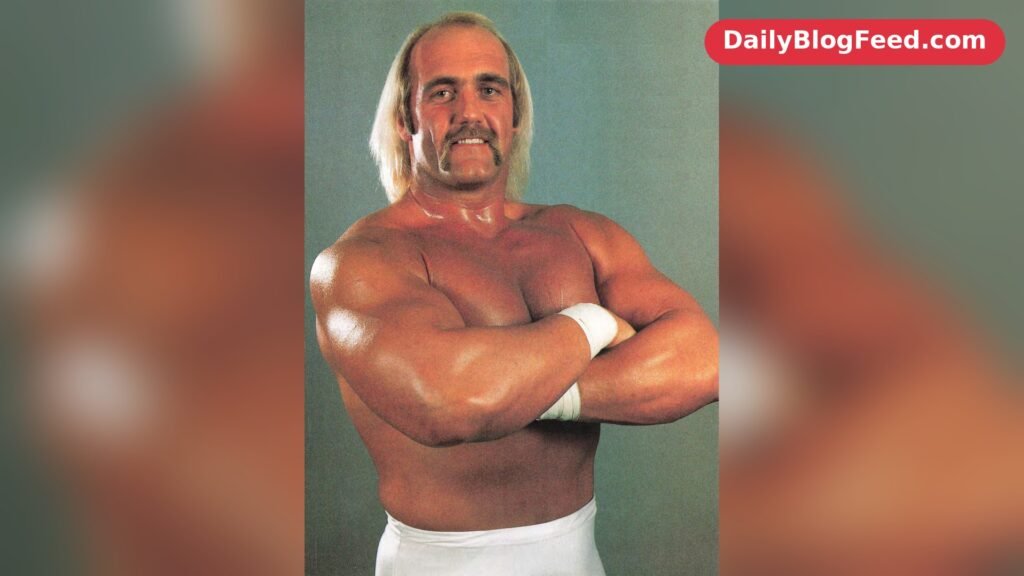

Hulk Hogan was, for a time, the most famous wrestler in the world. Children tore their shirts in imitation, crowds chanted his name in arenas, and his catchphrases entered everyday language. He did not just wrestle matches. He performed a character so large that it crossed from sports entertainment into mainstream American culture.
His real name was Terry Bollea, and his path to fame was not straightforward. He played bass guitar in rock bands, trained as a wrestler in Florida, and worked his way through regional promotions before finding the role that changed everything. When Hulkamania arrived in the 1980s, Hogan became the hero of a generation of young fans.
Later, he reinvented himself again as a villain, helped launch one of wrestling’s most famous groups, and moved into film and reality television. His later life also included public legal battles and personal controversies. This article covers that full arc, from his early years to his death in 2025.
Quick Facts
| Fact | Detail |
|---|---|
| Full name | Terry Gene Bollea, known as Hulk Hogan |
| Born | 11 August 1953, Augusta, Georgia, USA |
| Died | 24 July 2025, aged 71 |
| Wives | Linda Claridge (1983–2009); Jennifer McDaniel (2010–2021); Sky Daily (2023–2025) |
| Children | Brooke Hogan and Nick Hogan |
| Profession | Professional wrestler, actor, television personality |
| WWE/WWF titles | Six-time WWE/WWF champion |
| Defining era | Face of 1980s Hulkamania |
| Famous role | Thunderlips in Rocky III (1982) |
From Terry Bollea to a Wrestling Hopeful
Terry Gene Bollea was born on 11 August 1953 in Augusta, Georgia. His family later moved to Tampa, Florida, where he grew up. As a teenager, he was a keen baseball player and a music fan, and he spent years playing bass guitar in local bands. Wrestling was an interest, but it was not his first plan.
He began training as a wrestler in the late 1970s in Florida, learning the physical craft and the performance side of the business. Early promoters saw his size and charisma, but he still had to learn how to work a crowd. His first major break came when he started wrestling under the name Hulk Hogan, a name that combined his size with a nod to his Irish heritage as promoted at the time.
Hogan’s early career took him through several territories, including the American Wrestling Association, where he became a popular figure. He was tall, heavily muscled, and comfortable on the microphone. Those qualities made him stand out, but the national breakthrough still lay ahead. That breakthrough came when Vince McMahon expanded the World Wrestling Federation across the United States in the early 1980s.
Rocky III and the Crossover Star
Before Hulkamania fully took hold, Hogan reached a wider audience through film. In 1982, he appeared as Thunderlips, the Ultimate Male, in Rocky III, starring Sylvester Stallone. The role was short but memorable: Hogan’s character fought Rocky Balboa in a charity exhibition match that turned into a chaotic spectacle. Audiences who had never watched wrestling saw Hogan on the big screen and remembered him.
The Rocky III appearance mattered for two reasons. First, it proved Hogan could work outside wrestling and hold his own alongside a major film star. Second, it gave him mainstream credibility just as professional wrestling was preparing to expand on national television.
He was no longer only a regional attraction. He was a recognisable face.
That crossover appeal became a pattern in his career. Hogan later starred in films such as No Holds Barred, Suburban Commando, and Mr. Nanny, and he appeared in television shows aimed at family audiences. None of those films matched Rocky III in cultural impact, but they showed how far wrestling fame could carry a performer in the 1980s and 1990s.
His film work also placed him alongside veteran screen performers. Hogan appeared in Gremlins 2: The New Batch in 1990 in a cameo, a film whose cast included Christopher Lee. The connection is a small footnote in both careers, but it shows how widely Hogan’s work travelled: from wrestling arenas to a major Hollywood sequel in the same decade as his peak fame.
The 1980s Boom: Hero to a Generation
In January 1984, Hogan defeated the Iron Sheik to win the WWF Championship, and Hulkamania began in earnest. His entrance music, his yellow and red colours, his moustache, and his ritual of tearing his shirt became instantly recognisable. He urged fans to say their prayers and take their vitamins, and he posed for the crowd after victories in a routine that children copied everywhere.
Hogan headlined the first WrestleMania in 1985, teaming with Mr. T against Roddy Piper and Paul Orndorff. The event helped turn WrestleMania into wrestling’s biggest annual show. Over the next few years, Hogan’s feuds with figures such as Andre the Giant, Randy Savage, and the Ultimate Warrior drew huge crowds and television ratings. His match against Andre at WrestleMania III in 1987, in front of a claimed crowd of more than 90,000 people, remains one of the most famous matches in wrestling history.
His hero persona drew comparisons with classic American screen heroes. Like John Wayne, whose larger-than-life hero persona defined an earlier era of American entertainment, Hogan played a clear-cut good guy audiences could cheer without hesitation. Both men became symbols of toughness and straightforward heroism, even though their mediums were very different.
Hogan won the WWF Championship six times in total across his career, a record that reflects his long run at the top. He was not the most technical wrestler of his era, and critics often noted that his matches followed a familiar pattern. Fans, however, did not come for technical wrestling. They came for the entrance, the comeback, and the leg drop that ended most of his big matches.
By the end of the 1980s, Hogan was a household name. He had lunch boxes, cartoons, toys, and a Saturday morning cartoon show based on his character. For many children of that decade, he was their first wrestling hero, and for many parents, he was a safe, cartoon-like figure in a business that had once seemed rougher around the edges.
The nWo Turn That Shocked Wrestling
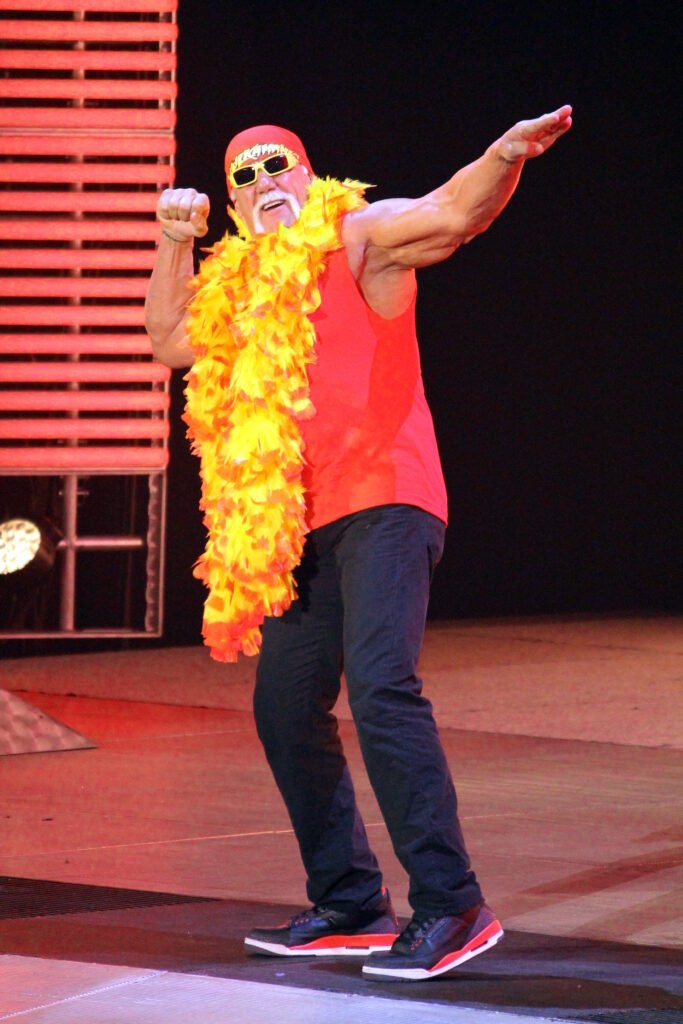
By the mid-1990s, Hogan’s hero character had grown stale. Audiences had changed, wrestling had become edgier, and younger fans wanted something less predictable. In 1996, while wrestling for World Championship Wrestling, Hogan shocked the wrestling world by turning villain and co-founding the New World Order, known as the nWo, alongside Scott Hall and Kevin Nash.
The turn worked because it was so unexpected. Hogan, the ultimate good guy, now wore black and white, mocked fans, and attacked former allies. The nWo became one of the most popular and influential groups in wrestling history, helping WCW overtake WWF in television ratings for a long period. Hogan’s reinvention extended his career by years and proved he could play the villain as convincingly as he had played the hero.
The tough-guy reinvention also echoed the screen image of performers known for hard-edged roles. In that sense, his nWo period shared something with the tough-guy screen image associated with Clint Eastwood, whose characters often projected menace and authority rather than simple heroism. Hogan’s turn showed that a performer famous for one image could succeed by embracing its opposite.
Hogan later returned to WWE in 2002 and was welcomed back as a hero by nostalgic fans. His match against The Rock at WrestleMania X8 became famous for the crowd reaction, with fans cheering Hogan even though he was wrestling as a villain. That night showed how deeply his original character had stayed in public memory, even after years of reinvention.
Hollywood, Reality TV and the Second Act
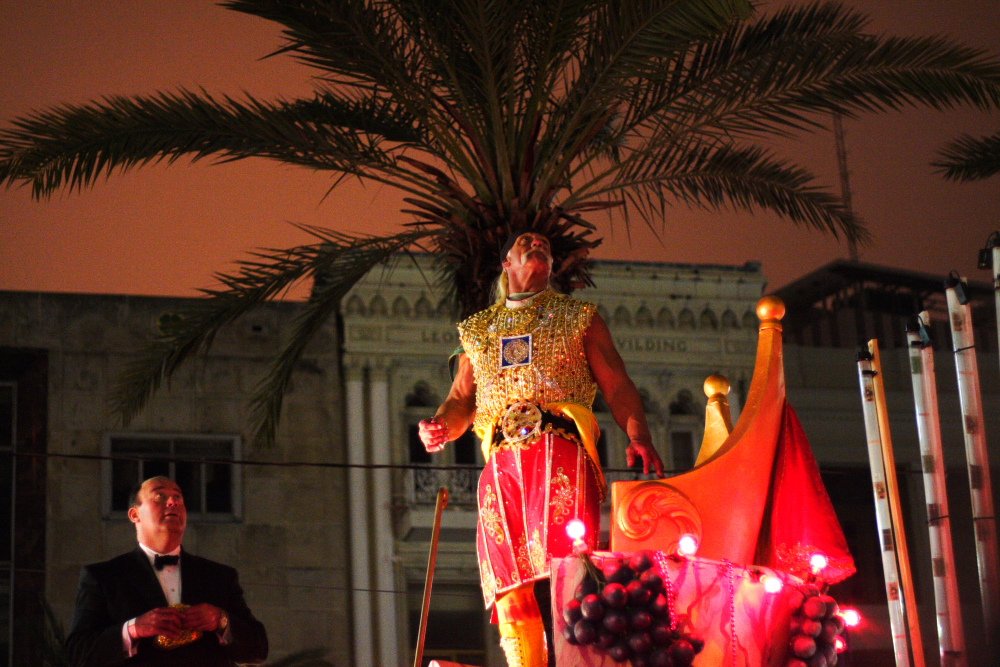
After his peak wrestling years, Hogan moved further into television. He starred in the VH1 reality series Hogan Knows Best, which followed his family life in Florida. The show introduced him to a new audience and made his children, Brooke and Nick, public figures in their own right. Brooke pursued a music and television career, while Nick appeared on the show as a teenager.
Reality television brought both attention and difficulty. The family’s private life became public, and later events, including Nick’s serious car accident in 2007 and Hogan’s divorce, were widely reported. Hogan has spoken in interviews about the strain those years placed on him and his family. The show ended in 2007, but it remains part of how many viewers remember his later career.
Hogan continued to make wrestling appearances in the 2000s and 2010s, including runs with Total Nonstop Action Wrestling and returns to WWE for special events. He was inducted into the WWE Hall of Fame twice, once as an individual and once as a member of the nWo. Those honours reflected both his original Hulkamania run and his later reinvention.
He also pursued business ventures, including restaurants, merchandise, and a beach shop in Florida. Those projects kept his name visible even when he was not wrestling regularly. For fans who grew up with Hulkamania, Hogan remained a familiar presence at conventions, signings, and wrestling events.
Family and Marriages
Hogan married Linda Claridge in 1983, and the couple had two children, Brooke and Nick. Their marriage lasted until their divorce was finalised in 2009, after a highly publicised separation. The divorce and the surrounding media coverage were widely reported, and both Hogan and Linda later discussed the marriage in books and interviews.
In 2010, Hogan married Jennifer McDaniel. That marriage ended in divorce in 2021. In 2023, Hogan married Sky Daily, a yoga instructor.
They remained married until his death in 2025. Hogan’s family life, like his career, was lived largely in public, and reputable reporting has documented his marriages and children in detail.
His children have spoken about growing up with a famous father. Brooke Hogan built a career in music and reality television, while Nick Hogan worked in motorsports and media. Both have discussed the advantages and pressures of the Hogan name in interviews. Hogan himself often described his children as the most important part of his life, even as his career kept him travelling for much of their childhood.
The Gawker Case and Later Years
One of the most widely reported episodes of Hogan’s later life was his lawsuit against the website Gawker. In 2016, a Florida jury awarded Hogan $140 million in damages after Gawker published a private video of him. The case raised major questions about privacy and press freedom, and it was covered far beyond wrestling media. Gawker later settled with Hogan for $31 million, and the site closed after the case.
The lawsuit became a defining part of Hogan’s public image in his final decade. Supporters saw it as a defence of privacy, while critics of the case raised concerns about its implications for journalism. Whatever view readers take, the case showed that Hogan’s fame and legal battles continued to attract national attention long after his wrestling peak.
In his final years, Hogan remained active in wrestling-related events and public appearances, despite serious health problems that he discussed openly, including multiple back surgeries. He spoke about his faith and about the physical toll of a long wrestling career. His death on 24 July 2025, aged 71, was reported as a heart attack, according to reports at the time. Tributes followed from wrestlers, actors, and fans who had grown up watching him.
Net Worth
Celebrity Net Worth estimates Hulk Hogan’s net worth at around $25 million, though estimates vary by source and by year. That figure reflects wrestling earnings, film and television work, merchandise, and business ventures, balanced against the costs of divorce settlements, legal cases, and lifestyle spending reported over the years. As with other celebrity estimates, it should be read as an approximation, not an exact accounting.
Hogan earned very large sums during the peak of Hulkamania, when wrestling pay-per-view events, merchandise, and endorsements expanded rapidly. His later earnings were smaller but still significant, particularly from wrestling returns, reality television, and appearances. The Gawker settlement also affected his financial picture, though the exact net effect of the case on his overall wealth is difficult to separate from his other income and expenses.
What is clear is that Hogan was one of the highest-earning wrestlers of his era. His success helped establish wrestling as a mainstream entertainment business, and later wrestlers benefited from the audiences and commercial model he helped create.
Lesser-Known Facts
- Before wrestling, Hogan played bass guitar in rock bands in Florida, and music remained a lifelong interest.
- He was originally trained in Florida and worked under several names before Hulk Hogan became his permanent persona.
- Hogan’s famous leg drop finishing move was simple by wrestling standards, but it became iconic because of how crowds reacted to it.
- He appeared in the film Gremlins 2: The New Batch in 1990, in a cameo that introduced him to film audiences outside wrestling.
- Hogan won the Royal Rumble match twice, in 1990 and 1991, back-to-back victories that were rare at the time.
- He was a keen fan of karaoke and often performed at his beach shop events in Florida in later years.
Frequently Asked Questions
How old was Hulk Hogan when he died?
Hulk Hogan died on 24 July 2025, aged 71. He was born on 11 August 1953 in Augusta, Georgia.
Who were Hulk Hogan’s wives?
Hulk Hogan married three times: Linda Claridge from 1983 to 2009, Jennifer McDaniel from 2010 to 2021, and Sky Daily from 2023 until his death in 2025.
How many children did Hulk Hogan have?
Hulk Hogan had two children, Brooke Hogan and Nick Hogan, both with his first wife, Linda Claridge.
How many times was Hulk Hogan WWE champion?
Hulk Hogan was a six-time WWE/WWF champion. His first title win in 1984 launched the Hulkamania era.
What was the nWo?
The nWo, or New World Order, was a wrestling group co-founded by Hulk Hogan in 1996 in WCW, alongside Scott Hall and Kevin Nash. Hogan’s turn to join the group shocked fans because he had been wrestling’s most famous hero.
What was Hulk Hogan’s net worth?
Celebrity Net Worth estimates Hulk Hogan’s net worth at around $25 million, though estimates vary. The figure reflects wrestling, film, television, and business earnings over a long career.
A Lasting Legacy
Hulk Hogan’s legacy is complicated, as the legacies of very famous people often are. He was a hero to millions of children, a villain who reinvented wrestling, a film and television star, and a man whose private life and legal battles were widely reported. Those parts do not cancel each other out. Together, they form the full picture of a performer who stayed famous for more than four decades.
For wrestling, his importance is clearer. He helped take the business from regional shows to national television and pay-per-view, and he created a character that people outside wrestling recognised. Later stars built on the audience he helped create. Whether fans remember him tearing his shirt, turning to the nWo, or appearing in Rocky III, they remember a performer who understood spectacle better than almost anyone in his field.