
Nigeria has confirmed its first case of Ebola in the current outbreak, after tests identified the Bundibugyo strain in a woman who arrived in the capital, Abuja, from Uganda on 3 October, the Nigeria Centre for Disease Control and Prevention (NCDC) said. The result, confirmed on 20 October, makes Nigeria the fifth country to detect the virus since the outbreak was declared in the Democratic Republic of the Congo (DR Congo) in mid-May, according to the World Health Organization (WHO), and marks its first spread to West Africa. The situation is still developing, and officials said investigations are continuing.
How the Case Was Detected
According to the WHO account published by UN News on 21 October, the woman began to feel unwell on 7 October, four days after arriving, and went to a private health facility in Abuja on 11 October. She was tested on 19 October after officials learned of her recent travel to Uganda, which has also recorded cases linked to the Congo outbreak, and the positive result was confirmed the next day.
On Wednesday, officials told an emergency meeting that further laboratory work had established the strain. Olajumoke Babatunde, director of the public health laboratory service at the NCDC, said three levels of molecular testing had been carried out and that the strain was Bundibugyo, according to Al Jazeera and AFP. The WHO also confirmed the identification.
Health Minister Muhammad Ali Pate told public broadcaster NTA that the patient was in isolation and receiving treatment, Al Jazeera reported. UN News, reporting a WHO statement, said she remained in isolation while investigators established the likely source of her infection and reconstructed her travel and exposure history.
Officials said they do not believe she was symptomatic during her flight, and tracing has extended to fellow passengers, according to reports of the emergency meeting by both Al Jazeera and AFP.
Containment Steps Under Way
The response has centred on people who may have had contact with the patient. Authorities have identified 44 contacts who are being monitored, according to both the WHO, via UN News, and Al Jazeera and AFP reporting, with work continuing to find others who may have been exposed.
Infection prevention and control measures are being strengthened at the private hospital where she first sought care, the WHO said. The NCDC has activated its incident management system to coordinate the response, and the WHO and its partners are supporting case investigation, contact tracing and infection control, and providing supplies including personal protective equipment.
The WHO has not recommended restrictions on travel or trade with affected countries, according to UN News, and has advised regional governments to maintain strong surveillance, disease monitoring and laboratory testing capacity.
Background: The Congo Outbreak
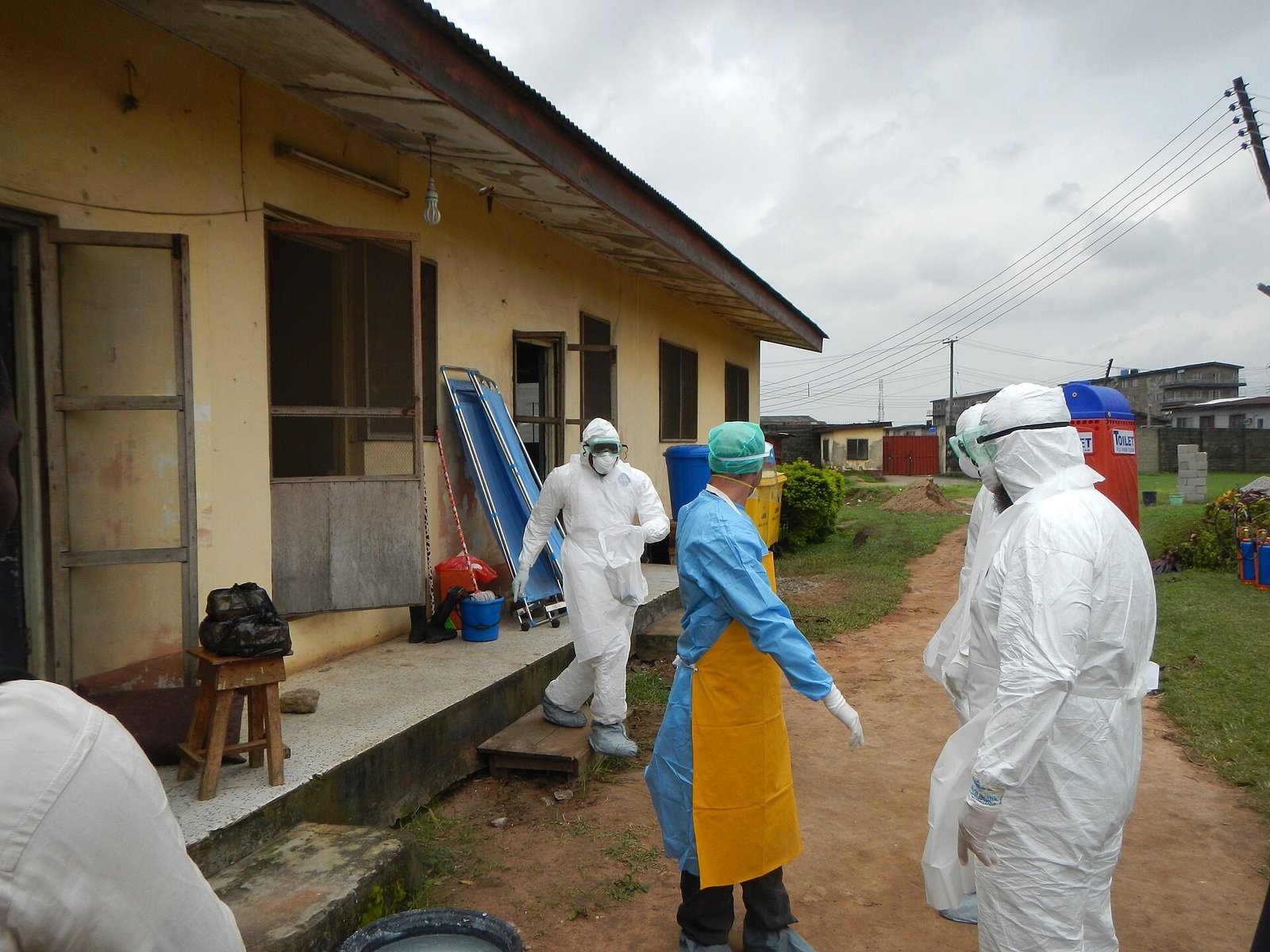
The outbreak began in DR Congo, where health authorities were first alerted in early May and the outbreak was officially declared in mid-May. It was later classed by the WHO as a public health emergency of international concern. The epicentre has been in the east, including Ituri province, and it has spread across several provinces, in conditions where conflict and displacement have made it harder for health workers to reach communities and trace contacts.
Case figures differ slightly between sources, so they should be read as an attributed range. UN News, citing Congolese health authorities, reported more than 9,500 cases and more than 4,200 deaths in DR Congo as of 18 October. AFP reporting, also citing health authorities, put the figures at more than 9,000 confirmed cases and 4,381 deaths. Both sources describe this as the deadliest Ebola outbreak in DR Congo’s recorded history, and the WHO has described it as the fastest-growing Ebola outbreak on record.
A central difficulty is the strain itself. Unlike the Zaire strain behind the West African epidemic of 2013 to 2016, the Bundibugyo strain has no approved vaccine and no specific treatment, according to the WHO. Care focuses on supporting patients early. That makes the standard tools of control — finding cases quickly, isolating them safely, following contacts for 21 days and preventing infection in health facilities — especially important.
Beyond DR Congo and Nigeria, Uganda’s linked outbreak was declared over in late August, according to both the WHO, via UN News, and AFP reporting, and Kenya has reported nine cases since early October, according to both the WHO and AFP. The pattern described by those sources has been a large outbreak centred on DR Congo, with smaller numbers of travel-linked cases detected elsewhere.
Nigeria has dealt with an imported case before. In 2014, a first case was detected in Lagos during the West African epidemic. That introduction led to 20 infections and eight deaths, according to WHO figures cited by Al Jazeera, but transmission was stopped within about three months. Experts say the 2014 experience left Nigeria with laboratory and tracing systems now being used again.
Regional coordination is increasing. Jean Kaseya, director general of the Africa Centres for Disease Control and Prevention, warned of an extremely serious threat as cases appeared in more countries, according to both Al Jazeera and AFP. Al Jazeera reported that he said he would convene African health ministers next week to strengthen the cross-border response and review hospital capacity.
What Happens Next
For Nigeria, the coming three weeks are critical, and the situation is still developing. The 44 identified contacts, and any others found through the investigation, will be monitored through the 21-day window in which symptoms would normally appear, according to the WHO. If no further cases are found among them, officials will have stronger evidence that this introduction was contained at the first case. If new cases appear, tracing will widen to their contacts in turn.
Authorities are expected to keep heightened screening at airports and other points of entry, maintain infection control at the Abuja facility where the patient was first treated, and continue testing suspected cases that fit the travel and symptom profile. The WHO said rapid identification, timely follow-up of contacts and effective infection prevention remain decisive in stopping further spread.
Attention will also turn to the Africa CDC meeting of health ministers, and to surveillance along routes between DR Congo and West Africa. Officials have not announced travel restrictions, and health agencies advise vigilance rather than alarm: people who develop symptoms after recent travel to an affected area should seek care promptly and tell health workers about their travel history, so testing can happen without the delay seen in this first case.