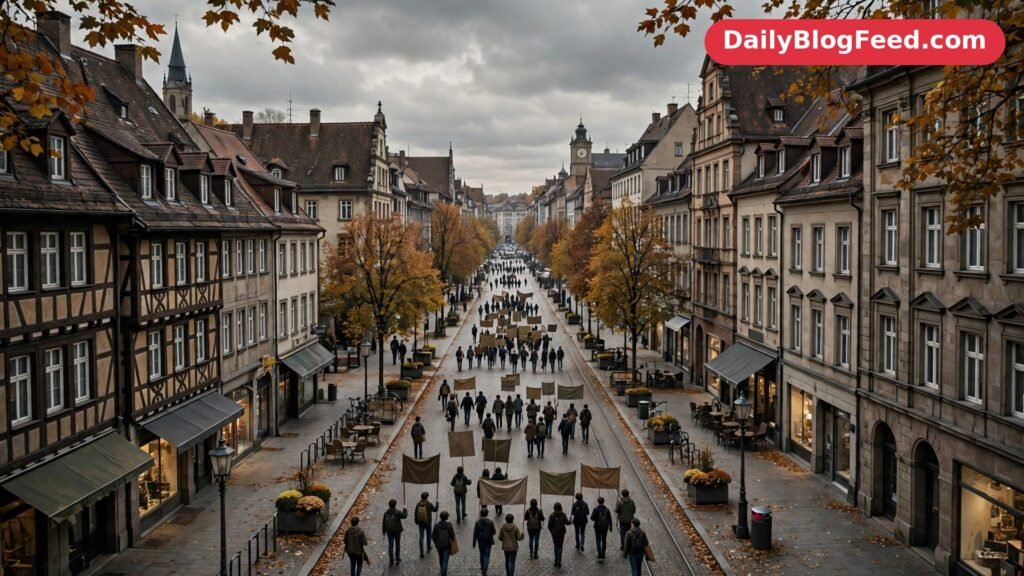

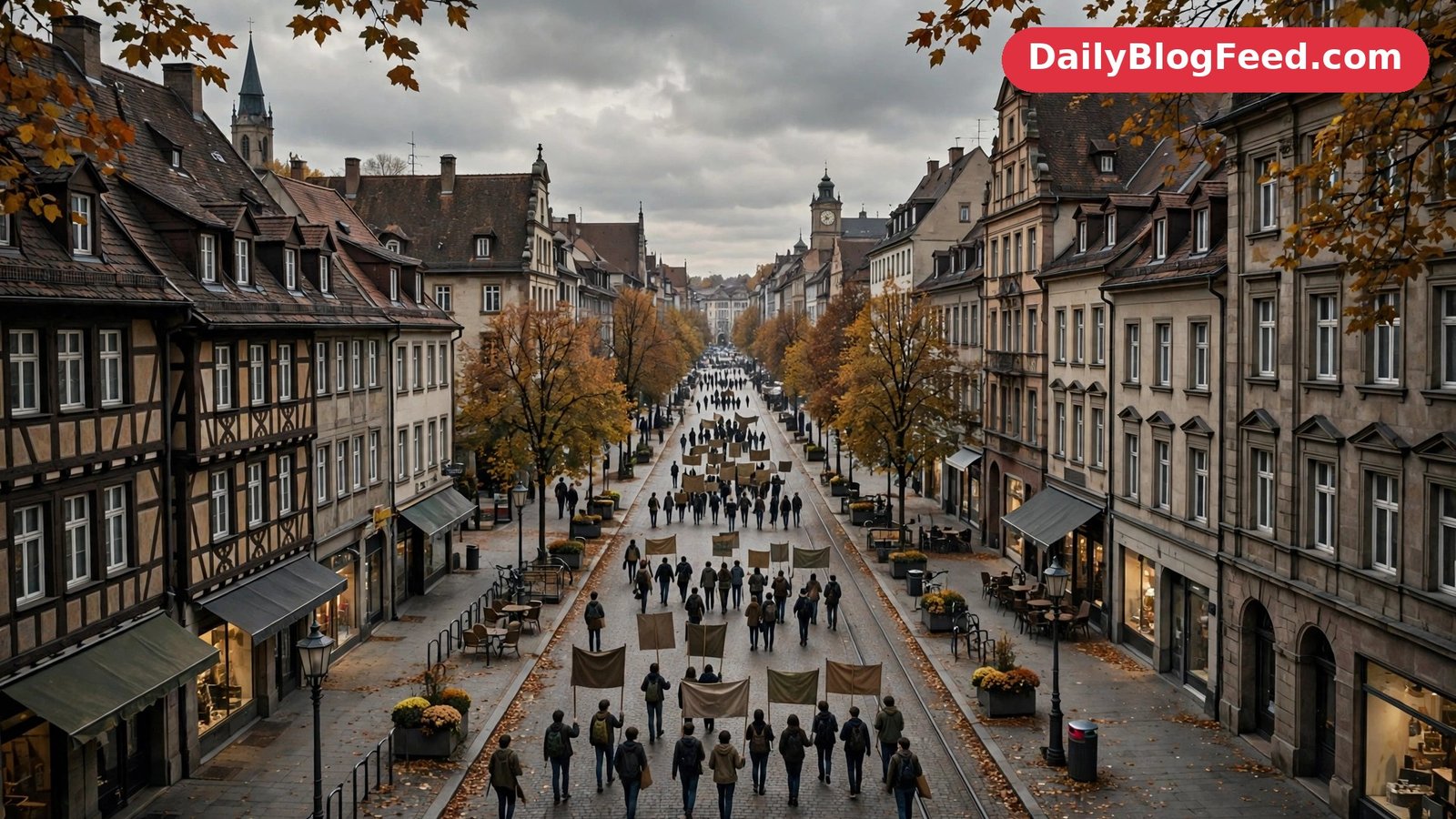
Thousands of young people marched across Germany on Saturday, October 31, 2026, in youth-led demonstrations calling for more investment in education, lower living costs and an end to compulsory military service, before largely peaceful daytime protests gave way to serious unrest in Frankfurt and other cities in the evening.
The demonstrations, organised under the banner "Gen Z regelt" — translated as "Gen Z takes charge" — took place in 34 cities, including Berlin, Frankfurt, Munich and Cologne, according to organisers and news reports. Police in Frankfurt said a daytime demonstration there drew around 8,000 people, while organisers put the figure at about 10,000. For most of the day the marches were peaceful, but after dark, groups in Frankfurt smashed shop windows, looted stores and clashed with police, according to police and local media reports.
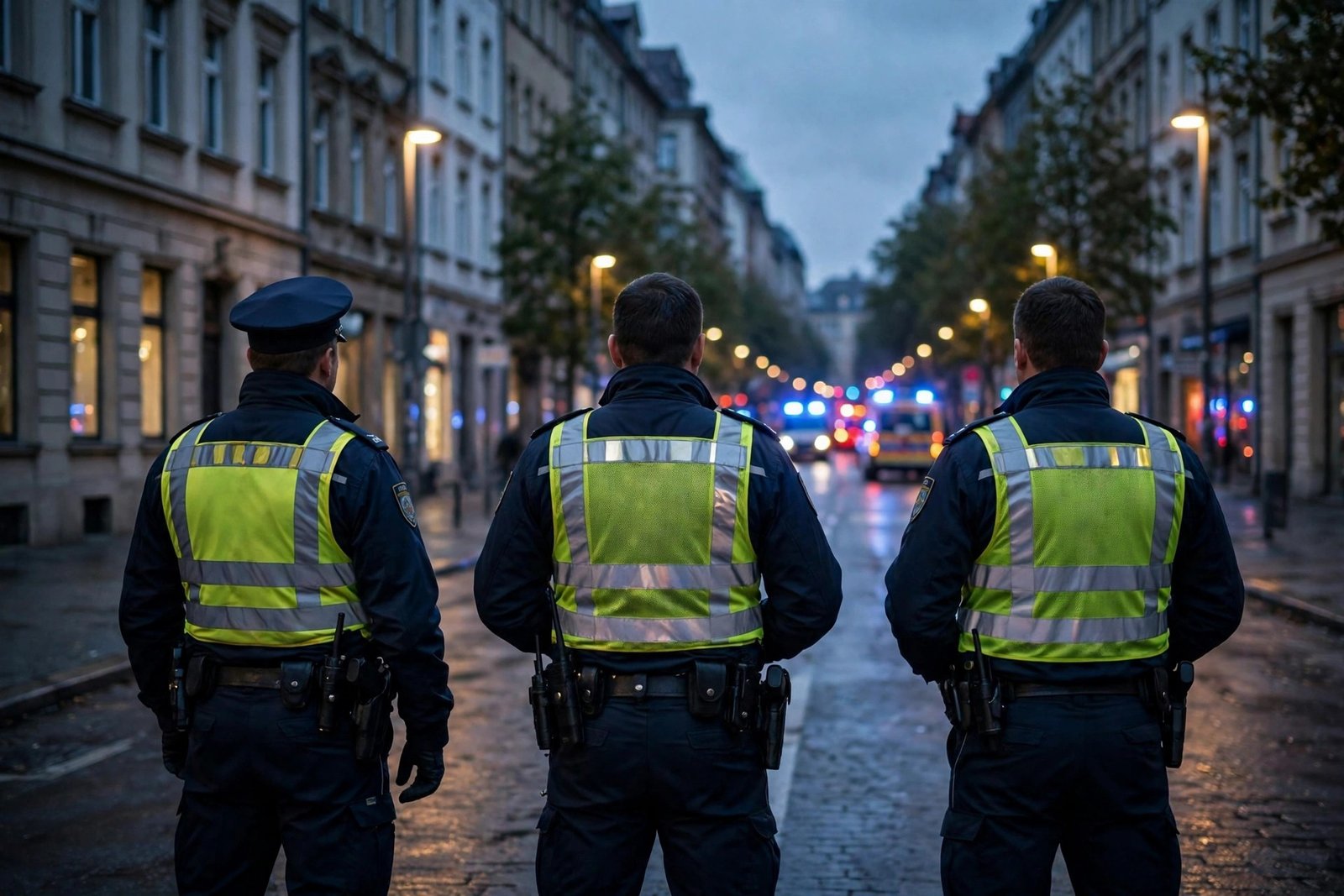
Frankfurt police closed part of the Zeil, one of Germany’s busiest shopping streets, and urged people to avoid the city centre as officers worked to restore order. Special police units were deployed, and water cannon was used in some areas. Police said more than 30 people were provisionally detained in Frankfurt, according to the public broadcaster Hessenschau, while other reports, citing DW News, put the number detained in Frankfurt at 54.
What the protesters were demanding
The "Gen Z regelt" campaign brought together young demonstrators with a set of domestic demands. According to organisers and coverage of the protests, the marchers called for greater investment in schools and universities, improved public services, action on rising living costs, and opposition to compulsory military service at a time when Germany is increasing defence spending.
The movement describes itself as a loose alliance rather than a single political party, and its demands were deliberately broad: better education funding, affordable housing and everyday costs, stronger social services, and a say for younger people in decisions that will shape their working lives. Many of the daytime marches carried that message peacefully, with speeches, banners and music, and participants included students, apprentices and young workers.
The protests also took place against a wider backdrop of cost-of-living pressure in Europe. On the same weekend, hundreds of thousands of people marched in France for a third day of mobilisation against the cost of living and a lack of public services, according to reports, while youth protests were also reported in about 30 German cities. The German demonstrations were, however, organised separately and had their own demands and leadership.
How the evening turned violent in Frankfurt
According to police, the mood in Frankfurt changed after the main demonstration ended. Masked individuals smashed shop windows along the Zeil and nearby Hasengasse, looted businesses and set fires, while fireworks and petrol bombs were thrown at emergency services, police said. A shoe shop and a gun store were among the premises attacked, and police said two weapons were recovered from the gun store.
Officers sealed off a section of the Zeil at about 10 p.m. and urged people to stay away from the area. More than 1,000 security personnel were deployed downtown shortly before midnight, according to reports of police statements. Police described the damage as significant, although its full extent had not been established by Sunday morning.
Hesse state premier Boris Rhein condemned the violence and said those responsible would face consequences, according to reports. Hesse Interior Minister Roman Poseck said about 100 people motivated by left-wing extremist ideology were among those involved in the Frankfurt violence, according to police and media reports. The organisers of the daytime protests distanced themselves from the evening violence, saying it did not reflect the peaceful character of the wider demonstrations.
Unrest in Cologne, Berlin and other cities
Frankfurt was the worst affected city, but it was not the only place where clashes were reported. In Cologne, about 200 people were involved in disorder near the cathedral, according to the Indian Express, with bottles and bicycles thrown at officers. One person was hurt and five people were detained there, reports said.
In Berlin, police broke up an evening demonstration after officers were attacked with stones and fireworks were set off. Police said 27 officers suffered minor injuries and up to 56 demonstrators were temporarily detained. Disturbances were also reported in Hamburg, where police used water cannon after demonstrators threw fireworks and other objects at officers, according to reports.
The pattern was similar in each city: a largely peaceful daytime protest, followed by smaller groups clashing with police after dark. That distinction matters, because it separates the broad youth movement from the violent minority that police blamed for the looting and attacks on officers.
Ministers call for tough penalties
On Sunday, November 1, German Interior Minister Alexander Dobrindt called for tough penalties against rioters and looters, according to Outlook India. Speaking to the newspaper Bild, Dobrindt said those involved in looting and violent clashes in Frankfurt would be identified and held accountable, and he praised police for preventing further escalation.
"The rioters and looters will be identified and held accountable," Dobrindt was quoted as telling Bild. He was briefed on Saturday evening in the Federal Ministry of the Interior’s situation centre on the nationwide protests, according to reports.
The minister’s comments reflected a political debate that is likely to continue in the coming days: how to respond to violence at protests without dismissing the underlying concerns raised by young demonstrators. Opposition politicians and youth groups are expected to argue that the peaceful majority should not be judged by the actions of a violent minority, while government ministers have stressed that looting and attacks on police cannot be tolerated.
What happens next
Police investigations in Frankfurt and other cities are continuing, and authorities are expected to release more detailed figures on arrests, injuries and damage in the coming days. The full cost of the damage to shops along the Zeil has not yet been assessed, and businesses affected by the looting will be counting the cost as they repair windows and restock.
For the "Gen Z regelt" movement, the next question is whether it can keep its focus on education, living costs and public services after a night of violence that dominated headlines. Organisers have already sought to distance the campaign from the rioters, and future demonstrations will be watched closely to see whether they remain peaceful.
More broadly, the protests have put the concerns of younger Germans firmly on the political agenda. With defence spending rising and budgets under pressure, the government faces competing demands — from young people calling for more money for schools and services, and from security planners arguing for stronger defence. How those competing claims are balanced will be one of the defining domestic debates in Germany in the months ahead.
Sources: Outlook India; Daily Sabah (dpa); Indian Express; The Tribune (ANI/DW News).