


Two Italian technicians are dead after a drone attack on a military site in Kuwait on Thursday, and the question of who launched it is already turning into a diplomatic row.
Italy’s foreign minister, Antonio Tajani, told the Senate in Rome that the two men were working at an air-defence surveillance station when it was hit. Kuwait’s Defence Ministry said its forces had spotted several drones in Kuwaiti airspace and dealt with them, but falling debris injured four people. The two Italians later died of their injuries. Two other people — a Kuwaiti national and a Pakistani national — were hurt and taken to hospital.
“Following a powerful explosion, both of our compatriots, according to information coming from Kuwait, have died,” Tajani said. He added his sympathy to the families, calling it a time of “profound grief.”

What happened at the site
Kuwait’s Defence Ministry described the target only as a “vital facility.” It said the attack caused material damage as well as the casualties, and that its military had detected and dealt with several drones.
The two Italians worked for Rheinmetall Italia, the Italian arm of the German defence group Rheinmetall. According to Italy’s foreign ministry, an explosion caused by a drone attack hit the site where they were working. The Wall Street Journal reported that the men had been carrying out maintenance on detection antennas for the Skyguard air-defence system used by Kuwait’s military.
Rheinmetall declined to comment on the incident.
The timing added another layer to the story. Al Jazeera reported that the attack happened while Kuwait’s National Guard and military were meeting an Italian delegation that was visiting the country, including the commander general of the Italian Carabinieri, Lieutenant-General Salvatore Lungo, and the Italian ambassador to Kuwait. Italy’s Prime Minister Giorgia Meloni said she had been informed of the “tragic deaths.”
Who the victims were — and what is still unclear
So far, neither Italy nor Kuwait has released the names of the two men. What is known is that they were civilian technicians, not soldiers, doing maintenance work on air-defence equipment.
That matters because it shapes how the attack is being talked about. Kuwait’s Defence Ministry called it “heinous Iranian aggression” in its statement. Tajani, speaking to reporters later on Thursday, said the drone used in the attack was manufactured in Iran.
But the full picture is not settled. No independent investigation has yet confirmed who launched the drones, and the details of how they reached the site — or how many there were — have not been made public. Kuwait has not said whether any drones were shot down or where the debris fell.
Iran says it wasn’t us
Tehran has denied any part in the attack, firmly and repeatedly.
Iran’s Foreign Minister Abbas Araghchi spoke by phone with his Kuwaiti counterpart, Jarrah Jaber Al-Ahmad Al-Sabah, and rejected the claim that Tehran was behind the strike, according to Iranian state TV. He said Iran had “no involvement whatsoever” and offered a joint investigation with Kuwait to establish what happened. Araghchi also spoke with Tajani and repeated the denial, Iran’s foreign ministry said.
The armed forces went further. Senior spokesman Brigadier General Abolfazl Shekarchi said: “No military or offensive operations whatsoever have been conducted by the Armed Forces of the Islamic Republic of Iran in the region.” He also suggested the accusations were a cover, pointing to what he called the role of Israel and American forces in “false flags and regional adventures.”
So the two sides are telling very different stories. Kuwait and Italy blame Iran. Iran says it did nothing and wants a joint inquiry. Until evidence is published, the question of responsibility stays open — and that is exactly why the wording here matters.
A region already on edge
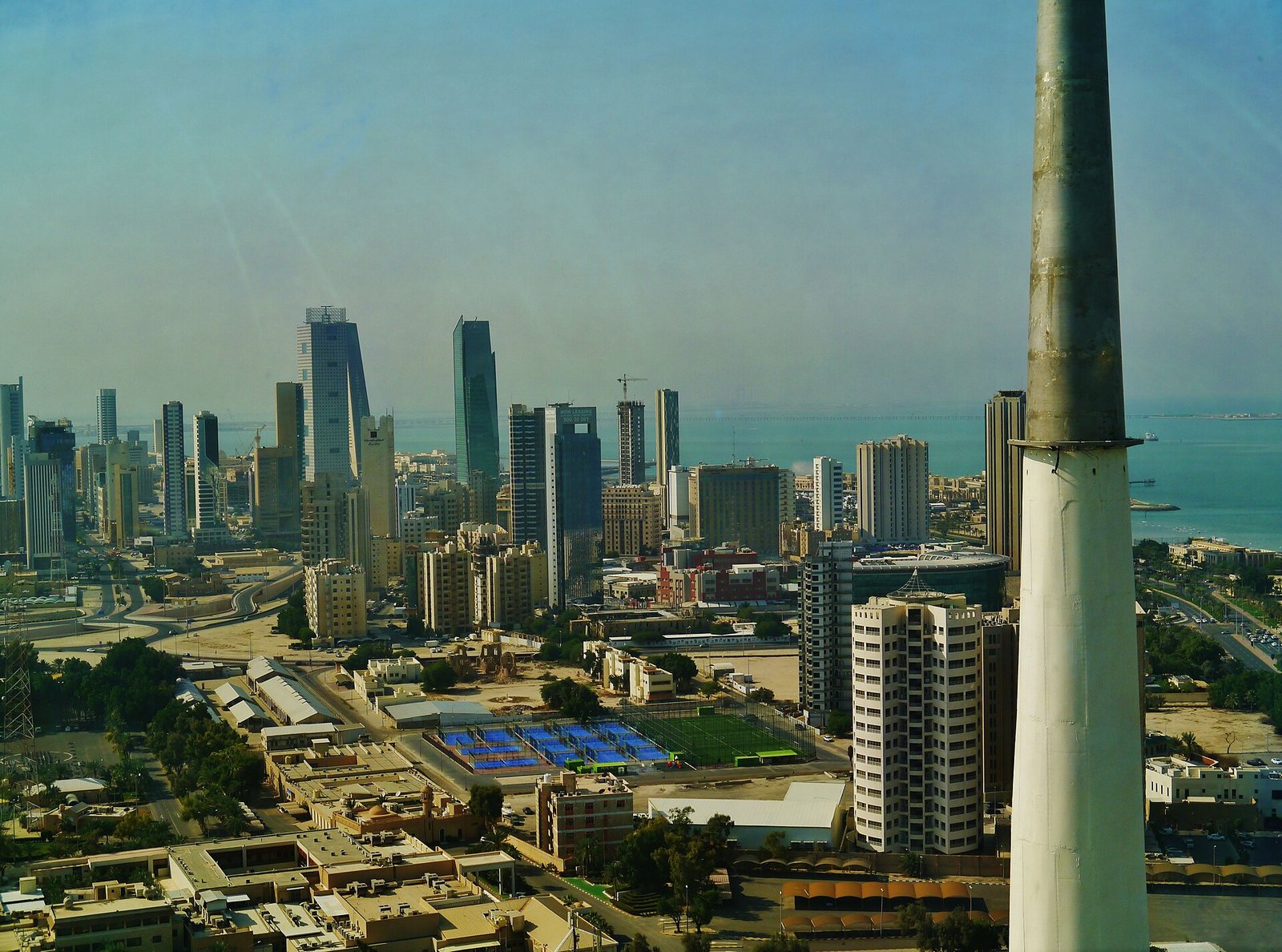
Thursday’s attack did not come out of nowhere. It was the second reported Iranian attack on Kuwait this month, according to Reuters. Earlier in November, Iran said it had targeted US drone and missile sites in Kuwait after the United States struck Qeshm Island in the Strait of Hormuz — a strike DailyBlogFeed covered at the time.
The wider pattern is hard to miss. Al Jazeera’s reporting from Doha noted an uptick in attacks across the Gulf since September, even as the region’s governments have repeated that an attack on one of them is an attack on all. Shipping through the Strait of Hormuz has been under strain too, with tankers hit and oil prices jumping on supply fears. Just this week, Yemen’s Houthis said they had attacked targets in Saudi Arabia, including a refinery, and two tankers were reported hit by sea mines near Oman’s Khasab port.
The Gulf Cooperation Council condemned Thursday’s attack. Its secretary-general, Jasem Mohamed Albudaiwi, called it “brutal” and said Iran’s continued attacks on Kuwait, targeting vital facilities and endangering civilians, were a dangerous escalation that threatened regional security. In Brussels, European Commission President Ursula von der Leyen called for more pressure on Tehran after the two Italians were killed.
For Kuwait, a small US-allied state that hosts American forces, the attack is a reminder of how exposed it is. For Italy, it is a loss of two citizens abroad — and a test of how Rome handles a crisis where the facts are still contested.
What happens next
Three things will decide where this goes. First, the investigation: Iran has offered a joint inquiry, and whether Kuwait and Italy take that up — or publish their own evidence — will shape the argument about who is responsible. Second, the response: Gulf states have condemned the attack in strong terms, and any coordinated reply, through the GCC or with the United States, would raise the stakes. Third, the wider confrontation: with Hormuz shipping, Houthi strikes and the US-Iran standoff all running at once, one more incident in Kuwait could easily feed into something bigger.
For now, the confirmed facts are these: two Italian technicians are dead, two other people are injured, a Kuwaiti military site was hit, and Iran denies it had anything to do with it. Everything else is still being argued over — in Rome, in Kuwait City, and in Tehran.
Sources: Reuters, Al Jazeera, CNN, The Wall Street Journal, Gulf News. Related: US Strikes Iran’s Qeshm Island, Strait of Hormuz Fears Grow · Houthi Drone Attack Hits Riyadh Financial District Tower, 11 Injured