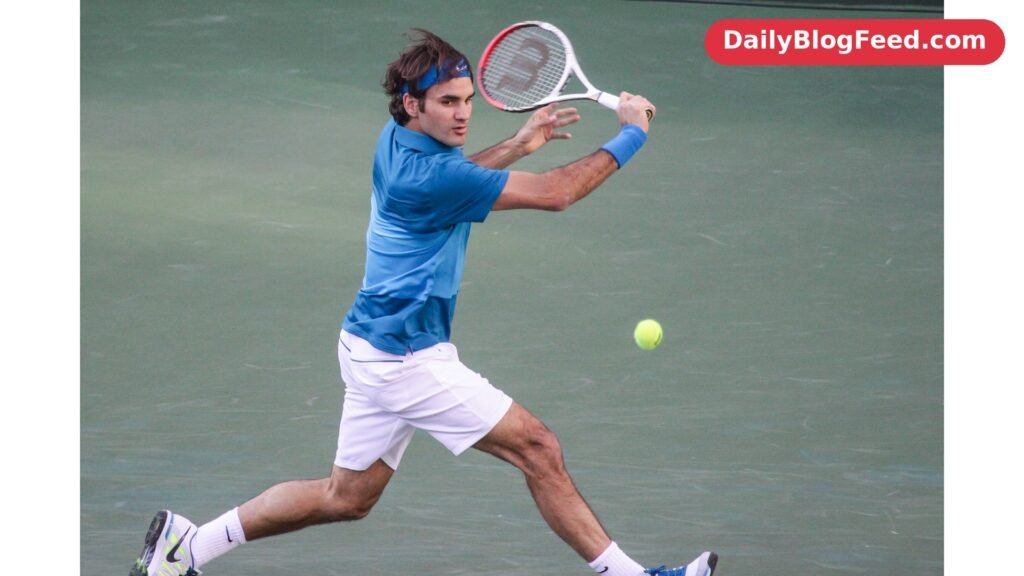

There is a particular kind of silence that used to fall over a tennis crowd when Roger Federer was about to serve. It was not the silence of boredom. It was attention, the shared sense that something beautiful might happen in the next few seconds.
Federer did not merely win tennis matches. He changed how the sport looked, turning a power game into something that resembled dance. Over 24 years as a professional, he collected 20 Grand Slam singles titles, spent 310 weeks ranked world No. 1, and became one of the most admired athletes on the planet.
This profile covers the facts readers most often ask about: his age, his wife Mirka and their four children, his career milestones, and his fortune. It also explains why his retirement in 2022 felt like the end of an era, and what he has done since leaving the tour.
Quick Facts
| Fact | Detail |
|---|---|
| Full name | Roger Federer |
| Born | August 8, 1981, Basel, Switzerland |
| Age | 45 (as of 2026) |
| Height | 6 ft 1 in (1.85 m) |
| Turned professional | 1998 |
| Retired | September 2022 (Laver Cup) |
| Playing style | Right-handed, one-handed backhand |
| Wife | Mirka Federer (married 2009) |
| Children | Myla, Charlene, Leo, Lenny (two sets of twins) |
| Grand Slam singles titles | 20 |
| ATP singles titles | 103 |
| Weeks at world No. 1 | 310 (237 consecutive) |
| Olympic medals | Gold, doubles 2008; silver, singles 2012 |
Why Federer Still Matters
Retired athletes usually fade from conversation. Federer has not. Years after his final match, he remains a reference point for how tennis should be played and how a champion should behave. Young players still study his footwork, and fans still share clips of his most graceful rallies.
Part of that staying power is aesthetic. Federer’s one-handed backhand, gliding movement, and calm expression made difficult shots look easy. Where other great players won through visible effort and noise, Federer won through apparent ease. That contrast became his signature, and it earned him fans far beyond tennis.
The other part is character. He won a record 13 Stefan Edberg Sportsmanship Awards and was voted the ATP fans’ favorite for 19 consecutive years, from 2003 to 2021. In a sport built on individual rivalry, he managed to be both fiercely competitive and widely liked. That combination is rarer than any trophy.
The Basel Boy Who Chose Tennis
Roger Federer was born on August 8, 1981, in Basel, Switzerland. His father, Robert Federer, is Swiss, and his mother, Lynette Federer, was born in South Africa, giving Roger both Swiss and South African citizenship. He has one sibling, his older sister Diana.
As a child, Federer played both soccer and tennis, starting tennis around the age of eight. He also worked as a ball boy at the Swiss Indoors tournament in Basel in 1992 and 1993, watching professionals from the sidelines of his hometown event. By age twelve, he had set soccer aside and committed himself to tennis.
His early tennis years were not as serene as his later image suggested. As a junior, Federer was known for emotional outbursts and broken rackets. He has spoken openly about having to learn self-control, and that transformation became one of the defining arcs of his career. The calm champion of later years was not born calm; he trained himself into it.
He turned professional in 1998. His first singles title came in Milan in 2001, and his first major breakthrough arrived two years later. The groundwork, though, had been laid in those intense teenage years of training in Switzerland, where he learned the footwork and timing that would later look effortless.
Wimbledon 2003: The Coronation
Federer’s first Grand Slam title came at Wimbledon in 2003, when he defeated Mark Philippoussis in the final. It was a turning point not just for his career but for men’s tennis. A new kind of champion had arrived, one whose grass-court game mixed classic serve-and-volley instincts with modern power.
What followed was one of the great dominant stretches in sports history. Federer won three Grand Slams in 2004 and reached world No. 1 in February of that year. He held the top ranking for 237 consecutive weeks, a record that still stands. Between 2004 and 2007, he won eleven Grand Slam titles and lost only a handful of matches each season.
His style during those years was almost unfair to describe. He seemed to float to the ball, strike it early, and end points before opponents had settled. Commentators struggled for fresh superlatives, and fellow players admitted that playing him at his best felt like chasing a ghost. The grace was real, but it was built on extraordinary athleticism and preparation.
The Rivalries That Made Him Greater
Greatness needs opposition, and Federer found his in Rafael Nadal and Novak Djokovic. The three men, later joined by Andy Murray in the “Big Four” conversation, pushed one another to levels none might have reached alone. Their matches became the defining contests of a generation.
The rivalry with Nadal was the most famous. Nadal, a ferocious left-hander, dominated their early meetings on clay and beat Federer in an epic Wimbledon final in 2008, a match many consider the greatest ever played. Federer answered over time, adjusting his tactics and eventually winning their later meetings, including the 2017 Australian Open final at age 35.
The rivalry with Djokovic was quieter but just as demanding. Djokovic leads their head-to-head record, and their matches were often decided by a handful of points in deciding sets. Federer’s longevity is partly measured by how long he stayed competitive against rivals five and six years younger than him.
These rivalries also shaped his public image. Where Nadal brought intensity and Djokovic brought elastic defense, Federer brought elegance and composure. Fans divided into camps, but most agreed that the sport was richer for having all three at once. The era they shared is now remembered as a golden age.
The Long Goodbye
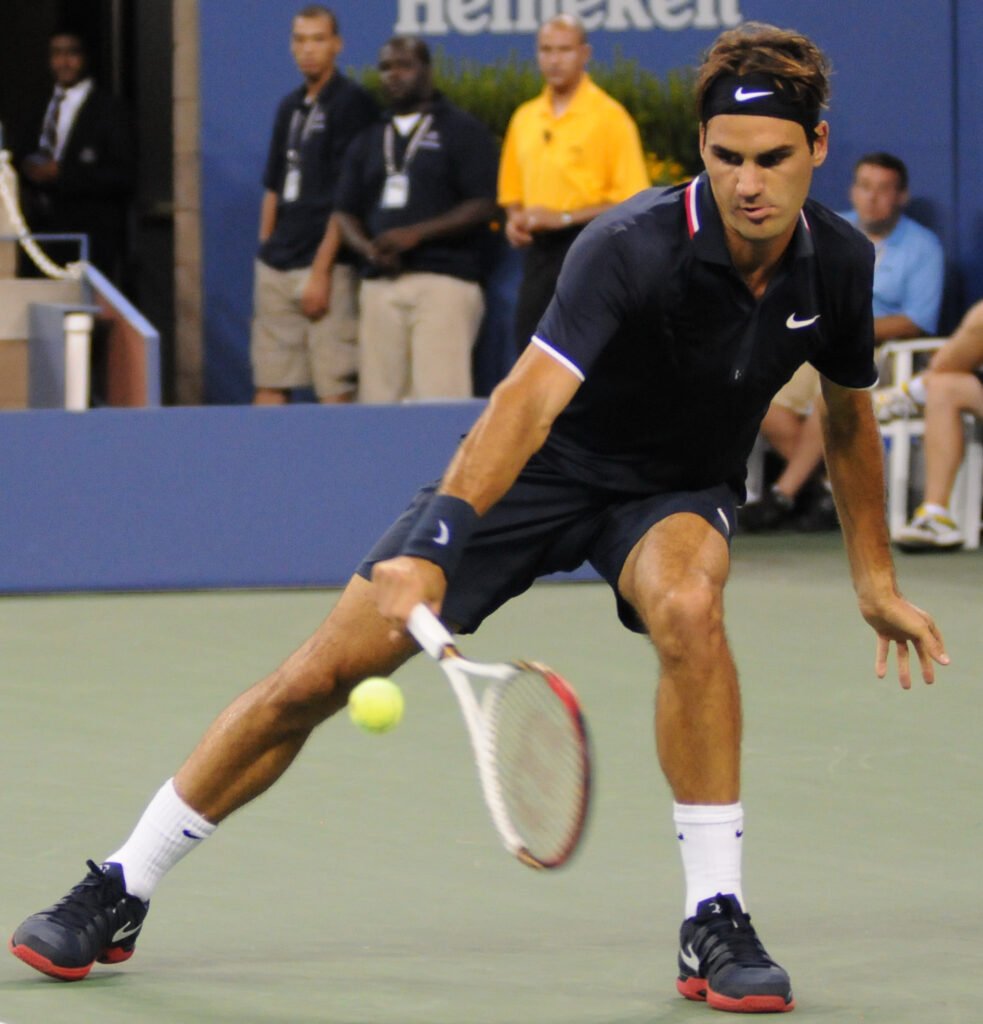
Federer’s later career was a story of comebacks. Knee surgery in 2016 cost him half a season, and many assumed his best years were over. Instead, he returned in 2017 to win the Australian Open and Wimbledon, becoming the oldest man in decades to win a Grand Slam. He won his twentieth and final major in Melbourne in 2018.
Further knee surgeries in 2020 and 2021 kept him off the tour for long stretches. He attempted one more comeback in 2022 but concluded that his body would not allow him to compete at the level he demanded of himself. On September 15, 2022, he announced his retirement, with the Laver Cup in London as his final event.
His last match, on September 23, 2022, was a doubles match partnered with Rafael Nadal. The two old rivals played together for Team Europe, losing a close match to Jack Sock and Frances Tiafoe. The images from that night, of Federer and Nadal sitting side by side in tears, became instantly iconic. It was a farewell that honored both the rivalry and the friendship.
The Laver Cup itself is part of Federer’s legacy. He played an instrumental role in creating the team competition, which pits Europe against the rest of the world. It has become a popular fixture on the tennis calendar and a fitting monument to a player who loved the team spirit of Davis Cup competition.
Life After Tennis
Since retiring, Federer has focused on family, business, and philanthropy. He remains an ambassador for the Swiss running-shoe brand On, in which he holds a minority stake, and he continues long-standing partnerships including Rolex. He signed a major apparel deal with Uniqlo in 2018, after more than two decades with Nike.
His public appearances have included honors at major tournaments and a celebrated commencement address at Dartmouth College in June 2024, in which he shared lessons from his tennis career about effort, resilience, and handling setbacks. The speech was widely shared online and praised for its plainspoken honesty.
Philanthropy remains central to his post-tennis identity. The Roger Federer Foundation, established in 2003, supports early childhood education in southern Africa and Switzerland, and reports say it has helped millions of children access quality education. He has also raised funds through the Match for Africa exhibition series.
Family: Mirka and Four Children
Roger Federer married Miroslava “Mirka” Vavrinec on April 11, 2009. Mirka is a former professional tennis player herself, born in Slovakia and raised in Switzerland. The two met while representing Switzerland at the 2000 Sydney Olympics, and she later worked as his manager before stepping back from the tour.
The couple have two sets of twins. Their identical twin daughters, Myla Rose and Charlene Riva, were born in 2009. Their fraternal twin sons, Leo and Lenny, were born in 2014. Federer has often said that fatherhood changed his perspective on tennis, making wins sweeter and losses easier to bear.
Family life also shaped his scheduling. In his later career years, he planned his tournament calendar around school holidays and family travel, and his children were regulars in the players’ box. Since retirement, he has spoken about enjoying the ordinary pleasures of family time that two decades of touring rarely allowed.
Net Worth: A Range, Not a Single Number
Roger Federer’s net worth is reported very differently depending on the source and the date, so any single figure should be treated with caution. Older estimates, including one widely cited around $550 million, reflected his career prize money and endorsement earnings. More recent reporting puts him considerably higher.
Forbes reported that Federer became the seventh billionaire athlete in history in 2025, boosted by his minority stake in On, with his net worth estimated at about $1.1 billion — a figure Forbes first published in August 2025 and repeated in its 2026 billionaires list. That range, from roughly $550 million in older estimates to over $1 billion in the latest Forbes-linked reporting, reflects how much of his wealth sits in investments whose value moves with markets.
What is not in doubt is the scale of his earnings. He won about $130 million in career prize money, second only to a few rivals in tennis history. Endorsement income dwarfed that figure: he was Forbes’ highest-paid tennis player for years and led all athletes in 2020 with about $106 million in pre-tax income, almost all of it from endorsements.
The On investment is the key to the higher estimates. Federer bought a stake in the Swiss company in 2019, before its public listing in 2021, and the brand’s growth since then has multiplied the value of that holding. It is a reminder that his business instincts, like his tennis, rewarded patience and timing.
Style, Sportsmanship, and Screen Comparisons
Federer’s appeal always extended beyond the court. He dressed with a care that made him a regular at fashion events, and his calm public manner made him a natural ambassador for luxury brands. Comparisons to classic screen elegance are not far-fetched: his composure under pressure recalled the effortless polish of stars such as Cary Grant, whose screen persona combined charm with absolute control.
That polish never came at the expense of competitiveness. Federer could be ruthless in a tiebreak and stubborn in a fifth set, and his record against the best players of his era proves it. The grace was the surface; underneath was a competitor who hated losing and prepared obsessively to avoid it.
His sportsmanship, though, was genuine and widely recognized by his peers. He was known for conceding points he thought were wrongly awarded and for praising opponents in defeat. That behavior earned him the respect of rivals who had every reason to resent his success, and it helps explain why his farewell was mourned across the sport. A reputation for decency that lasts for decades is rare in any public career, and it recalled the enduring goodwill enjoyed by screen stars such as James Stewart, whose long career was built on a similar blend of talent and trustworthiness.
Lesser-Known Facts About Roger Federer
- He once served as a ball boy at his hometown tournament, the Swiss Indoors in Basel, before going on to win the event ten times.
- He holds dual Swiss and South African citizenship through his mother, who was born in South Africa.
- His first language is Swiss German, but he speaks fluent English, French, and German, and often gave interviews in multiple languages at the same tournament.
- He was declared unsuitable for Swiss military service and instead served in civil protection, an arrangement that reflected the back problems he dealt with even as a young man.
- He played more than 1,500 matches across 24 years as a professional, a workload that makes his longevity even more remarkable.
- He is one of the few tennis players to be named among Time magazine’s 100 most influential people in the world, an honor he received twice, in 2007 and 2018.
Frequently Asked Questions
How old is Roger Federer?
Roger Federer was born on August 8, 1981, in Basel, Switzerland, which makes him 45 years old as of 2026. He retired from professional tennis in September 2022 at the age of 41.
Who is Roger Federer’s wife?
Roger Federer’s wife is Mirka Federer, formerly Miroslava Vavrinec, a former professional tennis player. They met at the 2000 Sydney Olympics and married on April 11, 2009.
How many children does Roger Federer have?
Roger Federer has four children, two sets of twins. His daughters Myla and Charlene were born in 2009, and his sons Leo and Lenny were born in 2014.
How many Grand Slams did Roger Federer win?
Roger Federer won 20 Grand Slam singles titles: six Australian Opens, one French Open, eight Wimbledons, and five US Opens. His eight Wimbledon titles remain a men’s record.
What is Roger Federer’s net worth?
Estimates vary widely. Older reports cited around $550 million, while Forbes-linked reporting from 2025–2026 estimated about $1.1 billion, boosted by his stake in the shoe brand On. The honest answer is a range, not a single fixed number.
Why did Roger Federer retire?
Roger Federer retired because repeated knee surgeries and injuries left him unable to compete at the level he expected of himself. He announced his retirement on September 15, 2022, and played his final match at the Laver Cup a week later.
Conclusion
Roger Federer’s career can be measured in numbers, and the numbers are extraordinary: 20 Grand Slams, 103 titles, 310 weeks at No. 1. But the numbers alone miss what made him special. He played tennis the way people wish they could play anything, with a lightness that disguised enormous effort and a calm that disguised enormous will.
His rivalries made him better, his family grounded him, and his philanthropy gave his fame a purpose beyond trophies. Retirement has not diminished his standing; if anything, distance has clarified it. The sport he left behind still measures its new stars against his standard of grace under pressure.
Perhaps that is the simplest summary of all. Long careers at the top are rare in any profession, and the performers who sustain them tend to share a quality: reinvention without loss of identity. Screen greats such as Gregory Peck carried a similar dignity across decades, and Federer did the same on court. He arrived as a temperamental teenager and left as the game’s most admired elder statesman, and the transformation itself may be his finest achievement.
A final thought belongs to the fans who watched him for 24 years. They did not just witness victories; they witnessed a style of winning that made the sport more beautiful. That beauty, more than any record, is why Roger Federer’s name still brings a smile to people who never picked up a racket.